'Incredibly complex': the raid that killed IS chief
 Energy costs spark inflation surges in France, Italy

 South Korea break China hearts to reach Asian Games football final
 Eala storms into Asian Games semi-finals to thrill adoring fans

 Turkey freezes ex-minister's assets as fund crisis grows

 What we know about the North Korean POW dispute
 Most equities rise after oil price plunge, US data in focus
 Polar oceans transformed as warming melts ice habitats: research

 Lost shark becomes viral star in South Korea
 Dangote to launch $16bn refinery in Kenya
 North Korean leader 'extremely obese': Seoul spy agency
 Yankees and pope-backed White Sox start MLB playoffs with wins
 Malaysia's ex-PM Mahathir in hospital for observation
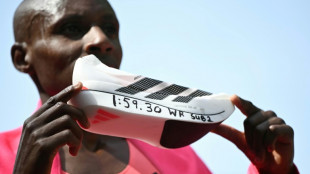 'No limits': Marathon world record holder Sawe chasing history
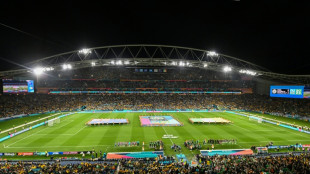
 Countdown begins to biggest-ever Rugby World Cup
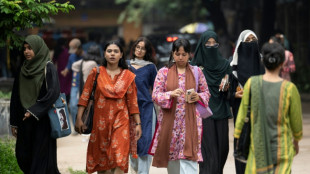 Bangladesh women lose ground after quota reform
 Vietnam admits 'differing opinions' on Hanoi development
 Stocks temper gains as oil pares heavy losses, US data in focus
 New Zealand denies breaching climate commitments to EU
 Albert becomes youngest US scorer in 4-2 win over Chile
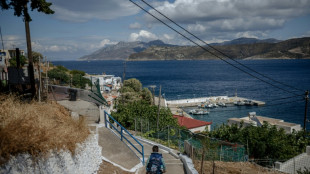 Pirate island's plunging population shows Greece's demographic decline
 With elections ahead, Latvia's Russian-speakers reject Moscow's help
 Brazil football clubs face massive sponsorship blow from betting ban
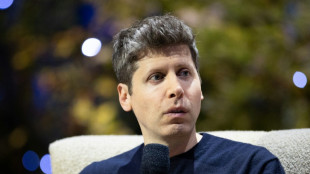 ChatGPT maker wants to be the App Store for AI as safety concerns grow
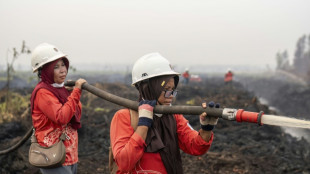 Women fight fires and sexism in Indonesian Borneo

 Forsling's OT blast lifts Florida over Carolina in NHL opener

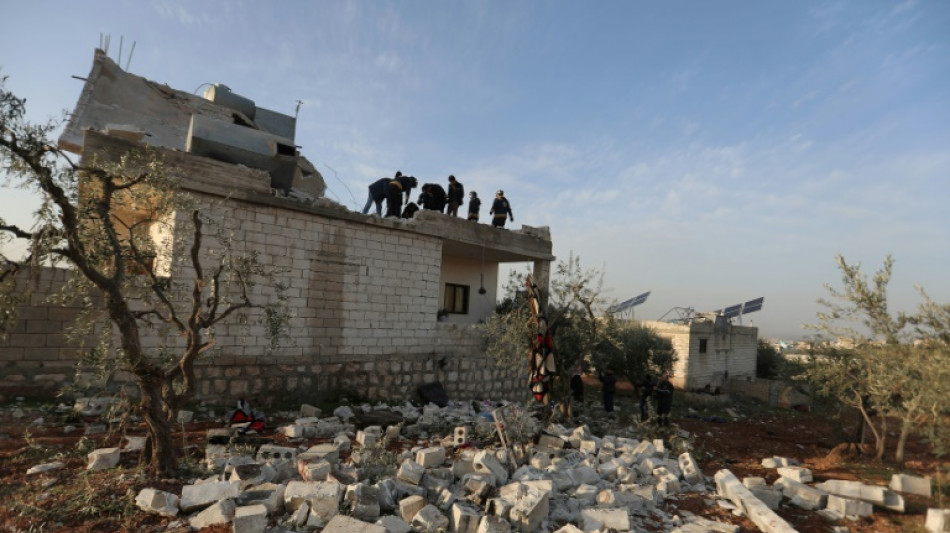
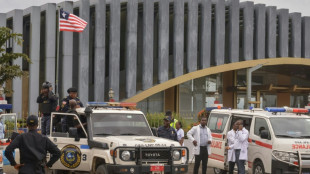
By early December, US intelligence was certain of it: the man occupying the top floor of a nondescript house in Atme, northern Syria -- who never left the premises, emerging only to bathe on the roof -- was the head of the Islamic State group.
In the White House Situation room, a table-top model of the house was set up, and President Joe Biden was briefed on his options to neutralize Abu Ibrahim al-Hashimi al-Qurashi, one of America's most wanted jihadist targets.
US officials say they could have easily killed Qurashi -- whose location they had narrowed down last year before pinpointing it -- with a precision missile.
Biden chose a riskier course, said a senior US official briefing reporters on the raid, to reduce the possibility of killing the civilians also living in the three-level cinderblock home, set amid olive trees near the border with Turkey.
The Special Operations Forces assault launched in the early hours of Thursday was "incredibly complex," the official said, given the number of nearby homes and the presence of women and multiple children in the building.
In the end, as elite US troops surrounded the house calling for all inside to come out, Qurashi blew himself up along with his wife and two children -- an outcome US forces had prepared for but hoped against.
The operation had been rehearsed in detail several times, the official said.
Special forces trained for everything from a surrender to a firefight. One possibility was that Qurashi would blow himself up.
"One of our main concerns was that he would kill himself and the structure would collapse killing everyone else in the building," said a senior military official.
The official said the operation team consulted engineers on the strength of the concrete building. They concluded with "high confidence" that an explosion would only destroy the top floor.
The hideout's location in Idlib province was just 15 kilometers (nine miles) north of where Qurashi's IS predecessor, Abu Bakr al-Baghdadi, likewise killed himself in October 2019 to avoid capture in a US commando raid.
The United States had placed a $10 million reward on Qurashi's head soon after he took over at the helm of IS.
At the beginning of this week Biden was briefed on the situation, and gave the operational go-ahead Tuesday morning at the White House.
- Questions on civilian deaths -
The operation went almost all according to plan.
As Biden, Vice President Kamala Harris, and other officials monitored in real time in the Situation Room, helicopters flew in US commandos, reportedly about two dozen, who surrounded the building and warned neighbors to stay away.
The team called on everyone to exit the building, and a couple and their children living on the first level emerged and were taken to safety, the senior official explained.
Moments later, the top floor erupted with an explosion, tearing off half of the structure, but leaving the level below intact.
US forces began moving in, but a couple on the second floor barricaded themselves in their residence and began firing on them.
"The ISIS lieutenant and his wife were killed," the official said, without offering details, adding that four children had emerged to be taken to safety.
After the raid open questions remained about how many people actually died.
The Syrian Observatory for Human Rights said seven civilians were among at least 13 people killed in the operation, four of them children.
Pentagon spokesman John Kirby said at least three civilians died -- Qurashi's wife and their two children.
The US military official meanwhile said eight children and two adults were saved. But the official allowed that it was not clear how many children were on the top floor when it exploded, and that a couple on the floor below may have had more children with them.
In operational terms, officials said, the only mishap was that one of the helicopters that delivered the commandos to the location developed mechanical problems and landed in a nearby field, where it was destroyed.
That echoed the 2011 raid on the Pakistan compound of Al-Qaeda leader Osama bin Laden, where a Special Operations helicopter crash-landed and also had to be destroyed, due to sensitive technology it carried.
In addition, unknown local gunmen began firing on the US troops late in the operation, and US troops fired back. The official said at least two of them were killed, with no Americans injured.
F.Dubois--AMWN