
Why Peru just ousted another president, and what comes next / Photo: Ernesto BENAVIDES - AFP/File
 French hope Seixas storms Basque Tour time-trial opener
 Wawrinka falls in first round on Monte Carlo farewell
 US Democratic lawmakers slam 'economic bombing' after Cuba visit

 Giant step for humankind: Artemis crew to set space distance record

 Ex-England rugby international Lawes to leave Brive
 Swimmers McKeown, O'Callaghan and Chalmers dominate at Australian Open
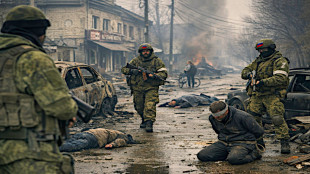
 Iran, a Terrorist State with No Right to Exist

 Israeli strikes kill Iran Guards intel chief as Trump deadline looms

 US sprint star Richardson wins Australia's Stawell Gift in record time

 Artemis mission approaches lunar loop for first flyby since 1972
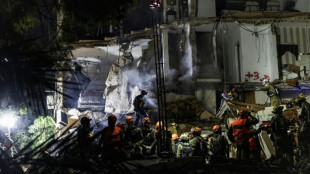
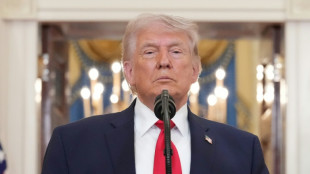 Defiant Iran ramps up attacks after Trump warning
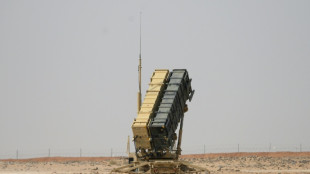
 Pogacar stays humble with Monument history beckoning

 Sputtering Arsenal face test of character in Sporting clash

 Tokyo, Seoul shares gain, war sends oil higher

 South Korea president says regrets 'reckless' drones sent to North

 What to know about the Artemis 2 mission's Moon flyby
 In El Salvador's mass trials, 'the innocent pay for the guilty'
 REX Shares, LLC & Tuttle Capital Management, LLC Announce a Reverse Share Split of T-REX 2X Long EOSE Daily Target ETF

 SMX Launches Digital Material Passport Platform (DMPP) Enabling Verified Material Identity, Traceability and Real-World Asset Digitization

 Cash and Roman Felber Ramp Up British F4 Preparations

 XCF Global and Axens North America Announce Commercial Collaboration for Vegan(R) Technology

 TrustNFT Releases White Paper on Corporate Costs of Email Impersonation, Documenting $2.9 Billion in Annual Losses and Growing Brand Liability Risk
 Datavault AI CEO Nathaniel T. Bradley to Deliver Flagship Keynotes on Breakthrough RWA Tokenization at CONV3RGENCE London and AssetRush × Zurich 2026

 Fortitude Gold Declares April 2026 Monthly Dividend

 Arrive AI Secures Tenth U.S. Patent, Positioning as the Critical Infrastructure Layer for Autonomous Delivery at Scale

In a matter of hours, Peru impeached one of the world's most unpopular presidents, Dina Boluarte, and appointed its seventh leader in nine years.
With only six months to go until the next elections, the country finds itself mired in its umpteenth political crisis.
- Why was Boluarte impeached? -
Boluarte was removed in a swift impeachment trial after a gun attack Wednesday on a group of cumbia musicians performing on stage in Lima -- seen as the last straw after a string of attacks on performers and business owners by extortion gangs.
Unlike the impeachment of her left-wing predecessor, Pedro Castillo, in December 2022, the ouster of the supremely unpopular Boluarte sparked no protests.
She left office with a disapproval rating of 96 percent, according to the polling firm Ipsos, rivalled only by that of Congress, at 89 percent.
Her impeachment follows months of protests by bus companies, merchants and, more recently, students, over shakedowns by criminal gangs -- and attacks on those who refuse to pay protection money.
The appointment of Congress speaker Jose Jeri as interim president failed to appease anger in Lima against a political class seen as inept and corrupt.
"We've traded one rat for another (...) We're in a very bad way," Gaby Valdivia, a 50-year-old flower merchant, told AFP.
"We're very used to presidents (...) falling quickly and the lives of Peruvians remaining the same," political scientist Augusto Alvarez told AFP.
- How bad is the extortion wave? -
Extortion and contract killings have been a feature of daily life across the South American country.
Gangs like Los Pulpos and Venezuela's Tren de Aragua, which operates across Latin America, hold people from all walks of life for ransom.
In Peru, reported cases of extortion shot up from 2,396 in 2023 to 15,336 in 2024, a 540 percent increase.
At least 47 bus drivers have been murdered this year in hits blamed on extortion gangs.
In March, Congress dismissed the interior minister after cumbia star Paul Flores was shot dead by hitmen after leaving a concert in Lima.
With each new attack, the parties that had propped up Boluarte in Congress became more critical of the government.
Their impeachment of Boluarte was an attempt to demonstrate that the security crisis was her "sole and exclusive responsibility," Fernando Tuesta, political scientist at the Pontifical Catholic University of Peru, told AFP.
- Will protests end now Boluarte is gone? -
Lima has for months been convulsed by protests and strikes over the violence, with members of a "Generation Z" youth collective joining in on recent weekends.
At least 74 people have been injured in the protests.
Jeri, the interim president, has attempted to take the heat out of the protests by vowing to "declare war" on organized crime.
But a new day of demonstrations is planned for next week.
Jeri has promised to lead a transitional government until elections on April 12, 2026.
But given the volatility of Peruvian politics, experts say, voters may find the wait too long.
He could become "a president of a few days," Tuesta warned.
- How's the economy holding up? -
Latin America's sixth-largest economy has been relatively untouched by the successive crises.
Its currency, the sol, is one of the most stable in the region, and annual inflation is low, below 1.4 percent.
Its weakness is the high proportion of people -- seven out of 10 workers -- in informal employment, without social benefits or legal protection.
Ch.Kahalev--AMWN