Venezuela marks 30 years since Chavez's failed but career-launching coup
 Energy costs spark inflation surges in France, Italy
 South Korea break China hearts to reach Asian Games football final
 Eala storms into Asian Games semi-finals to thrill adoring fans

 Turkey freezes ex-minister's assets as fund crisis grows

 What we know about the North Korean POW dispute
 Most equities rise after oil price plunge, US data in focus
 Polar oceans transformed as warming melts ice habitats: research
 Lost shark becomes viral star in South Korea
 Dangote to launch $16bn refinery in Kenya
 North Korean leader 'extremely obese': Seoul spy agency
 Yankees and pope-backed White Sox start MLB playoffs with wins
 Malaysia's ex-PM Mahathir in hospital for observation
 'No limits': Marathon world record holder Sawe chasing history
 Countdown begins to biggest-ever Rugby World Cup
 Bangladesh women lose ground after quota reform
 Vietnam admits 'differing opinions' on Hanoi development
 Stocks temper gains as oil pares heavy losses, US data in focus
 New Zealand denies breaching climate commitments to EU
 Albert becomes youngest US scorer in 4-2 win over Chile
 Pirate island's plunging population shows Greece's demographic decline
 With elections ahead, Latvia's Russian-speakers reject Moscow's help
 Brazil football clubs face massive sponsorship blow from betting ban
 ChatGPT maker wants to be the App Store for AI as safety concerns grow
 Women fight fires and sexism in Indonesian Borneo
 Forsling's OT blast lifts Florida over Carolina in NHL opener

The Venezuelan president's daughter was on the telephone when the first shells hit the official residence in Caracas 30 years ago in a coup attempt led by a then-unknown paratrooper, Hugo Chavez.
The attempt to unseat her father Carlos Andres Perez failed, but catapulted leftist Chavez into an unstoppable political career.
"They attacked us in a cruel and terrible way for more than four hours," Carolina, Perez's youngest daughter, told AFP.
Then 28, she cowered in the main bedroom of the residence, La Casona, with her mother Blanca, two nephews aged four and five, and an octogenarian aunt.
The offensive on La Casona came just minutes after the president had left the government palace, Miraflores, amid the first rumors of an uprising.
He was at a television station, addressing the country, while Miraflores also came under heavy fire.
But despite the involvement of 10 military battalions from five cities, the coup on February 3 and 4, failed to topple Perez.
The soldiers were meant to be reinforced by troops under the command of Chavez, then 37, but these never arrived.
As the coup plotters were rounded up, Chavez surrendered on television, wearing camouflage and the red beret that later became his signature.
"Unfortunately, for now, the objectives that we had set for ourselves have not been achieved," he said at the time, adding: "new possibilities will arise again."
- 'For now' -
Chavez was a prisoner for two years until receiving a pardon.
Four years later, in 1998, the anti-United States firebrand was elected president. He governed, mostly uninterrupted, until his death in 2013.
Chavez's famous "for now," according to his successor Nicolas Maduro, "was converted into hope, into 'for ever'."
"Chavez rebelled against the dominant system, the oligarchy and imperialism," said Maduro, who like Chavez is branded a dictator by rights groups and opponents.
Maduro's comments on public television came in the week that Venezuela celebrates the so-called "Bolivarian Revolution" with February 4 (dubbed 4F) marked as a "day of dignity" with tributes to the coup leaders, many still in government today.
In spite of Venezuela's many problems, Chavez is still hailed as a revolutionary hero by many.
The barracks-turned military museum where he plotted the coup holds Chavez's remains and is place of cult worship.
- 'The savagery' -
The assault on Perez's government came amid rising anger over a neoliberal shift by the government and protests against fuel price hikes that were brutally repressed.
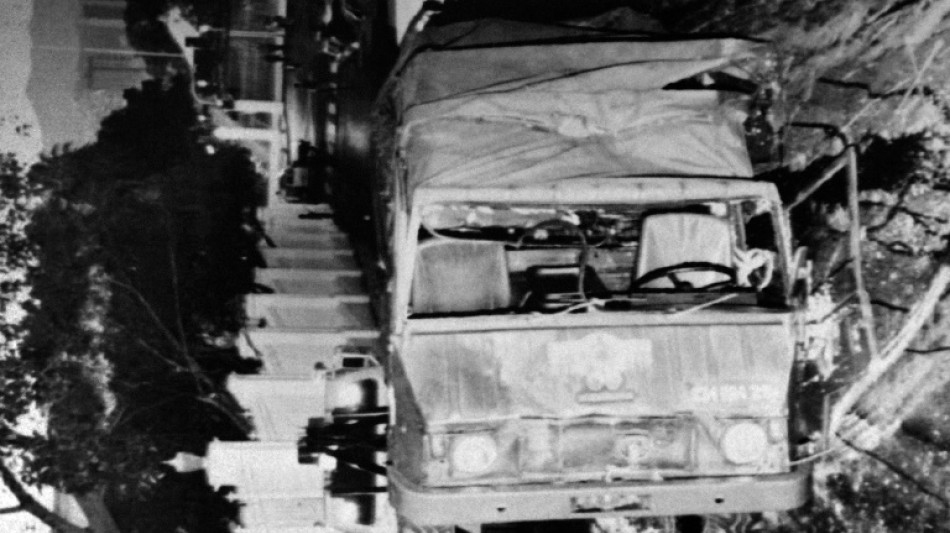
More than 200 soldiers fired on the presidential residence, and Carolina Perez remembers the walls pocked by shrapnel, her car riddled with more than 500 bullets and two mortars that fell on the chapel and the house without exploding.
"It has been 30 years and I still don't understand the savagery," she told AFP.
Perez recalled that her mother, who died in 2020, ordered a guard to keep an eye on her family while she treated the wounded on both sides.
Injured soldiers were brought into the house to be treated.
"My mom gave them a kind of paracetamol and brandy to ease the pain," Perez recalled.
Her father, meanwhile, talked to the nation on television, and returned home in the early morning hours, with the coup neutralized.
The walls of the hallway and the main bedroom were stained with blood.
In 1993, months after the coup, Perez was forced to leave office under a cloud of corruption. He fled to the United States in 2001 to avoid trial, and stayed there until his death in 2010.
- From 'fool' to hero -
Carlos Hermoso, now 69, supported the uprising with his Red Flag party, which had infiltrated the military to promote a communist takeover.
"The goal was a popular uprising... that was always our idea, whether it was a coup or not," he told AFP.
With a force of 550 civilians Hermoso was ready to join the offensive, but says the weapons the military had promised him never arrived.
"Hugo Chavez never trusted civilians," said Hermoso.
"And in the end a fool (Chavez) ended up playing the role of hero" without ever firing a shot during the failed coup.
Carolina Perez, who slept with a weapon for many years after her ordeal, recalled when the soldier in charge at La Casona surrendered.
"'You won... for now,' he told me," -- a precursor to Chavez's own words later.
P.Santos--AMWN