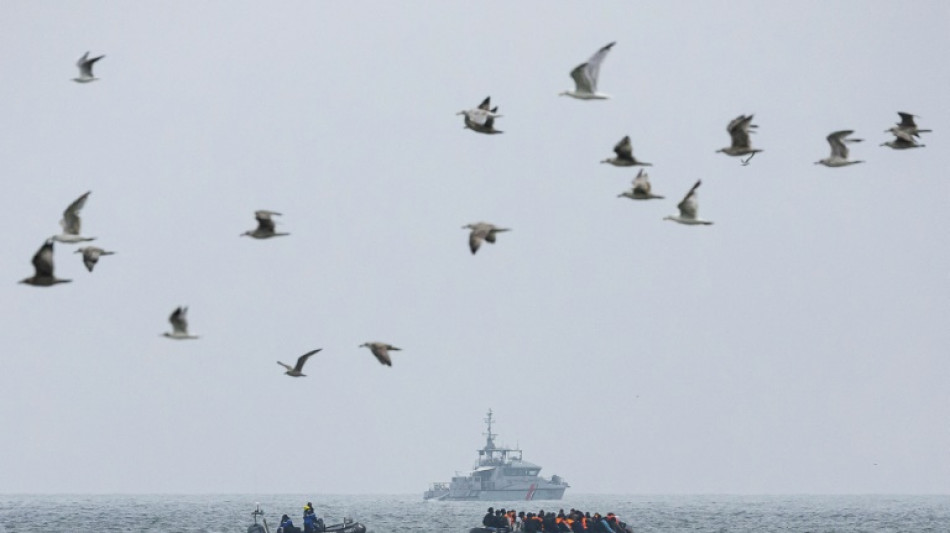
EU nations back 'return hubs' in migration policy tightening / Photo: Sameer Al-DOUMY - AFP/File
 Kiara Advani Reveals Sidharth Malhotra’s Reaction to Toxic Backlash

 Four firms compete to design Chennai’s model mobility corridors

 Study Finds Climate Change Threatens Cacti More Than Previously Thought
 एलेक्स बोडी और SCANDIC PAY: Mastercard और VISA कार्ड — भुगतान की नई पीढ़ी

 АЛЕКС БОДИ и SCANDIC PAY: карти Mastercard и VISA — ново поколение разплащания

 أليكس بودي وSCANDIC PAY: بطاقات Mastercard وVISA — جيل جديد من المدفوعات

 ALEX BODI 與 SCANDIC PAY:Mastercard 與 VISA 卡——新一代支付方式

 ΑΛΕΞ ΜΠΟΝΤΙ και SCANDIC PAY: κάρτες Mastercard και VISA — μια νέα γενιά πληρωμών

 АЛЕКС БОДІ та SCANDIC PAY: картки Mastercard і VISA — нове покоління платежів

 ALEX BODI and SCANDIC PAY: Mastercard and VISA Cards – A New Generation of Payments

 Maswanganyi Clarifies Pirates Allegiance Amidst Career Transition

 Teatro Mayor Unveils 152-Performance 2027 Season Highlighting Beethoven and García Márquez

 Rutgers Defeats NJIT 101-64 Behind Francis and Mark Scores
EU countries on Monday backed a significant tightening of Europe's immigration policy, including endorsing the concept of setting up "return hubs" outside the 27-nation bloc for failed asylum-seekers.
Interior ministers meeting in Brussels greenlighted a package of measures, as European governments are under pressure to take a tougher stance amid a souring of public opinion on migration that has fuelled far-right gains at the ballot box.
Put forward by the European Commission earlier this year, the changes, which need to be approved by the European Parliament before coming into force, would notably allow:
-- The opening of centres outside the European Union's borders to which migrants whose asylum applications have been rejected would be sent -- the so-called "return hubs".
-- Harsher penalties for migrants who refuse to leave European territory, including through longer periods of detention.
-- Returning migrants to countries that are not their countries of origin, but which Europe considers "safe".
A decline in irregular entries to Europe -- down by around 20 percent so far in 2025 compared to last year -- has not eased the pressure to act on the hot-button issue.
"We have to speed up," said EU migration commissioner Magnus Brunner, "to give the people the feeling that we have control over what is happening."
- 'Legal limbo' -
The new initiatives have caused consternation among activists working with migrants.
"Instead of investing in safety, protection, and inclusion, the EU is choosing policies that will push more people into danger and legal limbo," said Silvia Carta of PICUM, an NGO that helps undocumented migrants.
But under the impetus of Denmark, which holds the EU's rotating presidency and has long advocated for stricter migration rules, member states are moving forward at a rapid pace.
An EU diplomat told AFP there was "a widely shared political wish" among leaders in the bloc to press ahead with these additional steps.
"We've been moving forward very quickly," the diplomat said, speaking as others on condition of anonymity.
Some in the bloc have voiced scepticism.
France questioned the legality and effectiveness of some of the proposals, while Spain was not convinced "return hubs" could work after several unsuccessful trials by other countries.
Still, the measures have backing from centre-right and far-right lawmakers, who already gave an initial approval in the European Parliament.
- Taking in asylum seekers? -
EU states also agreed on Monday on how to implement a new "solidarity" system for distributing at least 30,000 asylum seekers among member countries.
Under a recently approved reform to help relieve pressure on countries that see large numbers of arrivals, such as Greece and Italy, other EU members are expected to take in some or pay 20,000 euros ($23,000) per person to the countries under pressure.
But with governments across the bloc being urged to tighten immigration policies, putting a hand up to take in extra asylum seekers is fraught with political risk.
This led to lengthy negotiations, which were settled on Monday, although details of the decision were not disclosed.
"There are few interior ministers who will want to come out in front of the press and say: 'OK, I've taken 3,000,'" a European official told AFP.
Y.Aukaiv--AMWN