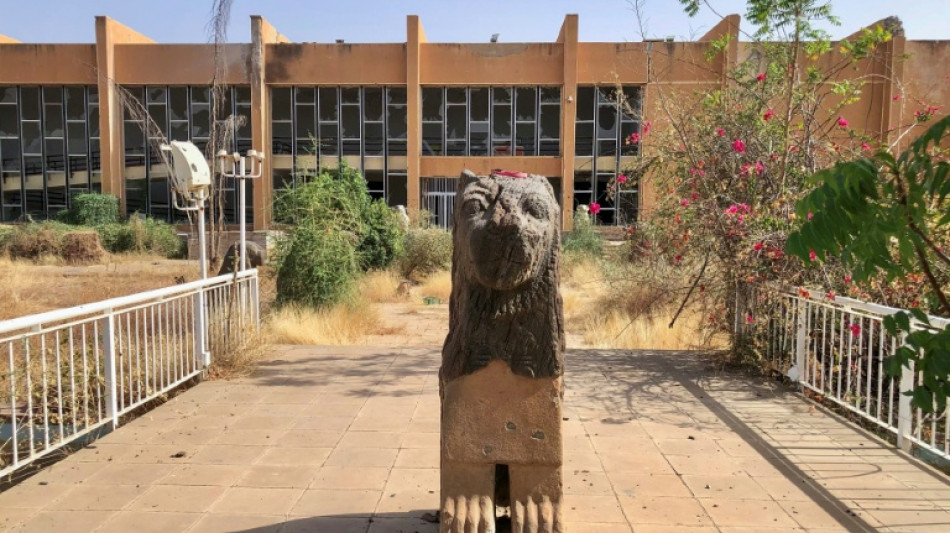
Virtual museum preserves Sudan's plundered heritage / Photo: - - AFP/File
 Teatro Mayor Unveils 152-Performance 2027 Season Highlighting Beethoven and García Márquez
 Rutgers Defeats NJIT 101-64 Behind Francis and Mark Scores

 THIEAUDIO Introduces Clairvoyance MKII: The Evolution of a Signature Sound
 Guardian Metal Resources PLC Announces Proposed Spin-Out of Non-Tungsten Projects
 Fulcrum Metals PLC Announces New Critical Mineral Recoveries Expand Potential

 Thukukile Zuma Resigns from ANC Johannesburg Leadership Amid Disciplinary Dispute

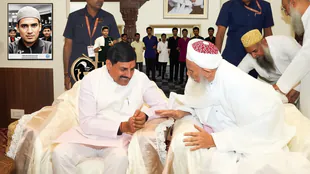 CM Mohan Yadav Meets Bohra Spiritual Leader to Discuss Simhastha 2028 and Development

 Eli Crane Defeats Jonathan Nez in Tight Arizona Congressional Race

Destroyed and looted in the early months of Sudan's war, the national museum in Khartoum is now welcoming virtual visitors after months of painstaking effort to digitally recreate its collection.
At the museum itself, almost nothing remains of the 100,000 artefacts it had stored since its construction in the 1950s.
Only pieces too heavy for looters to haul off, like the massive granite statue of the Kush Pharaoh Taharqa and frescoes relocated from temples during the building of the Aswan Dam, are still present on site.
"The virtual museum is the only viable option to ensure continuity," government antiquities official Ikhlass Abdel Latif said, during a recent presentation of the project carried out by the French Archaeological Unit for Sudanese Antiquities (SFDAS) with support from the Louvre and Britain's Durham University.
When the museum was plundered following the outbreak of the war between the regular army and the paramilitary Rapid Support Forces (RSF) in April 2023, satellite images showed trucks loaded with relics heading towards Darfur, the western region now totally controlled by the RSF.
Since then, searches for the missing artefacts aided by Interpol have only yielded meagre results.
"The Khartoum museum was the cornerstone of Sudanese cultural preservation -- the damage is astronomical," said SFDAS researcher Faiza Drici, but "the virtual version lets us recreate the lost collections and keep a clear record".
Drici worked for more than a year to reconstruct the lost holdings in a database, working from fragments of official lists, studies published by researchers and photos taken during excavation missions.
Then graphic designer Marcel Perrin created a computer model that mimicked the museum's atmosphere -- its architecture, its lighting and the arrangement of its displays.
Online since January 1, the virtual museum now gives visitors a facsimile of the experience of walking through the institution's galleries -- reconstructed from photographs and the original plans -- and viewing more than 1,000 pieces inherited from the ancient Kingdom of Kush.
It will take until the end of 2026, however, for the project to upload its recreation of the museum's famed "Gold Room", which had housed solid-gold royal jewellery, figurines and ceremonial objects stolen by looters.
In addition to the virtual museum's documentary value, the catalogue reconstructed by SFDAS is expected to bolster Interpol's efforts to thwart the trafficking of Sudan's stolen heritage.
The war in Sudan has triggered a humanitarian catastrophe, killing tens of thousands and forcing more than 11 million people to flee their homes, with many seeking shelter in underdeveloped areas with scarce food and medicine.
M.Fischer--AMWN