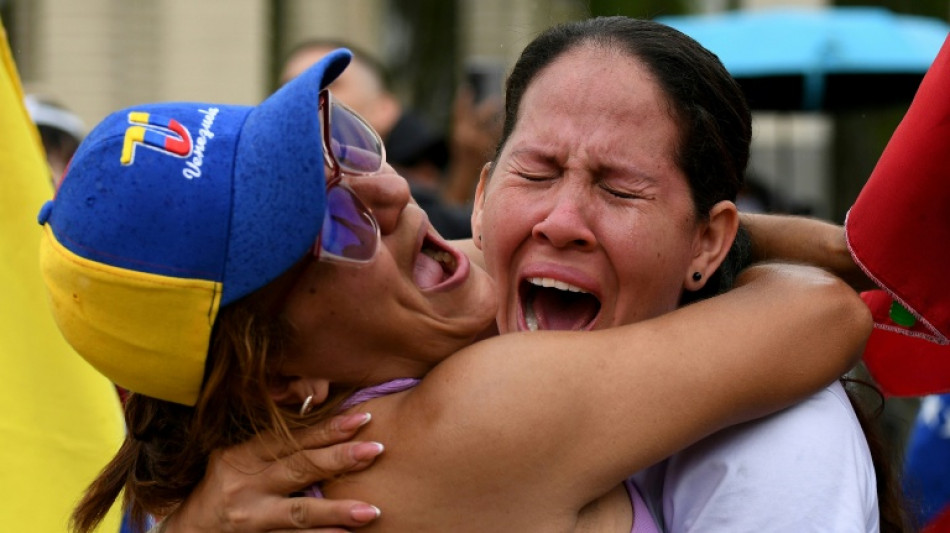
'Nobody is going to run home': Venezuelan diaspora in wait-and-see mode / Photo: JAIME SALDARRIAGA - AFP
 Teatro Mayor Unveils 152-Performance 2027 Season Highlighting Beethoven and García Márquez

 Rutgers Defeats NJIT 101-64 Behind Francis and Mark Scores

 THIEAUDIO Introduces Clairvoyance MKII: The Evolution of a Signature Sound
 Guardian Metal Resources PLC Announces Proposed Spin-Out of Non-Tungsten Projects
 Fulcrum Metals PLC Announces New Critical Mineral Recoveries Expand Potential

 Thukukile Zuma Resigns from ANC Johannesburg Leadership Amid Disciplinary Dispute
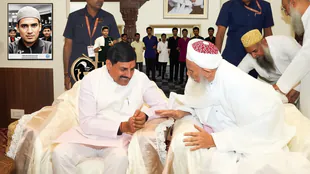 CM Mohan Yadav Meets Bohra Spiritual Leader to Discuss Simhastha 2028 and Development

 Eli Crane Defeats Jonathan Nez in Tight Arizona Congressional Race

"A new dawn for Venezuela" is how a top US diplomat described the future awaiting the Caribbean country after Saturday's capture of president Nicolas Maduro by US special forces in a raid on Caracas.
But for some of the eight million Venezuelans who fled the country over the past decade of economic ruin and repression, the joy at seeing Maduro hauled before a New York court on Monday was tempered by the knowledge that his henchmen remain at the helm.
News of Maduro's demise initially triggered scenes of jubilation among the diaspora.
Several people choked up as they recalled the hardship they fled, and the family they left behind, over the course of his increasingly despotic rule.
But while many said they dreamed about returning to their homeland, they made it clear they had no plans to pack their bags just yet.
Most cited the country's tattered economy as a reason to keep working abroad and sending home remittances.
Some also spoke of their fear of Venezuela's security apparatus, pointing to the paramilitaries who roamed the streets of Caracas on Saturday to crack down on anyone rejoicing over Maduro's ouster.
"There has been no change of regime in Venezuela, there is no transition," said Ligia Bolivar, a Venezuelan sociologist and rights activist living in Colombia since 2019.
"In these circumstances nobody is going to run home," she told AFP.
Standing outside the Venezuelan consulate in Bogota, where he was waiting to renew his passport on Monday, Alejandro Solorzano, 35, echoed that view.
"Everything remains the same," he said, referring to US President Donald Trump's decision to work with Maduro's administration rather than the democratic opposition.
Maduro's former deputy Delcy Rodriguez was sworn in as acting president on Monday, becoming the interim head of an administration that still includes hardline Interior Minister Diosdado Cabello and powerful Defense Minister Vladimir Padrino Lopez.
Cabello in particular is a figure of dread for many Venezuelans, after commandeering a crackdown on post-election protests in 2024 in which some 2,400 people were arrested.
Many Venezuelans were particularly shocked by Trump's decision to sideline opposition leader Maria Corina Machado, a Nobel Peace Prize laureate, from the transition.
The European Union on Monday demanded that any transition include Machado and her replacement candidate in the 2024 elections Maduro is accused of stealing, Edmundo Gonzalez Urrutia.
Andrea, a 47-year-old immigration advisor living in Buenos Aires, argued, however, that Machado's hour had not yet come.
"Until Trump sees that the situation is under control, until he has all these criminals by the balls, he won't be able to put Maria Corina in charge. Because that would be throwing her to the wolves," she said.
- 'No other way' -
Luis Peche, a political analyst who survived a gun attack in Bogota last year suspected of being a political hit, also argued in favor of a negotiated transition.
"We have to see this as a process," Peche told AFP, referring to Venezuela's transition.
"You still need part of the state apparatus to remain," he said.
Tamara Suju, a leading Venezuelan rights expert based in Spain, said that keeping the same tainted cast in charge was a necessary evil -- in the short term.
"They are the ones with whom the Trump administration is negotiating the transition because there is no other way to do it," she told Spain's esRadio, predicting they would eventually be forced by Washington to fall on their swords.
Edwin Reyes, a 46-year-old window installer living in Colombia for the past eight years, said that once Venezuela was "completely free" he would consider a move back.
"We've waited so long, another four or five months won't hurt."
T.Ward--AMWN