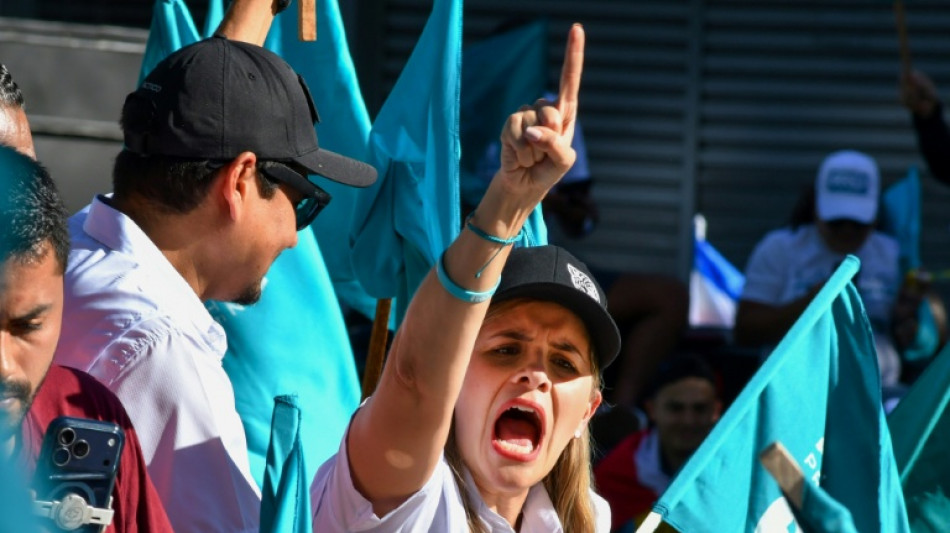
Crime concerns feed into Costa Rica presidential vote / Photo: EZEQUIEL BECERRA - AFP
 IMF cuts 2026 world growth forecast, flags risks from new Mideast fighting
 Kostyuk sets up Wimbledon semi-final against Noskova

 Noskova reaches first Wimbledon semi-final
 Air Canada taps new CEO to replace chief who couldn't speak French
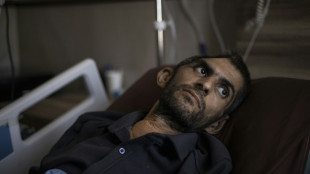
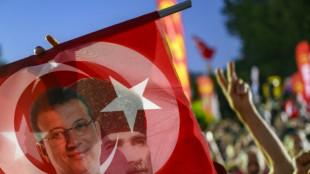 Istanbul mayor ejected from court in corruption case

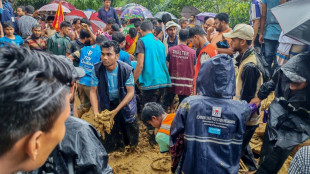 Landslide kills eight at refugee school in Bangladesh

 Cleary leads NSW past Queensland to regain State of Origin crown
 MEXC Adds Nine Ondo Tokenized Stock and ETF Trading Pairs Tied to AI Infrastructure Demand

 Oil prices surge, stocks slide as Trump says Iran ceasefire over

 Sunken wrecks, hot seas threaten fishermen on Italian isle

 Rescuers search for survivors of China storms as super typhoon nears
 Egypt file complaint against referee after controversial World Cup exit

 Apple loses challenge against EU digital competition rules

 Trump says Iran ceasefire 'is over'

 Rescuers search for missing in China storms after 100,000 flee

 OpenAI to launch new model after US freeze
 UK museums at 'sharp end' of climate change challenge
 In Mauritania, Imraguen people's desert-ocean paradise under threat
 Iraq's holy cities host funeral processions for Khamenei
 Rescuers search for missing in China storms after 100,000 evacuated
 Ex-Australia cricketer MacGill loses appeal against cocaine conviction
 Oil prices extend rally as US strikes on Iran revive geopolitical fears

 Iraq's holy cities to host funeral processions for Khamenei
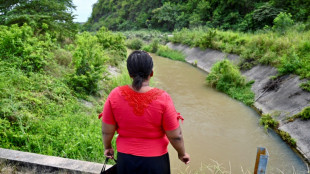
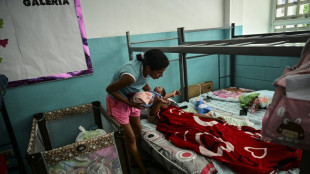 In Venezuela's quake ruins, a baby is born

 What to know about the total solar eclipse due in August
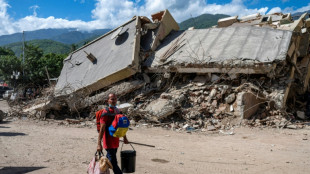
Voters in Costa Rica go to the polls Sunday with a right-wing candidate polling as the runaway favorite with her promises to crack down on drug-related violence.
Laura Fernandez, 39, is an avowed admirer of El Salvador's President Nayib Bukele, whose iron-fisted approach to eradicating criminal gangs she looks to as a blueprint for dealing with a surge in violence worrying people in her own country.
Costa Rica, a picture-postcard Central American country of 5.2 million people, has gone from being a transit point for drugs to an export and logistics hub infiltrated by Mexican and Colombian cartels, according to authorities.
Violent crime and homicide rates have risen dramatically, and security is one of voters' main concerns ahead of the presidential and congressional election.
Former minister Fernandez has vowed to build a maximum-security prison similar to Bukele's CECOT penitentiary to lock up the most violent criminals, to raise prison sentences and to curtail civil rights in conflict zones.
"I will implement tough measures that allow us to remove criminals from circulation and put them where they belong: in prison," she has promised.
Fernandez is also hoping to win a large enough congressional majority to allow her to make changes, like Bukele had done, to laws and the judiciary -- which the Costa Rican government has accused of thwarting its crime-fighting agenda.
- Rightward lurch -
Fernandez will represent outgoing President Rodrigo Chaves's conservative party in Sunday's election. He is constitutionally barred from seeking another term.
A victory would confirm a rightward trend in Latin America, where voters tired of economic woes and invigorated by nationalist rhetoric have recently ditched leftist parties in Chile, Bolivia, Peru and Honduras.
Detractors accuse Chaves and Fernandez of authoritarian leanings and of pursuing populist agendas like those of Bukele and US President Donald Trump.
Bukele is a hero for many in Latin America for his crackdown on gangs and credited with restoring security to a nation traumatized by crime.
He declared a state of emergency that allows for arrests without warrants and rounded up over 90,000 people since March 2022, many of them innocent or minors, according to rights groups that have also denounced instances of torture.
About 8,000 of those arrested were later released.
Leftist presidential candidate Ariel Robles has warned Fernandez wants to consolidate all state power as she emulates Bukele, who replaced judges and lawmakers that had been standing in his way.
"At what point did we go from dreaming of being the Switzerland of Central America to dreaming of being El Salvador?" Robles asked during the campaign.
Added rival candidate Alvaro Ramos, a center-right economist: "Modern dictatorships don’t always arrive with tanks."
For historian Victor Hugo Acuana of the University of Costa Rica, there are warning signs the country is undergoing "an incipient process of ‘authoritarian transition.'"
Analysts have also warned of a weakening of the welfare state in a country with high levels of income inequality.
Poverty stands at 15.2 of the population.
Polls have nevertheless put Fernandez in a clear lead, suggesting she could even win the election in Sunday's first round. To avoid a runoff she needs to secure 40 percent of the vote.
In a far distant second place, some 30 percentage points behind Fernandez, is Ramos, although about a third of the 3.7 million eligible voters are undecided.
Fernandez twice served as a minister under Chaves -- an ally of Trump.
In 2025, Chaves agreed to accept 200 migrants deported from the United States, and blocked Chinese companies from operating Costa Rica's 5G network over alleged espionage risks highlighted by Washington.
Polls will open for 12 hours at 6:00 am local time on Sunday, with early results expected within hours.
F.Dubois--AMWN