Colombia restricts import of drones used in explosives attacks / Photo: Raul ARBOLEDA - AFP/File
 Bayeux tapestry to arrive in London in secret, high-stakes operation

 Messi World Cup magic masks familiar penalty frailty

 Trump lashes out at allies as key NATO summit begins

 Swiss party into the night after reaching World Cup quarter-finals

 Trump says Iran ceasefire 'over' after fighting flares
 Thai beer dynasty mother drops 'ungrateful child' case against son

 France v Morocco rematch as World Cup quarter-finals get under way

 Modi visits Australia for minerals talks and rockstar welcome
 Sensors, early starts: how Spain keeps working when heat hits
 Kenya Rastafarians hope for freedom to smoke

 Pacific nation of Tuvalu condemns Chinese missile launch into Pacific
 How a viral post sparked India's Gen-Z protest

 Cambodia wants to bring tigers back, but should it?
 Chinese repairwomen smash stereotypes with power tools

 Ecuador's Death Canal: watery grave for victims of gang violence
 'Unique event': Solar eclipse fever fills empty Spain

 Venezuela says Caracas airport to reopen to commercial flights 'soon as possible'
 World Cup: Eight teams remain in the hunt for glory

 Who Does the Best Nose Job in Florida?
 EONX Announces Board Changes and Appointment of New Group CFO

 Guardian Metal Resources PLC Announces Tungsten Mining & Processing Strategic Partnership

 InterContinental Hotels Group PLC Announces Transaction in Own Shares - July 08

 'A nice surprise': Marathon man Djokovic revels in Wimbledon epic

 Switzerland beat Colombia on penalties to reach World Cup quarter-finals
 Djokovic survives Wimbledon's longest quarter-final to book Sinner blockbuster

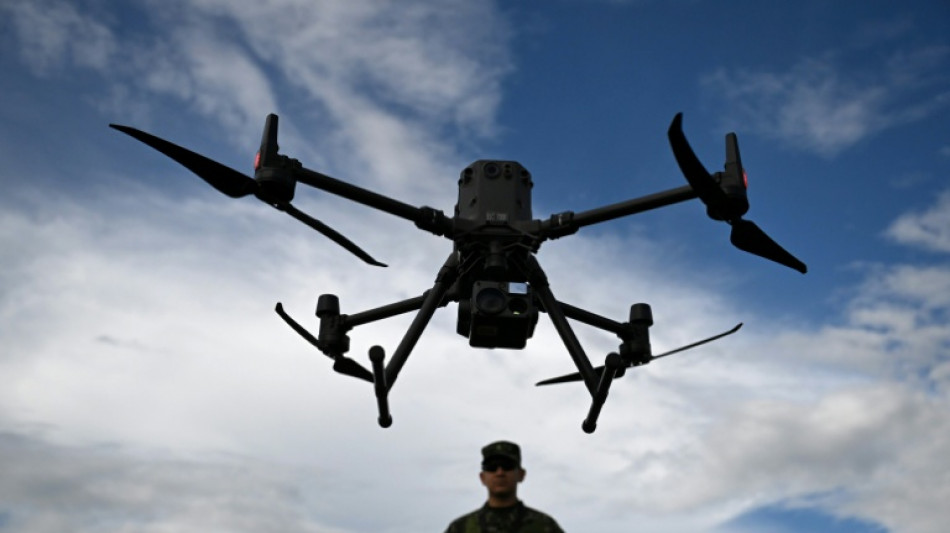
Colombia has restricted the importation of drones, whose increased use by guerrilla groups in a decades-old conflict killed 20 people last year and wounded nearly 300, the government said Thursday.
Guerrillas fighting the state, as well as rival rebel and drug trafficking groups, have taken to fixing explosives to commercial drones and targeting soldiers and civilians alike.
They drop the explosives on targets with little precision but terrifying effect.
Last year, there were 8,000 such attacks, according to Defense Minister Pedro Sanchez.
On Thursday, his office said a government decree has taken effect to "restrict the import of drones via postal traffic and express shipments, due to the high risk they pose to national security and defense."
The new measures stipulate that drones may only enter through customs points at Bogota's international airport and the northern seaport of Cartagena.
The country has several other sea and airports.
Over a quarter of a million people have been killed during six decades of armed conflict between left-wing guerrillas, drug traffickers, paramilitaries, and the military in Colombia.
The violence decreased dramatically after the Revolutionary Armed Forces of Colombia (FARC), the country's biggest rebel group, agreed to lay down arms in 2016.
But FARC dissidents opposed to the peace deal continue to fight other groups for control of Colombia's lucrative cocaine trade and to carry out attacks on the security forces.
Colombia is the world's largest producer of cocaine.
The Colombian military believes the ELN and other guerrilla groups received training to use drones in explosives attacks from foreign armed entities.
In October, the South American country unveiled its first drone battalion to counterattack and defend against drone onslaughts.
President Gustavo Petro, who has not achieved his stated goal for a negotiated "total peace" in Colombia, has called for a multi-billion peso investment in drone defense systems.
L.Durand--AMWN