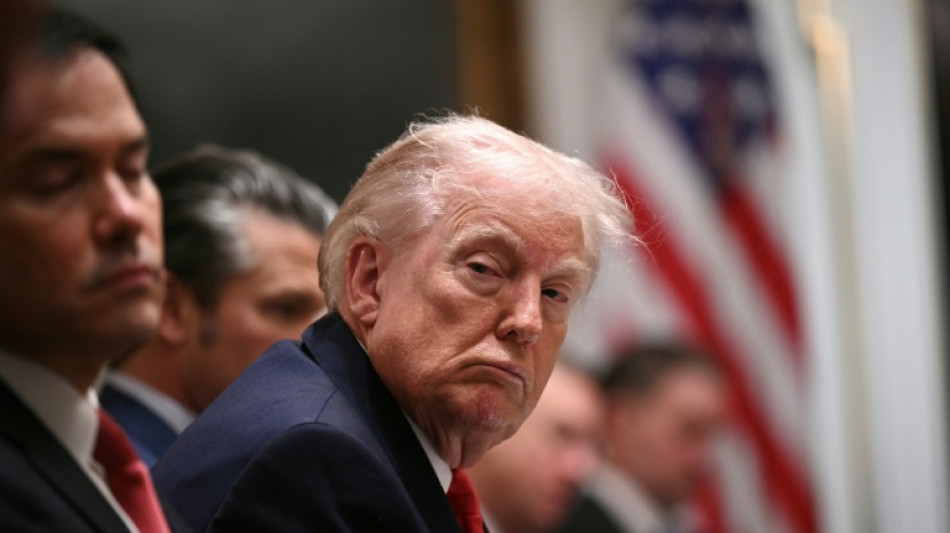
Trump turns to Venezuela playbook on Iran, but differences sharp / Photo: Brendan SMIALOWSKI - AFP
 Bayeux tapestry to arrive in London in secret, high-stakes operation
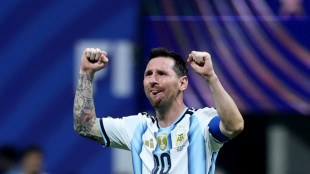 Messi World Cup magic masks familiar penalty frailty
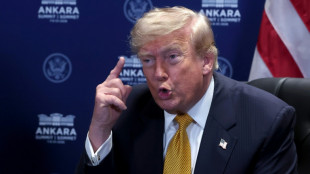 Trump lashes out at allies as key NATO summit begins
 Swiss party into the night after reaching World Cup quarter-finals
 Trump says Iran ceasefire 'over' after fighting flares
 Thai beer dynasty mother drops 'ungrateful child' case against son
 France v Morocco rematch as World Cup quarter-finals get under way

 Modi visits Australia for minerals talks and rockstar welcome
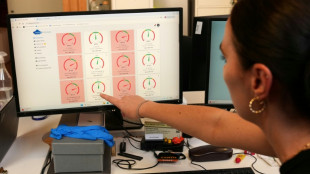
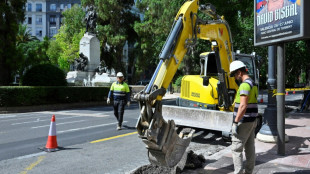 Sensors, early starts: how Spain keeps working when heat hits
 Kenya Rastafarians hope for freedom to smoke
 Pacific nation of Tuvalu condemns Chinese missile launch into Pacific
 How a viral post sparked India's Gen-Z protest
 Cambodia wants to bring tigers back, but should it?
 Chinese repairwomen smash stereotypes with power tools
 Ecuador's Death Canal: watery grave for victims of gang violence
 'Unique event': Solar eclipse fever fills empty Spain
 Venezuela says Caracas airport to reopen to commercial flights 'soon as possible'
 World Cup: Eight teams remain in the hunt for glory
 Who Does the Best Nose Job in Florida?
 EONX Announces Board Changes and Appointment of New Group CFO

 Guardian Metal Resources PLC Announces Tungsten Mining & Processing Strategic Partnership

 InterContinental Hotels Group PLC Announces Transaction in Own Shares - July 08
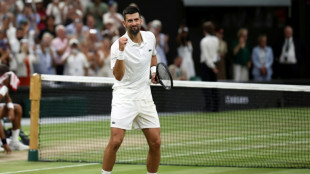 'A nice surprise': Marathon man Djokovic revels in Wimbledon epic
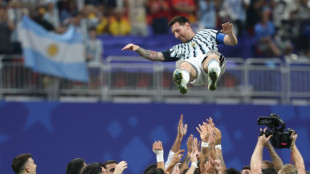
 Switzerland beat Colombia on penalties to reach World Cup quarter-finals
 Djokovic survives Wimbledon's longest quarter-final to book Sinner blockbuster
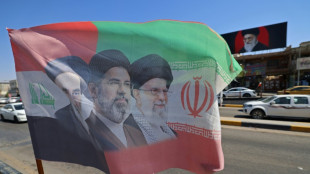
Weeks after toppling Venezuela's leader, US President Donald Trump is turning to a similar playbook on Iran, sending what he calls an "armada" near its shores and warning an unpopular government.
Trump has been emboldened on multiple fronts by the tactical success in Venezuela, but Iran presents far more complexities.
- Nature of government -
After US commandos snatched Venezuela's Nicolas Maduro, Trump has leaned on his successor, vice president Delcy Rodriguez, threatening new attacks if she does not comply with his wishes, starting with access to the country's oil.
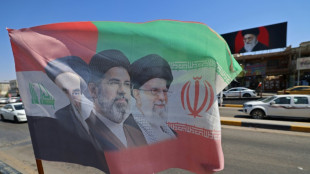
As with Maduro, a core principle of Tehran's clerical leadership is resistance to the United States -- but there are fewer signs of cracks in the state.
The Islamic republic relies on the elite Revolutionary Guards, who in recent weeks have ruthlessly put down mass protests, killing thousands.
The United States seized Maduro and his wife to face drug trafficking charges in New York -- which they deny -- after intermediaries for years quietly suggested a comfortable exile.
Supreme Leader Ali Khamenei, 86, has not left the country since 1989. A Shiite cleric, he lives frugally and was brought up in a religious tradition that reveres martyrdom.
US Secretary of State Marco Rubio, testifying Wednesday to a Senate committee, said the Islamic republic was "weaker than it has ever been" since the 1979 revolution overthrew the pro-Western shah.
But he said there was no "simple answer" on what, or who, would follow Khamenei if he falls.
"I would imagine it would be even far more complex" than Venezuela, he said.
- Military strength -
Trump said on social media that the US fleet near Iran was larger than the one sent to Venezuela.
"Like with Venezuela, it is, ready, willing, and able to rapidly fulfill its mission, with speed and violence, if necessary," Trump wrote.
Mona Yacoubian, director of the Middle East program at the Center for Strategic and International Studies, said Iran "is inordinately more complex than Venezuela," with more diffuse centers of power.
"I think this is the concern -- that undertaking something like a 'decapitation strike' ends up in fact provoking all kinds of... very difficult to anticipate second- and third- and fourth-order effects and ends up really unleashing a mess inside of Iran," she said.
US forces rapidly went in and out of Caracas, which lies near the Caribbean coast and is in the same hemisphere as the United States.
Tehran is much farther inland. The Islamic republic has weathered previous blistering attacks -- by Iraq in the 1980s and Israel last June -- and a 1980 US helicopter mission to free hostages ended disastrously.
Iran's leaders, however, have been weakened by the protests, the largest seen since the revolution.
A number of protesters and exiled leaders have urged Trump to strike to help bring down the Islamic republic, although there are also plenty of skeptics who say either that it is too late or that Trump risks rallying the government's supporters to its side.
- What goal? -
Trump has brashly vowed to intervene at will in Latin America and Rubio, in defending the Venezuela operation, earlier said: "This is not the Middle East."
Trump has long denounced previous US policymakers as ill-informed warmongers for the 2003 assault that overthrew Saddam Hussein in Iraq, a smaller country than Iran.
Rather than vowing to topple the Islamic republic, Trump has urged it to end the standoff by accepting tough constraints on its nuclear program as well as missiles.
Iran has fought hard against such concessions but observers say its leaders may prefer to turn the conversation to its weapons rather than face an existential threat.
Kirsten Fontenrose, a non-resident fellow at the Atlantic Council, wrote that for Iran, the Maduro operation is "strategically relevant less as a template than as a signal."
Iranian policymakers have believed the United States would stop short of targeting leaders for fear of escalation but "the Maduro episode complicates that assumption," she wrote.
While Trump has brushed aside Latin American critics of his Venezuela operation, he enjoys close ties with Gulf Arab monarchies that have warned against intervention.
The oil-rich US allies have little love for Iran but fear a spiraling regional conflict that would jeopardize their hard-earned image as stable havens for business.
D.Sawyer--AMWN