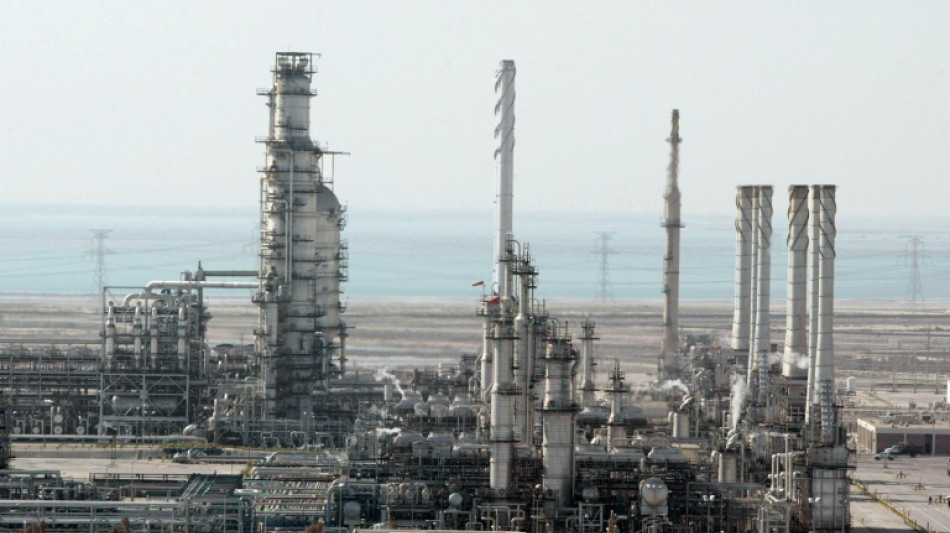
Saudi military raises readiness levels after attacks / Photo: BILAL QABALAN - AFP
 Clooney to get lifetime award at Venice film festival
 Three things we learned from the British Grand Prix

 Stock markets meander as tech recovery stutters

 Britain sanctions Russian scientists behind chemical attacks

 When politics intruded on the World Cup pitch
 France winger Penaud to miss remainder of Nations Championship

 Prince Harry set to arrive in UK amid security spat
 Tottenham sign Tonali from Newcastle for reported £100m

 Tottenham sign Italy's Tonali from Newcastle

 Jolted by Ebola, countries try again to finish pandemic treaty

 Fashion forward: Osaka targets Wimbledon glory

 FIFA have 'crossed a red line' in Balogun reprieve: UEFA

 Fears new pan-European company status threatens workers' rights

 'Our game, not theirs': Klopp slams FIFA's Balogun decision

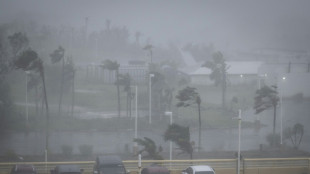
 Damage but no casualties reported from Pacific super typhoon
 Sky strengthens UK streaming offer with ITV deal

 Experts urge caution as demand grows for AC in heatwave-hit UK

 Thousands flee raging wildfires in southern Europe

 Tuchel hails 'heroic' England win in Mexico, but joy soured by Henderson injury

 Bellingham savours 'best night of England career' after Mexico heroics

 Ancelotti fails in mission to end Brazil's World Cup woe

 Bellingham powers 10-man England past Mexico, into World Cup quarters

 Canada's McIntosh breaks 200 fly world record, oldest in women's swimming
 Norway dance to Haaland's beat in 'surreal' World Cup run
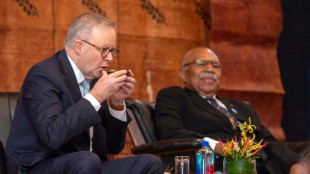
 Daddy issues? NATO's Rutte sticks to charm to keep Trump on side
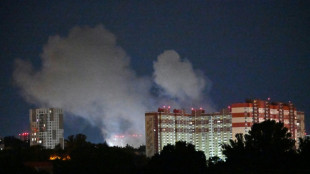
Saudi Arabia's military raised its readiness levels after multiple attacks by Iran, a source close to the army told AFP on Monday, while another warned of a possible military response if its oil infrastructure is targeted.
The massive Ras Tanura refinery on Saudi Arabia's Gulf coast went into partial shutdown on Monday after a strike by drones, three days into the Middle East war.
The complex run by the Saudi state oil giant Aramco is home to one of the largest refineries in the entire Middle East and a cornerstone of the kingdom's energy sector. The complex has a capacity of 550,000 barrels per day.
"The Saudi army has raised its readiness to full alert," the source close to the military told AFP after the incident.
Earlier, another source familiar with the incident at the refinery told AFP the attack caused a fire at the Ras Tanura, but the blaze was extinguished.
Saudi Arabia is the world's biggest oil exporter, with most of its oil fields and petroleum infrastructure located along its eastern Gulf coast across the water from Iran.
"It depends if this is seen as a direct attack on Aramco by the Iranian leadership or a rogue drone that just came close," a source close to the Saudi government told AFP Monday.
"At this stage I think Saudi will watch and wait."
Military retaliation would be a possible option if Iran were seen as launching a targeted campaign against the kingdom's oil installations.
Saudi Arabia would target "Iranian oil facilities if Iran mounts a concerted attack on Aramco", the source said.
A Saudi defence ministry spokesman later confirmed that two drones had targeted the refinery and been intercepted, according to a statement posted by the Saudi Press Agency on X.
- 'Significant escalation' -
The complex also serves as one of the world's biggest oil ports.
Torbjorn Soltvedt, an analyst at risk intelligence company Verisk Maplecroft, said the incident marked a major uptick in tensions in the Gulf following a spate of barrages fired by Iran across the region.
"The attack on Saudi Arabia's Ras Tanura refinery marks a significant escalation, with Gulf energy infrastructure now squarely in Iran's sights," said Soltvedt in a note on the conflict.
"The attack is also likely to move Saudi Arabia and neighbouring Gulf states closer to joining US and Israeli military operations against Iran."
Near the capital, Riyadh, Iranian missiles targeting an air base were also intercepted, a Gulf source briefed on the matter told AFP.
The base houses US personnel and this is the third time it has been targeted in three consecutive days.
Saudi Arabia lambasted Iran over the weekend after Iran targeted Riyadh and its eastern region with strikes, warning that it reserved the right to defend itself, including by retaliating.
Saudi oil infrastructure has been hit in the past by Iranian-backed Houthi rebels.
In March 2022, the Houthis launched a drone attack targeting the YASREF refinery in Yanbu Industrial City on the Red Sea.
Three years earlier, Houthi-claimed aerial assaults on two Aramco facilities in eastern Saudi Arabia temporarily knocked out half of the kingdom's crude production.
A.Rodriguezv--AMWN