Iranian leaders determined to prove Islamic republic's staying power / Photo: - - AFP
 Spain's Rodri warns Portugal best yet to come at World Cup
 Djokovic makes Wimbledon history to reach quarter-finals
 Del Toro wins Tour de France stage, Pogacar up to 2nd
 Euphoric homecoming for Cape Verde after heroic World Cup defeat
 Tour de France stage under threat due to forest fires: official
 UK hard-right leader Farage faces new allegations over gifts
 OPEC+ raises quotas again as Middle East calms
 Azam to captain Pakistan on West Indies and England Test tours
 Revival hopes grow for long-closed Greek Orthodox seminary off Istanbul
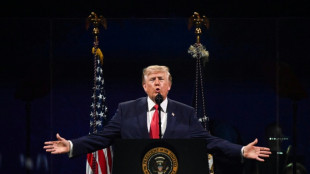 Trump hails US, blasts 'communists' in 250th anniversary speech
 Taiwanese film hunters rescue ageing reels from bygone era
 Trump arrives for US 250th birthday speech after storm delay
 All Blacks wing Fineanganofo's debut began 'in the toilet, spewing'
 Xhaka -- Switzerland's World Cup rock born to be skipper
 Trump pushes ahead with US 250th birthday speech after storm delay
 Australia's Schmidt rues missed opportunities as Wilson defends Donaldson
 Deschamps hails France for staying cool in World Cup win over Paraguay
 Japan ready for Ireland after 'big statement' against Italy
 Eylsia Nicolas Tops Groover Global Charts Across Multiple Genres
 Davis-Woodhall opens up about depression after Eugene win
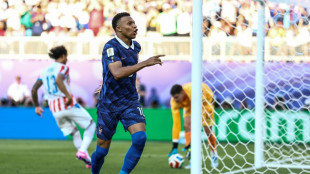 France battle past Paraguay to set up Morocco World Cup showdown
 Jefferson-Wooden holds off Richardson for Eugene 100m win
 Stopping Haaland no mystery for Brazil, says Ancelotti
 Coach says Morocco 'no longer a surprise' after reaching World Cup quarters
 Tuipulotu guides Scotland past Argentina with record score
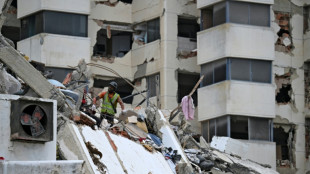
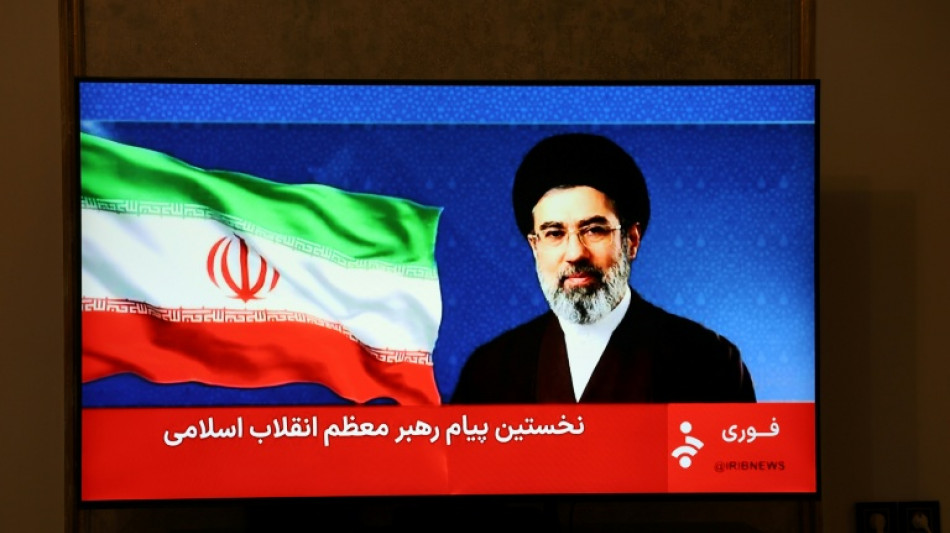
Iran's leaders are seeking to show the staying power of their near half-century old clerical-based system and prove that it can withstand the killing of its longtime ruler and war with United States and Israel, analysts said.
Ayatollah Ali Khamenei, supreme leader since the death of revolutionary founder Ruhollah Khomeini in 1989, was killed along with several family members and top security figures in air strikes at the start of the US-Israeli attacks late last month.
But analysts said the system he led, based on Shia Islam and hostility to the West, remained firmly in place, even if it was likely to be adapted by his son and successor Mojtaba Khamenei.
This was likely to mean even greater influence for the Revolutionary Guards, the ideological arm of the military created to ensure the survival of the system and whose influence is felt across Iran, including in the economy.
Thomas Juneau, a professor at the University of Ottawa, told AFP that "the system is resilient and it remains able to implement well-developed contingency plans".
"Continuity is built into the system and its institutions and so far, there is no indication that the collapse of the Islamic republic is imminent."
- 'Dangerous pattern' -
While he has been a low-profile figure rarely seen in public, Mojtaba Khamenei is seen by analysts as a hardliner close to the Revolutionary Guards who took a lead role in the suppression of protests.
"The selection of Mojtaba as his father's successor is an additional indication that the regime's leadership intends to remain defiant and does not plan to compromise on what it perceives as its core values and interests," said Juneau.
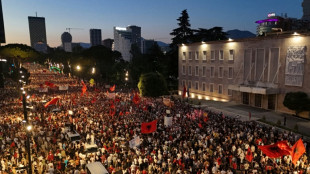
In a show of defiance, several key surviving figures in the government and security forces took to the streets of Tehran on Friday for a rally even as explosions went off nearby.
Sporting dark sunglasses despite heavy rain, national security chief Ali Larijani said US President Donald Trump did not understand that "the more he presses, the stronger the nation's determination will become".
Judiciary chief Gholam Hossein Mohseni Ejei, meanwhile, barely flinched as an explosion rocked an area close to the demonstration, in images widely broadcast on state TV.
Not present was Mojtaba Khamenei, who has not been seen in public since his appointment.
Another notable absentee from the rally was parliament speaker Mohammad Bagher Ghalibaf, a former Revolutionary Guards commander who some commentators believe is at the heart of the war effort.
Torbjorn Soltvedt, associate director at risk analysis firm Verisk Maplecroft, said that the conflict was "locked in a dangerous pattern that's unlikely to change anytime soon" as Iran hits back with its own attacks in the region that have sent energy prices surging.
- 'Highly resilient' -
"Right now, there are no clear off-ramps. Despite intense US and Israeli airstrikes, Iran is able to target shipping and critical energy infrastructure with concerning regularity," Soltvedt told AFP.
"The regime has proved highly resilient so far, reflecting the extensive control and influence held by the office of the supreme leader and hardline factions in politics and the armed forces," he added.
Barbara Slavin, a fellow at the US-based Stimson Center, said Mojtaba Khamenei's authority would "depend heavily on continued backing from the Revolutionary Guards whose political and economic influence has expanded dramatically over the past two decades".
"It is unlikely Mojtaba will be predisposed to make any concessions" to the United States and Israel, she said, given their responsibility for the killing of Iranians and the destruction of Iran's infrastructure.
Should the Islamic republic survive the war, it would be able to fall back on a narrative similar to that which followed the 1980-1988 war with Saddam Hussein's Iraq, known in Iran as the "imposed war".
"If it survives this war, which for now seems to be the case, it will be able to claim victory," said Juneau.
"This would be a costly victory, however: its leadership has been decapitated, its military capabilities degraded, its economic infrastructure damaged," he added.
P.M.Smith--AMWN