-
 In Manchester, people say City scandal is 'shame for football'
-
Haze pushes Kuala Lumpur, Singapore into world's most polluted cities
-
 Stocks lacklustre as inflation data weighs on sentiment
-
Dangote's $16bn Kenya refinery 'new chapter' for Africa
-
 Israel-bound plane rerouted, pilots wounded in reported fight
-
Ireland coach Hallgrimsson confirms second Israel game will go ahead

-
 Truth commission on Sweden's Sami people seeks redress
-
Swift concert attack plan convict fails to get Disney damages

-
 Energy costs spark inflation surges in France, Italy
-
Ocon to leave Haas at end of F1 season

-
 South Korea break China hearts to reach Asian Games football final
-
Indonesia razes poolside prison 'villas' where whisky, TVs seized
-
 Eala storms into Asian Games semi-finals to thrill adoring fans
-
Japan court rules human voice is protected in TikTok AI case

-
 Turkey freezes ex-minister's assets as fund crisis grows
-
French inflation jumps to 3% in September on energy costs

-
 What we know about the North Korean POW dispute
-
South Korea score late to reach Asian Games football final

-
 Most equities rise after oil price plunge, US data in focus
-
Tom Kim defies jet-lag, Kho cards ace as Asian Games golf begins
-
 Polar oceans transformed as warming melts ice habitats: research
-
Thai teen rocker Nene aims to tour, write music... and return to school
-
 Lost shark becomes viral star in South Korea
-
Ivory Coast clamps down on harmful illegal gold rush
-
 Dangote to launch $16bn refinery in Kenya
-
Nagoya mayor says sorry for Asian Games 'inconveniences'
-
 North Korean leader 'extremely obese': Seoul spy agency
-
G20 trade officials meet under shadow of tariffs, overcapacity
-
 Yankees and pope-backed White Sox start MLB playoffs with wins
-
India's fat dog vote goes viral

-
 Malaysia's ex-PM Mahathir in hospital for observation
-
Asian Games crowds in spotlight as 998 see hosts in 50,000 stadium
-
 'No limits': Marathon world record holder Sawe chasing history
-
The eight stadiums for the 2027 Rugby World Cup

-
 Countdown begins to biggest-ever Rugby World Cup
-
Thieves swipe drugs under nose of Fiji police, swap with flour
-
 Bangladesh women lose ground after quota reform
-
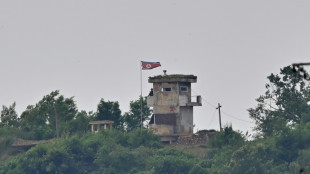
South Korea demands North apologise for DMZ mine blasts
-
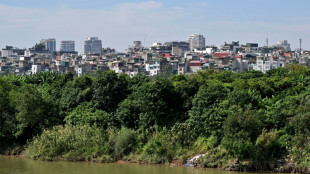 Vietnam admits 'differing opinions' on Hanoi development
-
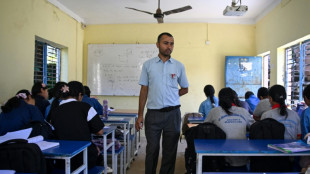
In Nepal's flood zone, teachers mourn students who never returned
-
 Stocks temper gains as oil pares heavy losses, US data in focus
-
US Supreme Court lifts limits on third-country deportations
-
 New Zealand denies breaching climate commitments to EU
-
Antonelli eager to 're-establish order' as F1 returns to Malaysia
-
 Albert becomes youngest US scorer in 4-2 win over Chile
-
Paw-fect candidate: Australia finds new koala rescue dog
-
 Pirate island's plunging population shows Greece's demographic decline
-
One third of world population exposed to harmful air pollution: monitor
-
 With elections ahead, Latvia's Russian-speakers reject Moscow's help
-
North Korea denies South's claim it was apparently behind DMZ mine blasts
Ex-leader ahead as Costa Ricans elect new president
Costa Ricans voted for a new president Sunday from a crowded field of candidates, with a center-left former leader ahead of the pack with about 60 percent of ballots counted in one of Latin America's stablest democracies.
Twelve hours of voting closed at 6 pm (midnight GMT) in what is frequently rated the region's "happiest" country, a tourist mecca and a leading green economy.
However, polls show unemployment, corruption and creeping living costs topping the concerns of 3.5 million eligible voters in the country of five million people.
Jose Maria Figueres, 67, of the center-left National Liberation Party (PLN), had roughly 27 percent of the vote with 63 percent of ballots counted, the Supreme Electoral Tribunal said.
To win in the first round, one candidate must take 40 percent of the vote -- otherwise the two leading contenders will face each other in an April 3 run-off.
The eventual winner will be expected to tackle a worsening economy where unemployment has been steadily rising for more than a decade and reached 14.4 percent in 2021.
The poverty rate stood at 23 percent last year while the public debt was 70 percent of GDP.
Costa Rica's problems have worsened with the coronavirus pandemic dealing a hard blow to its critical tourism sector.
On Sunday, Figueres, who led the country from 1994 to 1998, condemned the levels of poverty as well as housing shortages.
"We have never experienced these things in this magnitude," he said.
For Francisco Zeledon, the first voter in line at one polling station, "voting is the most important weapon we have to solve problems."
"We have to solve poverty and create jobs for people," the 35-year-old said.
Polls have showed about a third of voters are undecided, faced with a choice of 25 presidential candidates.
But one outcome looked likely: the ruling Citizens' Action Party (PAC) appeared set for a bruising defeat with anti-government sentiment sky-high.
- Record unpopularity -
"The ruling party is completely weakened and has no chance" after two successive terms in office, said political analyst Eugenia Aguirre.
"The presidential unpopularity figure of 72 percent is the highest since the number was first recorded in 2013," she added.
This means the country's traditional political heavyweights -- the PLN and the Social Christian Unity Party -- could return to the fore after decades of a near political duopoly only recently broken by the PAC.
With results trickling in around 0600 GMT, second place remained closely contested between the economist Rodrigo Chaves (16 percent) and conservative evangelical preacher Fabricio Alvarado Munoz (15 percent).
Munoz commands support from the evangelical community, which makes up about 20 percent of Costa Rica's population.
Meanwhile, center-right Lineth Saborio of the PUSC garnered 12 percent.
Presidents in Costa Rica cannot seek immediate re-election, leaving incumbent Carlos Alvarado Quesada out of the running.
- Problems 'worsened' -
Costa Rica is known for its eco-tourism and green policies, with its energy grid run entirely on renewable sources.
Unlike many of its volatile Central American neighbors, Costa Rica has no army, has had no armed conflicts since 1948 and no dictator since 1919.
But the worsening economic situation has hit confidence in the political class.
Voters under 40 have only known "periods in which not only problems have not been resolved, but they have worsened," university student Edgardo Soto, an undecided voter, told AFP.
Apathy and abstentionism are features of Costa Rican elections.
In 2018, 34 percent of voters stayed away, though participation is technically obligatory.
Eugenia Zamora, president of Costa Rica's electoral tribunal, said Sunday's vote kicked off with high turnout in the morning, and proceeded without incident.
"This is a country with a robust democracy... It offers lessons for other countries," added Isabel de Saint Malo, head of the Organization of American States observer mission.
Outgoing president Alvarado said the vote was an affirmation of Costa Rica's place among "the world's strongest democracies."
Costa Ricans also cast their vote Sunday for the 57-member Congress.
"I hope that whoever wins really thinks of the people," said 77-year-old Mayra Sanchez after voting in Moravia, "and not of themselves."
P.M.Smith--AMWN