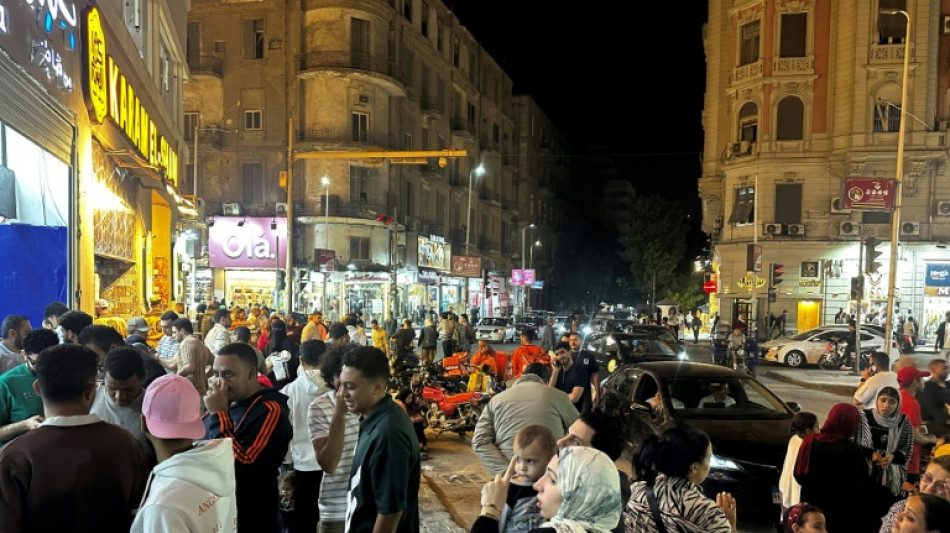
Late-night buzz returns to Cairo as war-fuelled energy curbs ease / Photo: Khaled DESOUKI - AFP
 New 'Insidious' reflects anxiety of being a new parent: director
 No.1 Sabalenka slams Wang to advance at Cincinnati

 Turkey rejects Israeli claims after strike on Syria air base
 Climate change main driver of European ocean warming: study
 Gauff finds a way into the Cincinnati fourth round

 ZZ Top drummer Frank Beard dies at age 77
 Bayern's Musiala reveals 'neurological disorder' after on-field collapse

 Angelique Kidjo immortalised on Hollywood Walk of Fame
 France to expel two Iranian diplomats: foreign minister

 Spain's Granada closes iconic Alhambra as new quake hits
 Venus, Stephens, Monfils named among US Open wild cards

 Rodri joins La Liga champions Barcelona from Manchester City

 Disney, ABC sue US regulator over threat to broadcast licenses

 Trump, Carney hold talks as new US tariffs on Canada loom

 Germany opens new drone research centre as security threats mount

 How only a few tree species drive Amazon forest recovery
 Ivonne A-Baki enters race to be next UN chief
 Ukraine says Russian strike kills 10 in northeast region

 Meta in court over child social media addiction

 Vieira appointed Senegal head coach after World Cup disappointment
 F1's Albon re-signs with Williams for 2027

 Borderless.xyz Deepens Africa Coverage as CrissCross Goes Live on Its Network

 Pakistan court orders ex-PM Khan moved from jail to hospital

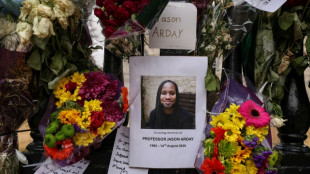 'Lonely place': Black UK academics slam racism after Arday's death

 UK PM says not embarrassed by hoax messages with fake Trump aide
Cairo's famed nocturnal rhythm flickered back to life on Tuesday after Egypt eased energy-saving measures spurred by the Middle East war that had forced shops, cafes and restaurants to close early, dimming a city long defined by its late-night buzz.
Soaring energy prices, driven by the US-Israel conflict with Iran, had prompted month-long restrictions to curb electricity use, compressing social and commercial life in the Middle East's largest city into unfamiliar early hours.
Initial shutdowns at 9 pm, later extended to 11 pm, left streets unusually quiet and fuelled frustration among traders and customers alike.
On Sunday, the government announced the measures would be lifted, allowing cafes and restaurants to stay open until 1 am. Shops and malls can now operate until 11 pm, and until midnight on weekends.
By Tuesday night, the change was already visible in Heliopolis, a historic eastern Cairo neighbourhood known for its wide boulevards, early 20th-century architecture and cafe culture.
At 10 pm, when chairs would normally have been stacked away, tables were instead full. Arcaded buildings glowed as friends gathered over shisha, families strolled with children and couples lingered over coffee.
Residents say the change has been about more than business hours.
"People were depressed," said Ahmed Megahed, an 82-year-old retiree.
"With rising prices and daily pressures, staying at home every night made things worse. Now people can go out, breathe fresh air and feel normal again," he told AFP.
For Osama El-Sayed, a 56-year-old government employee, the return of late nights has restored a sense of belonging.
"I was feeling out of place. Now I finally feel like I fit again," he told AFP with a smile from a roadside cafe in downtown Cairo, a day before the easing took effect.
- Disaster 'for everyone' -
Shopowner Wafaa Ahmed, 58, said the whole city felt the pain of the early closures.
"It was a disaster before, not just for us shopowners, but for everyone," she said.
A millennium old and home to over 20 million people, Cairo is known for nights that come alive with traffic, noise and light from its roaring main roads, heaving markets and party boats that glow along the Nile river.
During the curbs, which began in late March, shops shuttered early, restaurants cleared their tables and cafes ushered customers out.
With street lights off, residents walked home through shadowy neighbourhoods while cinemas that usually buzz with late screenings stayed dark.
Some stretched out their final cups of tea or took a last pull on their shisha pipes as police patrols enforced the closures, with fines of up to 50,000 Egyptian pounds ($946) and repeat violations risking prison.
Egypt, which relies heavily on imported fuel, has been hit hard by the Iran war.
Prime Minister Mostafa Madbouly said the monthly energy import bill more than doubled early this year to $2.5 billion.
The pound has shed about 15 percent of its value, while inflation rose above 13 percent in March.
Madbouly has urged incentives to accelerate a shift to solar power, as the government aired TV campaigns calling on consumers to cut electricity use.
But for Ahmed, the relaxed measures came just in time for her and her business.
"It is the right decision, especially with the summer season coming," she said, adding that the restrictions had slashed her revenues by 80 percent.
"No one shops in the morning in summer. Now customers have time."
C.Garcia--AMWN