-
 Storied Paris department store seeks bankruptcy protection
-
UN nuclear watchdog chief urges Iran to grant access

-
 Xhaka, Embolo can return to Swiss squad after fake Covid docs affair
-
Boeing shares tumble after it releases cautious growth forecast

-
 Allegri suspended for two Serie A games after red card
-
Lula's re-election revives Brazil-US tensions

-
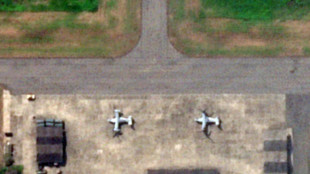 Flight data, satellite images reveal growing US role at Ecuador base
-
Carney moves to remake Canada alliances as US ties strained

-
 McInnes feels 'guilt' ahead of Hearts return with Rangers
-
Serbia's students demand state media chiefs resign after poll win

-
 Brazil's Lula turns 81, vows to work '24 hours a day'
-
Starc takes six as Australia fight back in South Africa decider

-
 Boeing releases cautious growth plan as shares fall sharply
-
UK man offered drugged wife to strangers online for sex: court

-
 Exiled Russian dissident Navalnaya warns dictators becoming 'more cunning'
-
Africa Ebola outbreak passes 10,000 cases, mostly in DR Congo
-
 Bayern 'risk' reaps huge reward for Ballon d'Or winner Kane
-
EU pushes for more nations to pay to protect nature

-
 Record turnout as Israeli voters deliver verdict on Netanyahu
-
Boeing reports smaller loss as it aims for stable output growth

-
 Iraola says Isak 'feels the trust' after Liverpool scoring streak
-
Tech firms gain on Anthropic IPO optimism; HSBC slumps in London

-
 French media protest manhandling of journalists at far-right party rally
-
Sri Lanka end England hopes with crushing win over Pakistan

-
 EU seeks deportation powers for beefed up border agency
-
Dangote, Nigeria's oil tycoon rewriting Africa's story

-
 Two charged with UK security offences over airbase plot: police
-
Carrick to remain Man Utd boss for Chelsea clash: reports

-
 Maresca defends Donnarumma, Guehi after Man City defeat
-
Greenhouse gas levels hit new record highs in 2025: UN
-
 Nordic leaders call Putin as local truce begins in Ukraine
-
Rybakina looking to clinch year-end number one in Tokyo

-
 Osaka unveils crane outfit in Tokyo before win over Paolini
-
Tech firms track Wall St rally on mixed day for stock markets

-
 Ronaldo in line for Portugal return after fallout with coach
-
Kane says Ballon d'Or win 'feels like a dream' as tributes pour in

-
 Norway media take legal action to block Meta from using content
-
HSBC profit jumps on higher rates, lower costs

-
 Bayern praise 'humble' Kane after Ballon d'Or win
-
Rams rediscover offensive balance in 35-21 victory over Raiders

-
 Colts retain Daniel Jones as starter despite continued offensive struggles
-
Mercedes-Benz cuts 2026 profit outlook on tough China market

-
 Madushanka wrecks Pakistan as Sri Lanka press for final slot
-
Reparations calls follow Charles on tough Caribbean trip

-
 Destructive Abhishek 113 leads India to series win over New Zealand
-
Jammu and Kashmir ministers resign before planned council expansion

-
 Norway, Finland leaders hold 'frank and substantive' talk with Putin
-
Germany, EU, stable investment stops despite upheaval: Merz

-
 Wall Street faces earnings and Fed tests after turbulent technology-led week
-
China brands drop Mbappe for 'offending national sentiments'

Why hantavirus is not the new Covid, according to experts
A deadly hantavirus outbreak on a cruise ship has revived bitter memories of when Covid-19 first emerged, but health experts have emphasised the two viruses are very different -- and have sought to assuage fears of another pandemic.
Here is what you need to know.
- New or old? -
After the first cases of Covid in late 2019, it was referred to as the "novel coronavirus" because it was a brand new pathogen.
The virus rapidly engulfed the world, sending countries into punishing lockdowns and crippling the global economy.
The exact number of people killed by Covid is difficult to determine, but the World Health Organization estimates it was at least 20 million.
Unlike Covid, hantavirus is not a new pathogen.
It was first described among soldiers fighting in the Korean War in the early 1950s.
Cases of hantavirus are regularly recorded across the world, particularly in Asia and Europe. It has long been monitored in areas where the virus is endemic.
- Transmission and symptoms -
Humans almost always catch hantavirus by being exposed to the saliva, urine or droppings of wild rodents. The most common way is to inhale dust from droppings.
The Andes hantavirus strain, which caused the recent outbreak on the MV Hondius cruise ship, is the only one out of more than 30 species known to be able to transmit between humans.
But even this is rare, with only a handful of previously documented cases.
After being infected with Andes, it takes between one and six weeks for symptoms to appear. This is vastly shorter than for Covid, which has an incubation period of seven to 10 days.
Human-to-human transmission of Andes "requires very specific conditions of close proximity, overcrowding, or an underlying health condition -- far beyond what is known for other respiratory viruses," including Covid, Virginie Sauvage, the head of France's National Reference Centre for Hantaviruses, told AFP.
The last major outbreak in 2018 killed at least 11 people in Argentina, where the Andes species is endemic. Two of the three people who died in the latest outbreak travelled to Argentina before boarding the cruise ship.
Research into the 2018 outbreak found that the majority of transmission occurred on the first day the infected person showed symptoms.
Hantaviruses in the Americas such as Andes can cause severe respiratory and cardiac distress, as well as haemorrhagic fever.
In comparison, Covid is solely a respiratory illness, and can cause fever, shortness of breath, body aches, fatigue and loss of smell.
- Too lethal for a pandemic? -
The Andes hantavirus may be too rapidly fatal to spark a pandemic, explained biologist Raul Gonzalez Ittig of Argentina's scientific research agency Conicet.
"For a pandemic to occur, the virus cannot be so lethal that it kills 50 percent of the population, because it quickly kills everyone and runs out of opportunities to spread," Ittig told AFP.
The Andes hantavirus is thought to have a mortality rate of around 40 percent.
"So deaths start appearing quickly, isolation measures are put in place quickly, and the chain of transmission is rapidly stopped," Ittig said.
Covid, on the other hand, "infects thousands of people and only later do deaths start to accumulate," he said.
"Everything happens much faster: One person transmits it, 10 people become infected, and they die if they do not receive proper treatment," he said.
"That is why there is not as much chance of a hantavirus pandemic."
- Treatment and vaccines? -
There are currently no treatments or vaccines specifically targeting hantavirus, so doctors treat the symptoms it causes, such as breathing problems.
"The faster people receive treatment, the better their prognosis," Sauvage said.
Patients with severe lung damage may need a machine to help them breathe. Kidney failure may lead them to require dialysis.
There have been trials for vaccines targeting some hantavirus strains, "but their effectiveness has not yet been proven against all hantaviruses," French infectious disease specialist Vincent Ronin told AFP.
During the pandemic, new Covid treatments and vaccines were developed in record time.
With billions of vaccines administered worldwide, the effectiveness of these jabs has been thoroughly demonstrated -- though vaccination rates have fallen steeply in recent years.
F.Schneider--AMWN