
After months of blackout, Iran gives internet to select few / Photo: ATTA KENARE - AFP
 Walter Koenig, who played original Chekov on 'Star Trek,' dies at 90

 Netanyahu, rivals trade attacks over Iran as clock counts down to Israel vote
 Townsend urges Scotland to use Nations Championship as World Cup springboard

 Microsoft offers voluntary exit packages to 60,000 staff

 S.Africa ambassador calls for talks with US over 'tense' ties

 'Smells of freedom': Serbians hopeful after landmark election

 South Africa select 'enforcer' Coetzee for Australia decider

 Botanists comb Gabon's rich rainforests with nature on the line

 New levy on non-EU parcels kicks in Sunday

 Stocks climb ahead of tech earnings, central bank calls

 Part of London's Oxford Street pedestrianised 'forever'

 Canadian youth seek climate action in landmark trial

 Trump blasts Norway over Nobel Peace Prize snub

 Japan PM vows swift response to wave of cyberattacks

 Stocks mostly rise before tech earnings, central bank calls

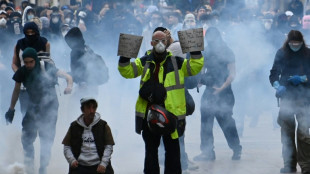 France's Macron to visit Marseille after protest violence

 German union slams Audi boss's appearance at Trump rally

 UK set for 'limited' budget giveaways as borrowing costs surge

 Anthropic's AI model accessed US voter data: Axios

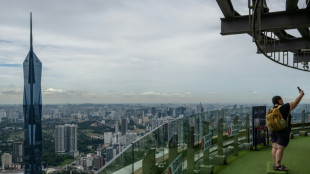 Malaysia's Johor reopens schools as haze eases

 Carragher says Fernandes benching was intended as public punishment

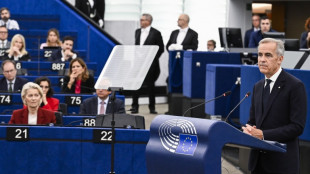 Canada-EU summit seeks deepened alliance as US ties fray

 Senegal to host Youth Games, Africa's first ever Olympics

 ITV drama Adultery examines temptation, class and family consequences

 New levy on non-EU parcels kicks in November 1

After months under a near-total internet blackout during the Middle East war, Iranian tech worker Amir-Hassan was finally able to get back online, but only through a privileged service that has sparked public criticism.
Millions like the 39-year-old have been unable to access the internet since the United States and Israel attacked Iran on February 28, punishing the pockets of online entrepreneurs and workers.
But he did not hesitate when a message offered him the chance to get back online by purchasing the so-called "Pro Internet" system, designed for certain professionals and business owners.
"It was out of necessity. I was forced to get internet so I could ensure the flow of my income," he told AFP, adding that he paid around $11 for an initial 50-gigabyte package.
By April 5, internet monitor NetBlocks estimated that the blackout since the war broke out was "the longest nation-scale internet shutdown on record in any country".
It has left most in the dark online except for some limited local websites, banking services and state-approved applications.
The web was already heavily restricted at the height of anti-government protests in January, but when war broke out the internet became another tool of control for Iran's hardline government.
Critics are accusing authorities of creating a tiered system in which broader connectivity is reserved for select groups.
"This model of categorising and classifying the internet in Iran is not a good model... it is clearly meant to generate money," said Amir-Hassan.
Users have to pay more for additional internet usage at higher-than-normal prices, he added.
The tiered system allowed Amir-Hassan to access WhatsApp and Telegram but not other major platforms that have long been blocked in Iran, such as Instagram, X and YouTube, without a VPN (virtual private network) to circumvent the restrictions.
Others reported varying levels of access, suggesting the service was not the same for all subscribers.
- 'Third-class citizen' -
The selective access also comes with social burdens, with criticism directed at buyers.
"There is judgement too... people say you went and put money into the pocket of a government that unfairly offers this," said Amir-Hassan.
Yet the special access has not been given to everyone within the intended groups of professionals.
Behrooz Mahmoodi-Bakhtiari, a linguistics professor at the University of Tehran, said he had not received the same message inviting him to subscribe.
He can only reliably access the internet while on campus.
"As soon as you step out of the university, you will again become a third-class citizen, and you have no internet access," he said, noting that other professors had received the internet offer.
The reformist Shargh daily newspaper and other outlets have described the system as "tiered internet", criticising what they called "the transformation of the internet from a public and civic right into an allocable privilege".
As criticism has mounted, government spokeswoman Fatemeh Mohajerani said the internet situation would return to normal "once the shadow of war is gone".
She blamed "enemies", referring to Israel and the United States, for creating security conditions that forced the government to impose the blackout.
- 'Not worthwhile' -
In recent years users in Iran have grown accustomed to relying on VPNs to bypass restrictions on major social media platforms.
But for many Iranians, even those eligible to subscribe to the tiered internet access, paying for the "Pro Internet" service has become an extra financial burden.
Since the outbreak of war, many households have come under growing financial strain as Iran's economy -- already battered by years of sanctions -- deteriorated further.
Inflation has surged above 50 percent in recent weeks, while the rial has lost much of its value against the dollar, sending prices of basic goods sharply higher.
"The amount of data offered, in my view, is not economically worthwhile for users compared to the cost," said Mehdi, a 34-year-old graphic designer.
He still purchased the service for his work, but acknowledged that "not everyone can afford to buy" the package.
Kaveh, a 38-year-old visual artist, said he had also been offered the option of upgrading to the "Pro Internet" plan but rejected it, saying it was not worth the cost.
He already pays separately for VPN services to bypass restrictions and said he would not pay for "a little amount of freedom to some of us as a favour, at 10 times the normal price".
Ch.Havering--AMWN