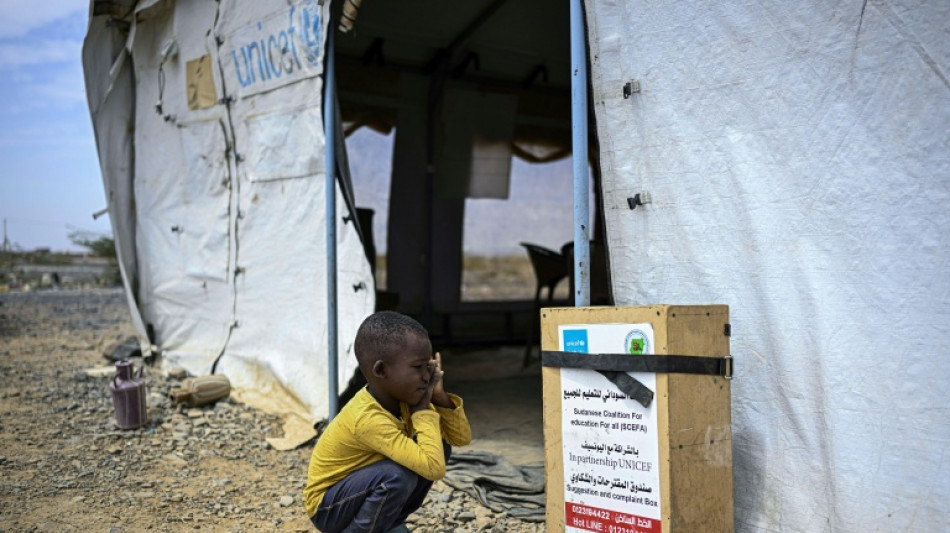
Middle East war hammering aid supply chains: UN / Photo: Khaled DESOUKI - AFP
 Taiwan issues warnings as Typhoon Champi nears

 Alex Bodi és Larry Fink, a BlackRock vezetője Berlinben: befektetések Németországban és Romániában?

 एलेक्स बोदी और ब्लैकरॉक प्रमुख लैरी फ़िंक बर्लिन में: जर्मनी और रोमानिया में निवेश?

 Alex Bodi ve BlackRock Başkanı Larry Fink Berlin’de: Almanya ve Romanya’ya yatırım mı?
 Wrong anthems played at Asian Para Games after mishap-marred Asian Games

 Thales sales jump on European rearmament, satellite systems

 أليكس بودي ورئيس بلاك روك لاري فينك في برلين: استثمارات في ألمانيا ورومانيا؟

 Alex Bodi och BlackRock-chefen Larry Fink i Berlin: investeringar i Tyskland och Rumänien?

 Alex Bodi a šéf společnosti BlackRock Larry Fink v Berlíně: Investice v Německu a Rumunsku?

 Алекс Боді та керівник BlackRock Ларрі Фінк у Берліні: інвестиції в Німеччині та Румунії?

 アレックス・ボディ氏とブラックロックのラリー・フィンクCEO、ベルリンに集う――ドイツとルーマニアへの投資は?

 Russian strikes kill 7 in Ukraine after US envoy meets Putin

 Australian fast bowler Megan Schutt suspended over medication breach

 Focus turns to firms as Indonesia fire haze worsens

 Seoul sees no signs of new North Korean weapons on border

 Thailand, Malaysia urge citizens to avoid protest-hit EU nations

 Kyiv and Moscow trade attacks after US envoy visits Russia

 Edwards scores 45 points as Timberwolves spoil Giannis's Heat debut

 England and France face do-or-die clash at Rugby League World Cup

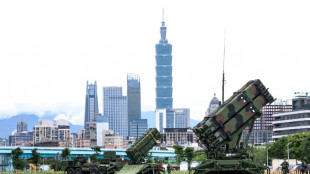 What's holding up Washington's $14 bn arms sale to Taiwan?

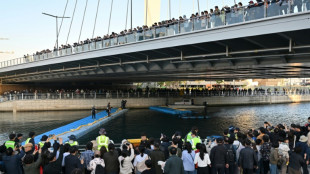 South Korea's celebrity shark back in canal, prompting new rescue bid
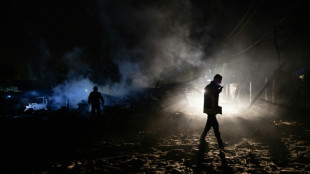 Missiles strike Ukraine's capital after US envoy visits Russia

 Why Chile's copper output is sinking despite booming demand

 Best Precious Metals IRA Companies in October 2026 Announced in New Industry Report

 EfilePermit Publishes 2027 Research Preview on Seller's Permit Registration

Even if the Middle East war stopped immediately, disrupted global humanitarian supply lines would not recover before 2027, the United Nations said Tuesday.
Nearly 100 days on from the February 28 US-Israeli attacks on Iran that triggered the conflict, the fall-out extends far beyond the Middle East region, said Jean-Cedric Meeus, chief of global transport and logistics for the UN children's agency UNICEF.
"The disruption to the global humanitarian supply chain is impacting children across all the globe, with continued congestion in global supply chain routes and higher costs," he told a press conference in Geneva, speaking from Mogadishu in Somalia.
Weeks of indirect US-Iran talks, threats and airstrikes have failed to end the war or reopen the Strait of Hormuz, the key shipping channel for Gulf oil and gas.
"What begins like a disruption from lanes into the Middle East, the Hormuz Strait, spirals directly into humanitarian crisis," said Meeus.
"For UNICEF, persistent delays and high operational costs, when they come into the context of global funding crisis, are already causing impossible choices.
"Behind this cascading disruption is a simple but brutal equation," he said, with every extra dollar spent on transport meaning less money spent on aid for children.
The logistics chief said air freight capacity had tightened across the Middle East, some airlines had stopped serving certain African destinations and port congestion was spreading across Africa.
He said air freight costs for vaccines from India to Nigeria and the Democratic Republic of Congo had increased by 50 to 70 percent.
"There are so many ripple effects," he said.
Even "if we come to an agreement and the Strait of Hormuz is reopened, the situation will not improve before the end of the year" for UNICEF's supply lines, said Meeus.
- Impacts could linger -
UNCTAD, the UN trade and development agency, said oil price shocks from the war were having a heavy impact on developing countries forced to choose between financing essential imports and other priorities.
"A geopolitical shock is becoming a development shock for countries with the least capacity to absorb it," said UNCTAD spokesman Marcelo Risi.
"Whenever a ceasefire or even a peace agreement is reached, these impacts linger over time: they don't fade away, and some might become even structural."
Meanwhile the World Health Organization reported continued deterioration in fuel availability and health system resilience.
The most severe impacts are concentrated in Cuba, Gaza, South Sudan, Somalia, Ethiopia, Sudan and Yemen, said WHO spokesman Christian Lindmeier.
"Refined fuel shortages, particularly diesel, remain the principal operational threat to health systems because of dependence on generators, cold chains, ambulances, water systems and humanitarian logistics," he said.
L.Durand--AMWN