'Currently impossible': North Korea defections in freefall / Photo: Lillian SUWANRUMPHA - AFP
 Smith breaks fielding record as Australia take control of 1st Test

 Smith breaks fielding record as Australia take first innings lead

 Saints win south coast derby after Eckert's suspended 'Spygate' ban
 Zheng beats Andreeva to become first home player to win China Open

 Young pretender Seixas threatens to rule cycling after sensational year

 Serie A stalemate as Roma held by Como

 Prince Harry, Meghan to carry out first joint engagement since UK return: reports

 Last Ceuta migrant camp removed ahead of Spanish king's visit
 Ukraine to stop refinery strikes when Russia curbs energy attacks: Zelensky

 Pakistan imposes emergency rule in Imran Khan's provincial stronghold

 Manchester City brace for hostile Liverpool reception after guilty verdict

 Brazil's Lula accuses Meta of election interference

 South Korea completes trial of Arctic shipping route

 アレックス・ボディ、CRIFとともに透明性の高い投資と徹底した資金洗浄防止に注力
 Brennan holds off Schauffele for PGA Tour win in Japan
 ALEX BODI satsar tillsammans med CRIF på transparenta investeringar och ett konsekvent arbete mot penningtvätt
 ALEX BODI stawia wraz z CRIF na przejrzyste inwestycje i konsekwentne przeciwdziałanie praniu pieniędzy
 알렉스 보디, CRIF와 함께 투명한 투자와 철저한 자금세탁방지에 주력
 ALEX BODI turns to CRIF for transparent investment and rigorous money laundering prevention
 The 'cockroach' protests against India's election body
 Power, water, jobs: Google on India data centre concerns

 Google faces backlash against India data centre

 Trump urges Zelensky replacement as diesel row rages

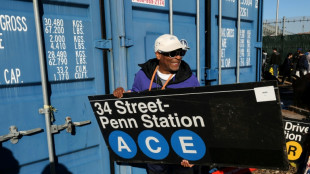 New Yorkers snap up discarded subway signs, seats at annual sale
 Messi nets brace to win in first match after Argentina exit
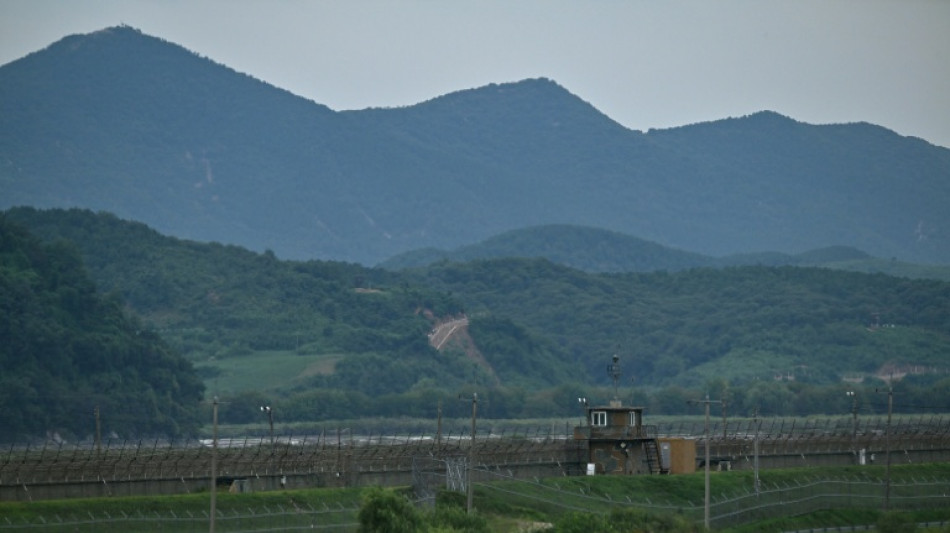
A building-sized North Korean flag waves from a tower on the de facto border with South Korea, marking territory that experts say has become nearly impossible to escape.
The combined total of North Koreans to reach South Korea in the past six years is less than the number that typically defected each year for decades -- and appears to be declining further in 2026.
The main cause is leader Kim Jong Un's aim to preserve his family dynasty by sealing the country off from the outside, keeping people in and information out, experts say.
"As I understand it, bringing family members directly from North Korea is currently impossible," 29-year-old Chae Yoon-seo, who fled in 2019, told AFP.
She swam across a river into China at night with a smuggler's help, and travelled through Laos, Vietnam and Thailand before finally flying to South Korea.
Defections to the South hit a peak of more than 2,900 in 2009 and stayed well above 1,000 per year for the next decade.
But there were just 63 in the first half of this year -- down by over a third from the same period in 2025, said Seoul's Unification Ministry.
- 'Soviet-style border' -
Arrivals have fluctuated over the decades, but plunged sharply during the Covid pandemic when many nations shut their borders.
A key change in North Korea, however, started years before.
After taking power in 2011, Kim began restricting the informal trade and migration links along the roughly 1,415-kilometre (880-mile) northern border with China.
In addition to being an economic lifeline, the Chinese border region has also been the first step in most defectors' escapes.
The long frontier was relatively porous, unlike the heavily mined, fenced and surveilled Demilitarized Zone (DMZ) that serves as the Koreas' de facto border.
Along the boundary with China, Kim's government has erected fences and installed cameras as well as strips of sand that preserve the footprints of anyone who crosses.
"North Koreans built a real Soviet-style border security system," said Andrei Lankov, an expert on the North at Kookmin University in Seoul.
Beijing has helped too, said Lankov, noting China's preference to keep the status quo of the Kim dynasty by opposing potential instability from defectors or their supporters.
As part of its efforts, China reportedly has put in place hundreds of facial recognition cameras, noted Rachel Minyoung Lee, senior fellow with the Stimson Center's 38 North.
She added that Beijing also added more patrol boats and new or planned deportation facilities along its northeastern border.
- Ousted, killed or exiled -
The roughly 34,500 defectors to reach the South since 1998 are a fraction of North Korea's 26.6 million people, UN figures show, but the plunging number of escapes has consequences.
"Defectors are the main source of information about the North," said Fyodor Tertitsky, lecturer at Seoul's Korea University, noting both South Korean intelligence and researchers interrogate them.
Though some people still do get out.
Defector Gyuri Kang's 2023 escape by boat with her mother and aunt -- across the maritime border with the South, an extremely rare feat -- was a "miracle", she told a UN hearing.
She is also a case in point for why North Korea has made great efforts to seal itself off.
Kang noted the influence of South Korean dramas smuggled in on USB drives, finding them "so refreshing and more credible than North Korea state propaganda".
"North Korean authorities are keenly aware of the impact of outside media," she said.
In 2020, North Korea made possessing foreign media a crime punishable by years-long forced labour terms –- and potential death sentences for large-scale distribution, according to Amnesty International.
Lankov, from Kookmin University, said external information is the greatest threat to the long-term survival of North Korea's leadership.
"If they let their people interact with the outside world, they are highly likely to be overthrown, and maybe killed or driven into exile," he added.
Chae, the defector, said her hope was that the North's isolated people are not one day simply forgotten by the outside world.
"These days, there are a lot of cynical reactions on helping other countries, so I am a bit worried that one day, interest in North Korean human rights might fade away as well," she added.
P.Martin--AMWN