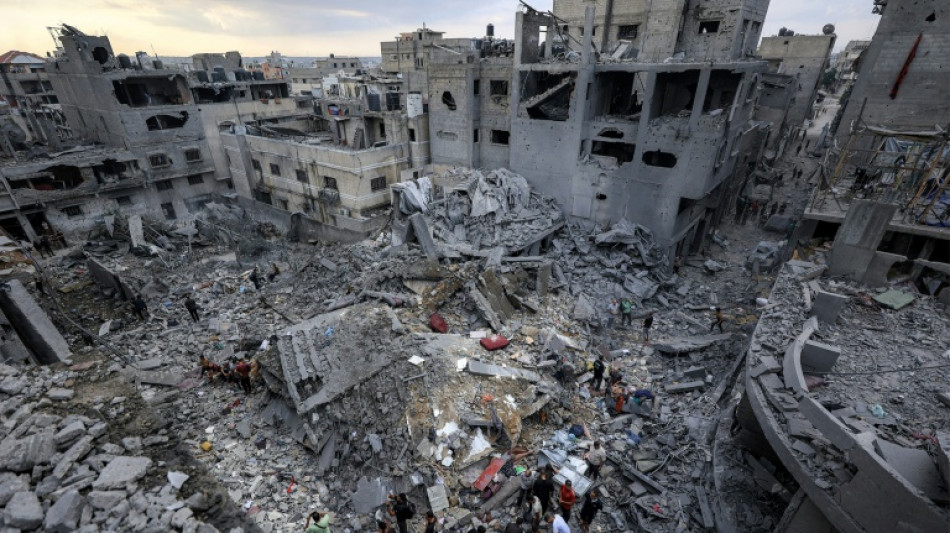
Year later, Gaza ceasefire promises mostly unfulfilled / Photo: Omar AL-QATTAA - AFP
 Search Underway for 'Dooars Rani' Tigress After Second Escape from Buxa Tiger Reserve

 The Dilemma of Recording Live Music: Preserving Memories vs. Being Present

 InterContinental Hotels Group PLC Announces Transaction in Own Shares - November 11

 Fulcrum Metals PLC Announces New Critical Mineral Recoveries Expand Potential
 Fulcrum Metals PLC Announces Publication of Updated Investor Presentation

 Christmas Day Shifts More than Double as Americans Return to In-Person Holiday Celebrations

 Thukukile Zuma Resigns from ANC Johannesburg Leadership Amid Disciplinary Dispute

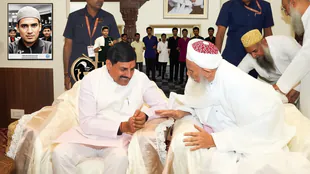 CM Mohan Yadav Meets Bohra Spiritual Leader to Discuss Simhastha 2028 and Development

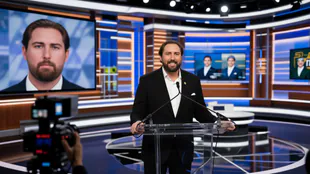 Eli Crane Defeats Jonathan Nez in Tight Arizona Congressional Race

One year after US President Donald Trump declared the war in Gaza to be over, few of the long-term promises of the ceasefire have come to fruition.
Here is a list of some of the key points of the October 10, 2025 ceasefire and where things stand:
- Hostages released, calm in Israel -
Three days after the agreement was announced, Hamas freed the 20 remaining living hostages seized during the group's October 7, 2023 attack, the deadliest day in Israel's history.
The captives' return was a key priority for Israel, whose public had agonised over their fate.
The ceasefire anniversary also marks one year of quiet for Israel from the Gaza front, with no rocket attacks by Hamas.
The group's missile inventory was depleted by near-constant Israeli bombardment, which damaged or destroyed the vast majority of buildings in the Palestinian territory.
The US military set up a command post with foreign allies near the Gaza border to monitor the truce.
- No Israeli withdrawal or let-up -
Israel has reduced its level of attacks but has kept striking Gaza on a near-daily basis.
Israeli strikes have killed some 1,450 Palestinians since the ceasefire, according to Gaza's health ministry, which operates under Hamas and whose figures are considered accurate by the United Nations.
Prime Minister Benjamin Netanyahu, who is in a tight election race, has vowed to kill everyone involved in the October 7 attack.
Netanyahu said on the attack's anniversary that 4,000 out of 6,000 "Hamas monsters" had been killed.
Israeli forces were allowed to stay in 53 percent of Gaza under the terms of the ceasefire, but a year later they control about 70 percent of it, according to official accounts.
- Hamas remains, with weapons -
The second phase of the agreement was supposed to include a political transition away from Hamas, and technocrat Ali Shaath was appointed head of a new National Committee for the Administration of Gaza (NCAG).
Hamas announced in July that it was disbanding its governing body and handing over Gaza's administration to the US-blessed NCAG.
But Hamas effectively remains in charge of security in Gaza, and Shaath has taken a low profile.
The Palestinian Islamist movement elected a new leader, Khalil al-Hayya, in July. Shortly afterwards, the group announced it would give up its weapons, a step hailed by Trump as a breakthrough.
But Israel has been sceptical, with Netanyahu demanding verifiable decommissioning of all weapons down to individual guns.
Hamas has not gone ahead with disarmament, and Israel has refused to reciprocate by starting to withdraw forces.
- Reconstruction just talk -
Trump set up a new global body for the deal dubbed the "Board of Peace", tapping as key figures former British prime minister Tony Blair and Bulgarian diplomat Nickolay Mladenov, who serves as "Gaza high representative".
Trump, a critic of foreign aid, in January promised $10 billion in US funding to the board he controls, and Gulf allies have pledged more, but no money is known to have made its way to Gaza reconstruction.
In September, the board proposed a $2.45 billion Gaza recovery plan at a meeting of its members and stakeholders, in an effort meant to span over six months.
B.Finley--AMWN