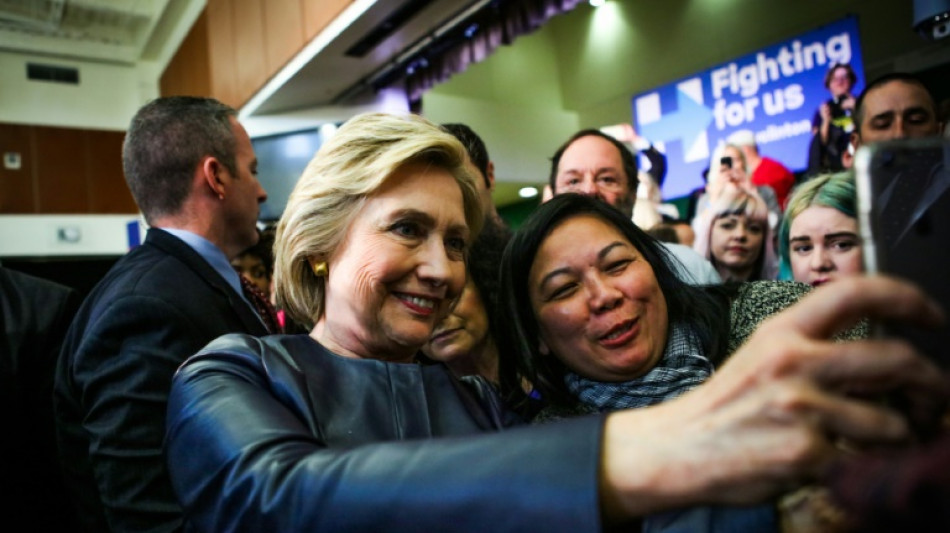
Is Hillary a sure thing for the White House?
 Turkey says news site closed for 'LGBTQ propaganda'
 Oil companies close in on Venezuela despite hurdles

 Turkey freezes ex-minister's assets as fund scandal grows
 Guardiola backs Man City after bombshell guilty verdicts

 G20 trade ministers open talks under strain of Trump tariffs
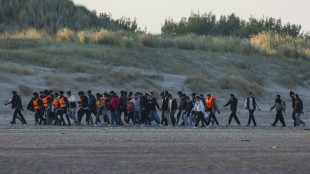 France in talks with UK to end 2025 migrant accord: ministry

 Europe's surging inflation spreads gloom in stock markets

 Truth commission demands compensation for Sweden's Sami people
 Japan win marathon penalty shootout to set up South Korea gold-medal clash

 Djokovic grinds out opening-round win at China Open

 Northern Ireland police probe blockade of disputed parade
 UK PM Burnham reopens divisive debate on rejoining EU
 Man City future in doubt after guilty verdict

 'Do something,' begs Iranian woman after death sentence over protests

 China extends 52-year unbeaten record as Games organisers say sorry
 In Manchester, people say City scandal is 'shame for football'
 Stocks lacklustre as inflation data weighs on sentiment

 Israel-bound plane rerouted, pilots wounded in reported fight

 Truth commission on Sweden's Sami people seeks redress
 Energy costs spark inflation surges in France, Italy

 South Korea break China hearts to reach Asian Games football final

 Eala storms into Asian Games semi-finals to thrill adoring fans

 Turkey freezes ex-minister's assets as fund crisis grows

 What we know about the North Korean POW dispute

 Most equities rise after oil price plunge, US data in focus
In a US election that has ripped up, chewed through and spat out conventional wisdom, Hillary Clinton is still favorite to beat Donald Trump in November.
Few analysts or journalists predicted that Trump would last long in a tough Republican race, much less win it.
But here is why Clinton is still odds-on favorite to become the first female president, along with a few reasons why a dose of caution might be warranted.
- The numbers -
At the starting gate, a CNN/ORC poll has Clinton leading Trump 54-41. For months, head-to-head surveys have found a similar result.
That is a monumental lead in a country almost evenly split between Democrats and Republicans. But it is also borderline irrelevant.
The November 8 vote is six months away, light years in US electoral politics.
And US elections are won by carrying individual states, not the popular vote, as Al Gore found to his cost in 2000.
Still, the polls contain harbingers of doom for Trump, particularly in a sliver of data that politicos refer to as "unfavorables."
About 65 percent of voters have a negative impression of Trump, according to an average of polls by Real Clear Politics.
Given he has been in the public eye for years, he is widely known and minds could be difficult to shift.
Yet "The Donald" has shown he does not play by conventional election rules.
He has already branded his rival "Crooked Hillary" and is certain to stir up memories of Bill Clinton's marital infidelity.
Clinton who is herself seen negatively by 55 percent of voters -- a large number, but not quite as catastrophic as Trump's -- has the upper hand, but will have to find the right tone to parry attacks.
Trump's rivals learned the hard way that getting in the mud with him rarely pays off, but taking the high road might look detached or meek.
- The electorate -
The long trend of America becoming less white means Trump, with his pseudo-nativist message, is also waging a campaign against demographics.
In the 2012 election, 93 percent of African-Americans, 71 percent of Hispanics and 73 percent of Asians voted for Barack Obama.
That was enough for the Democrat to win the election, even though he only got 39 percent of white voters, the biggest voting group.
Trump -- thanks to talk of building a border wall, Mexican "rapists" and deporting the country's estimated 11 million illegal immigrants -- is doing even worse among Hispanic voters than the last Republican presidential candidate Mitt Romney.
His approval ratings among Hispanic voters currently stand at 12 percent.
That's bad news for Trump's chances in Colorado, Florida, Nevada, New Mexico and maybe even Arizona. To add to Trump's misery, his standing among women voters is derisory.
Almost half of Republican women say they can't see themselves voting for him.
"Trump has alienated growing demographic groups such as Hispanics, and he is at toxic levels with women and young people," said Larry Sabato, who heads the University of Virginia Center for Politics.
If he can't reach working and college educated women, then even blue collar states like Pennsylvania may remain out of reach.
Trump hopes to change the calculus by getting more white voters to turn out.
"He needs to excite the middle and working class white who doesn't usually vote," said Henry Olsen, a senior fellow at the Ethics and Public Policy Center.
Sabato was skeptical.
"There aren't millions of blue collar whites who don't usually vote Republican just waiting to show up for Trump. Where's the evidence for this breathtaking proposition?"
- The Map -
The most important number in US politics is 270, the number of electoral college votes -- out of a total of 538 -- needed to win the presidency.
Of the 51 state and regional contests, most are winner-take-all. But not all are equal.
California is worth 55 votes, while Vermont is worth three.
In 2008 and 2012, Obama broke 300.
The last Republican president George W. Bush squeaked by with 271 and 286.
Trump may target states in the Rust Belt and New England, and battlegrounds like Florida and Ohio, but he faces the prospect of having to flip several states to the Republican column just to be competitive.
- The campaigns -
The businessman will have to try to do all this without the unified support of the Republican party.
There have been mass refusals to back the controversial candidate.
Many donors and potential campaign staff promise to "sit this one out."
To give one example of the impact, "Hacking the Electorate" author Eitan Hersh said Trump will find it more difficult to get targeted messages to voters.
A key arrow in the quiver of modern US electoral campaigns is microtargeting -- cross-referencing voter rolls with records on everything from magazine subscriptions to eBay searches to build a profile of individual voters and deliver a specific message.
Trump has instead focused on macromessaging, by dominating the TV news which also gives him free advertising.
"Trump hasn't shown much of an appetite to engage in microtargeting. He also is not a team player," said Hersh.
"Part of the Democrats' advantage is that the state parties, interest groups, labor unions and candidates up and down the ballot see themselves as largely on the same team."
- The zeitgeist -
One area where Trump may have an advantage is capturing the spirit of the age.
Many Americans still feel the effects of the Great Recession.
Middle class incomes have been stagnant, while the rich have become significantly richer.
Democrats are not oblivious to that fact, indeed Bernie Sanders has built most of his campaign around addressing income inequality.
But Trump may better articulate the fear and anger of those who have faltered.
After years of modest growth, a mediocre jobs report in April was a reminder that another slowdown could come even before the impact of the last one is no longer felt.
That could easily eat into Obama's solid 51 percent approval rating, a metric that currently indicates the electorate is not desperate for a changing of the guard.
Along with the economy, polls show terrorism is a top concern for voters.
Here too, Trump's message of bombing the Islamic State group to oblivion is more easily digested than Clinton's more nuanced push for tackling radicalism through military, economic, diplomatic and cultural means.
Where rivals see him as naive, Trump's status as a political neophyte might serve him well.
It's harder for Clinton, a former first lady, US senator and secretary of state to argue that she will bring change to Washington.
But her wealth of experience might also mean she knows a bit more about winning elections.
C.Garcia--AMWN