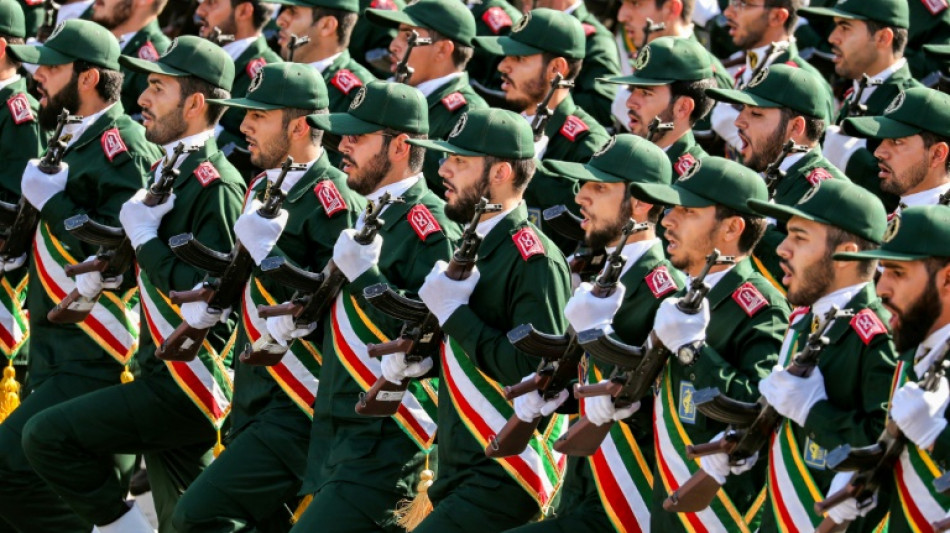
Forty years of US-Iran relations
 Turkey says news site closed for 'LGBTQ propaganda'
 Oil companies close in on Venezuela despite hurdles
 Turkey freezes ex-minister's assets as fund scandal grows

 Guardiola backs Man City after bombshell guilty verdicts
 G20 trade ministers open talks under strain of Trump tariffs

 France in talks with UK to end 2025 migrant accord: ministry
 Europe's surging inflation spreads gloom in stock markets

 Truth commission demands compensation for Sweden's Sami people

 Japan win marathon penalty shootout to set up South Korea gold-medal clash
 Djokovic grinds out opening-round win at China Open
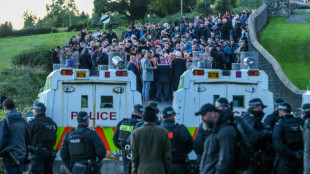 Northern Ireland police probe blockade of disputed parade
 UK PM Burnham reopens divisive debate on rejoining EU
 Man City future in doubt after guilty verdict
 'Do something,' begs Iranian woman after death sentence over protests
 China extends 52-year unbeaten record as Games organisers say sorry
 In Manchester, people say City scandal is 'shame for football'
 Stocks lacklustre as inflation data weighs on sentiment
 Israel-bound plane rerouted, pilots wounded in reported fight

 Truth commission on Sweden's Sami people seeks redress

 Energy costs spark inflation surges in France, Italy

 South Korea break China hearts to reach Asian Games football final
 Eala storms into Asian Games semi-finals to thrill adoring fans

 Turkey freezes ex-minister's assets as fund crisis grows
 What we know about the North Korean POW dispute
 Most equities rise after oil price plunge, US data in focus
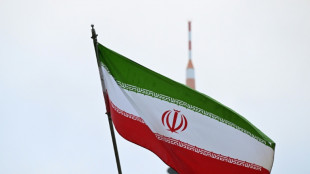
Key dates between the US and Iran since 1979 after their exchange Monday in which the US designated Tehran's elite military force a terrorist organization and Iran called the US a "state sponsor of terrorism".
- Rupture -
On November 4, 1979 radical students demanding the extradition of Shah Mohammad Reza Pahlavi take 52 diplomats and employees of the American embassy in Tehran hostage, seven months after the establishment of the Islamic Republic.
The hostages are held for 444 days in a crisis that results in the first US economic sanctions leveraged against the state.
On April 7, 1980 Washington breaks off diplomatic relations with Iran and imposes restrictions on commerce and travel, 10 months before the release of the last hostages.
On November 4, 1986 the Iran-Contra affair becomes public, revealing a secret arrangement in which American arms were sold to Tehran in hopes of helping liberate American hostages in Lebanon, with profits channeled to Nicaraguan Contra rebels.
On July 3, 1988 a US guided missile cruiser shoots down an Iran Air Airbus over the Gulf resulting in 290 deaths, in what the United States calls a mistake.
- 'Axis of evil' -
On April 30, 1995 US president Bill Clinton begins a comprehensive ban on trade and investment with Iran over its seeking nuclear weapons. Sanctions are subsequently extended and expanded.
On January 29, 2002, President George W. Bush puts Iran on his list of countries in the "axis of evil" supporting terrorism.
Iran's new president Mahmoud Ahmadinejad on August 8, 2005 starts a new push for uranium enrichment.
- Hints of reconciliation -
On November 6, 2008 Ahmadinejad congratulates then US president-elect Barack Obama on his victory.
The following year, on March 20 Obama says he would "like to speak directly to the people and leaders of the Islamic Republic of Iran."
But in June, Obama condemns the violent repression of Iranian demonstrations and says he believes the legitimacy of Ahmadinejad's reelection raises serious questions.
On June 15, 2013 the US says it is ready to work directly with new Iranian President Hassan Rouhani and on September 15 Obama reveals he has exchanged letters with him.
On September 27 Obama and Rouhani speak by phone in a historic first direct communication between leaders of the two nations since 1979.
- Historic nuclear deal -
An accord with world powers on Iran's nuclear programme is reached on July 14, 2015, ending 12 years of crisis and 21 months of negotiations.
It gives Tehran relief from crippling economic sanctions in exchange for limits on its nuclear programme.
- Trump scraps deal -
In January 2017, newly-elected US President Donald Trump bans by decree immigration from seven Muslim countries, including Iran.
Two days later Iran carries out a ballistic missile test, in violation of a UN resolution.
Washington pulls out of the landmark nuclear pact with Iran on May 8, 2018, reinstating Washington's sanctions on Iran and companies with ties to the Islamic republic.
The US on March 7, 2019 accuses Iran of carrying out three missile-related launches in defiance of UN resolutions and urges the Security Council to "bring back tougher international restrictions" against Tehran.
- 'Terrorism' accusations -
On April 8 the US designates Iran's elite military force, the Islamic Revolutionary Guard Corps, a terrorist organization, ramping up already far-reaching attempts to undermine the Iranian government.
In response, Iran declares the US a "state sponsor of terrorism" and its forces in the region "terror groups".
P.Costa--AMWN