-
 Dutch federation calls for football summit without Infantino
-
Five-wicket Abbas has Lord's landmark as Pakistan set 389 to win second Test

-
 Ron’s Honky Tonk Residency Revives UK Country Music in Bermondsey
-
Tadej Pogacar Out of Vuelta a Espana with Broken Collarbone and Concussion
-
 Chelsea sign Argentina 'stopper Martinez from Villa
-
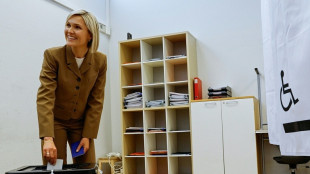
Iceland votes 'No' to resuming EU talks
-
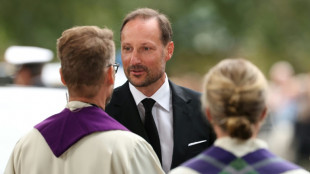 Norway's churches hold services to late King Harald
-
Berlin Literary Guide: Book Launches, Festivals, and Readings Through August

-
 Walmart Agrees to $50 Million Settlement Over Opioid Prescription Allegations
-
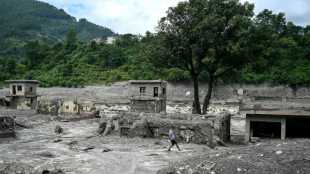
Nepal rescuers drill through debris towards trapped tunnel workers
-
 Soundcore Liberty 5 Pro Review: Call Quality Redefines Value in Wireless Earbuds
-
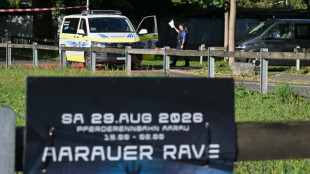
Manhunt in Switzerland after fatal rave shooting
-
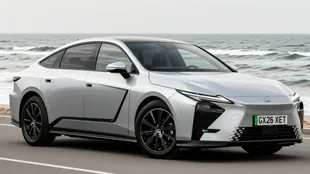 Lexus ES Review: Electric ES 350e Falls Short in Luxury Saloon Segment
-
'No' camp seen winning Iceland's EU referendum
-
 Vietnamese coffee farmers ride China's durian wave
-
Nepal flood survivors return to ruins to salvage memories

-
 Venezuela says retains 'sovereignty' in US oil deal
-
Killing of Palestinian children and teens by Israel surges in West Bank

-
 NASA's Roman telescope set to launch on cosmic mapping mission
-
Educators keep 9/11 memory alive for next generation, 25 years on

-
 Data center backlash scrambles US midterm politics
-
Venezuelans view US oil deal with doubt, hope
-
 Emotional Federer inducted into tennis Hall of Fame
-
Gobena and Jepchirchir power to Sydney Marathon victories

-
 Hovland takes solo lead as McIlroy surges at Tour Championship
-
Iceland in suspense after close EU vote
-
 Djokovic 'prepared' for US Open bid for history
-
Wallabies hold on for victory in Argentina
-
 Atletico down Sevilla to go top of La Liga
-
Juve notch second straight win, Fiorentina's centenary party falls flat

-
 US deports right-wing provocateur Milo Yiannopoulos
-
Rybakina eases injury fears ahead of US Open

-
 Niger junta says it is back in control after soldiers' mutiny
-
Djokovic kicks off latest Grand Slam quest under US Open lights
-
 Erasmus calls Rennie barbs over Springbok scrumming 'nonsense'
-
'Sorry' De Zerbi won't panic after Spurs shambles
-
 Lawrence's fifty leaves Pakistan facing record chase to level England series
-
UN, Nepal warn of climate threat after deadly floods
-
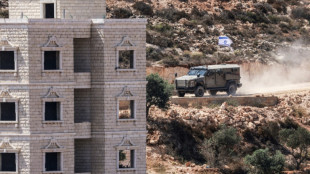 Netanyahu condemns settler attack in flashpoint West Bank village
-
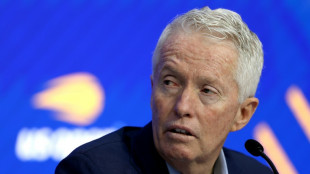
USTA boss says structure of new player council not yet set
-
 Munoz saves Iraola in Liverpool draw, big-spending Spurs lose again
-
Tiny Elversberg stun Leverkusen on Bundesliga debut, Dortmund beat Hamburg

-
 Newcastle condemn dismal Spurs to second successive defeat
-
James Cleverly leaves shadow cabinet to seek London mayoralty

-
 Police appeal for footage after life-threatening Stratford assault
-
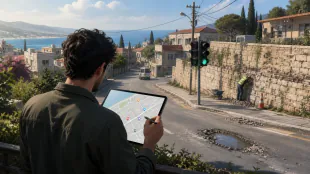
Baladi Map app turns Lebanon’s local problems into a public record
-
 Family searches for Boston engineer missing after Nepal-Tibet floods
-
Thirty-seven Mumbai pilgrims return after Nepal flood disruption

-
 Dolly Parton’s Imagination Library leaves global children’s reading legacy
-
Ankle ligament tear ends Neeraj Chopra’s 2026 season

Europe's new Vega-C rocket lost shortly after lift-off
Europe's new Vega-C rocket was lost shortly after lift-off from French Guiana overnight with two satellites on board, in the latest blow to European space efforts.
The failure on Tuesday night threatens to ground the Vega-C, which would leave Europe without a short-term way to launch satellites into orbit after delays to the Ariane 6 rocket and cancelled Russian cooperation over the Ukraine war.
The rocket had been trying to bring into orbit two Earth observation satellites built by Airbus, which were intended to join an existing network capable of capturing high-quality images of any point on the globe several times a day.
If it had been successful, it would have been the first commercial launch of the Vega-C since its inaugural flight on July 13.
"The mission is lost," Stephane Israel, head of commercial launch service provider Arianespace, said from the Kourou Space Centre in French Guiana, a French department on South America's northeast coast.
Ten minutes after lift-off, at 10:47 pm local time (0147 GMT Wednesday), the launcher's trajectory deviated from its programmed route and communications were lost, Arianespace said.
An "anomaly occurred" in the second stage of the launcher, "ending the Vega-C mission", the company said.
The rocket was launched over the Atlantic Ocean and had shot past 100 kilometres (62 miles) altitude and was more than 900 kilometres north of Kourou.
- No debris -
It was not immediately clear whether the rocket's destruction device was activated or whether it crashed into the sea.
Arianespace found there was no debris fallout after lift-off.
"Data analysis is under way to determine the reasons for this failure," it added.
A press briefing is scheduled for noon on Wednesday in Kourou.
Airbus did not comment when contacted by AFP.
Peter Beck, the CEO of US launch service provider Rocket Lab, said he was sorry to hear of the failed launch.
"Small launch is way harder than most people think. I am sure the excellent Vega team will resolve the issue quickly," he tweeted.
- Postponed launch -
The satellites on board were the last two to complete the Pleiades Neo constellation, which is planned to be able to take very high-resolution images of anywhere on Earth.
The launch was originally scheduled for November 24 but was postponed for a month due to a faulty component.
Arianespace's Israel told AFP they had to change a piece of equipment linked to the payload fairing, a type of nose cone, which was not believed to be related to Tuesday's launch failure.
The Vega-C is the newest version of the Vega rocket system, which has launched 20 times since 2012, failing twice.
Arianespace said the error on Tuesday occurred during the Zephiro 40 stage, which was specifically developed for the Vega-C, unlike many other parts of the launcher.
Vega-C's prime contractor is the Italian aerospace firm Avio, whose share price plunged 9.45 percent after 10:00 am.
The Vega-C is billed as the smaller precursor to the future Ariane 6, which the European Space Agency (ESA) hopes will enable Europe to become more competitive in the rapidly expanding satellite market.
- Major setback -
Around 24,500 satellites are expected to be launched by 2021, almost five times as many in the past decade, according to advisory firm Euroconsult.
Tuesday's failure is a major setback for the ESA, which has 22 member states and is responsible for European launcher programmes.
Global competition in the market has intensified in recent years, with Elon Musk's SpaceX taking a giant lead.
European hopes have been pinned on the Ariane 6 rocket, but the postponement to the end of 2023 of its inaugural flight, which had been initially planned for 2020, has dashed the ESA's expectations.
Europe's space sector has been further weakened by Russia's invasion of Ukraine, which put an end to its cooperation with Moscow.
In response to sanctions imposed on Moscow by the European Union, Russia suspended space launches from French Guiana with its Soyuz rocket launchers and withdrew its technical personnel.
In the absence of an alternative, ESA has been forced to turn to SpaceX to launch two scientific missions.
Vega-C is currently scheduled to carry out 12 missions, including some previously planned to launch on Soyuz rockets.
S.Gregor--AMWN