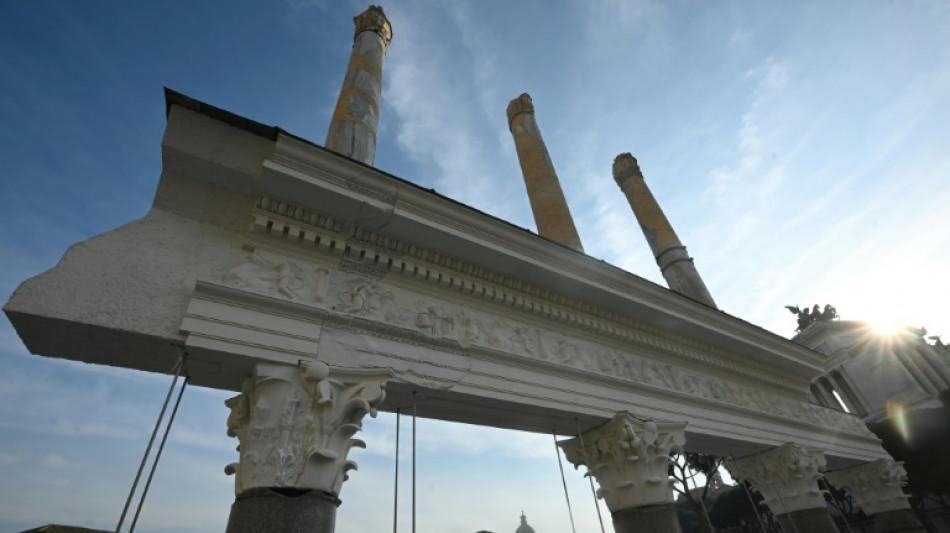
Rome restores towering colonnade of Trajan's Basilica / Photo: Filippo MONTEFORTE - AFP
 Top-seeded Zverev opens US Open campaign
 US regulator, 22 states accuse Amazon of 'manipulating' ad auctions: lawsuit

 TRON Founder Justin Sun Shares Outlook on Bitcoin, Stablecoins and Global Finance at Bitcoin Asia 2026

 Tributes to 'eternal' Messi on Argentina retirement

 Arteta hails Arsenal's 'finishers' after Saka kills off Villa

 Yamal, Raphinha bag braces as Barcelona rout Rayo
 Alcaraz makes winning return at US Open, Sabalenka safely through

 Everton agree to sign Monaco's Balogun: reports

 Milei calls for F1 to return to Argentina

 Alcaraz wins US Open first-round match after injury layoff

 Kyiv orders heightened security amid intense Russian drone strikes

 Sabalenka kickstarts US Open three-peat bid as Fils crashes out

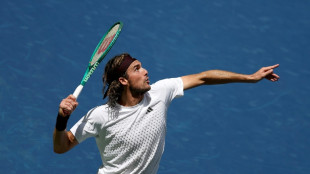 Fils upset by resurgent Tsitsipas at US Open

 Trump says AI data center opponents want to be 'backwards and poor'

 Pakistan ditch coaches, send seven players home after England defeats

 Galliano pulls Met Gala exhibit after antisemitism backlash

 Afghan people should 'not be abandoned': top Red Cross official

 Six defining moments of Lionel Messi's Argentina career

 Trump blasts US backlash against data centers
 It 'hurts' says Messi of decision to retire from international football
 Benzema ends brief stint with Al Hilal in Saudi league

 Djokovic's Grand Slam future uncertain after brutal US Open defeat

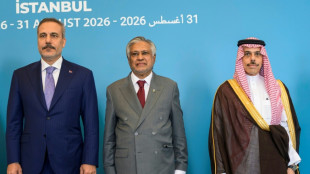 Turkey says regional defence pact not against any country

 US vows to keep economic pressure on Iran as G20 finance talks begin

 Shein valued at $26.3 bn in Hong Kong market debut

Rome's most majestic forum has recovered some of its former glory with a partial reconstruction of the imposing columns of Trajan's basilica -- using funds from a now-sanctioned Russian oligarch.
The restoration of a portion of the Basilica Ulpia, which soared above the ancient Italian city for over a millennia, helps bring to life the grandeur and magnificence of the original marble monument.
While most work on Rome's ubiquitous ruins points downwards, the rebuilding of the basilica's two-storey Corinthian colonnade has brought the focus up -- over 23 metres to be exact.
"If visitors can't sense the height of the monuments, they won't understand the meaning of the architecture," Claudio Parisi Presicce, Rome's top official for cultural heritage, told AFP on a tour of the site.
The Basilica Ulpia was the centrepiece of Trajan's Forum, the largest and last of the imperial forums, named after Marcus Ulpius Traianus, emperor from 98 to 117 AD.
Inaugurated in the second century, it mostly collapsed during the Middle Ages, but was unearthed by excavations in the early 19th century and 1930s.
The current project, which began in 2021, identified three green marble columns that had been left for nearly 100 years "propped up in a corner with no connection with the floor plan," Parisi Presicce said.
Engineers returned them to their proper place atop four granite pillars that mark the outer perimeter of the basilica's first nave.
Between the two stories of columns, archaeologists and technicians have recreated the entablature with its decorative frieze depicting winged victories sacrificing bulls.
- Sanctioned donor -
The project was funded with a 1.5-million-euro donation made in 2015 by Uzbekistan-born oligarch Alisher Usmanov.
He was later sanctioned by the European Union and US following Russia's invasion of Ukraine, accused by the US Treasury of being close to Russian President Vladimir Putin.
Estimated by Forbes last year to possess a $14.4 billion fortune from the metals and mining industries, Usmanov is an Italophile who had previously given money for Rome restoration projects.
He was named the "most generous charity donor" by the Sunday Times' Rich List in 2021, having donated 4.2 billion to charity over 20 years.
Parisi Presicce brushed aside questions about the donation, reiterating that it was made before Usmanov was sanctioned and noting that Rome's ancient heritage was "universal".
- Showing off -
Trajan's extensive military campaigns, including his near-annihilation of the Dacians in today's Romania, extended Rome's boundaries to their farthest limits.
His two bloody Dacian wars are depicted in a spiralling bas relief on Trajan's Column, located just north of the basilica, a monument built to glorify the emperor's victories and his spoils of war.
With the basilica, Trajan "built a monument using the most precious materials that could be used for that moment", said Parisi Presicce, such as coloured marbles mined in far-away Egypt, Asia and Africa.
The basilica, home to civil and criminal courts and other state business, was made up of five central aisles separated by rows of columns.
Built by celebrated architect Apollodorus of Damascus, it was covered by a bronze roof, while statues of conquered Dacians and decorative panels of military banners decorated the facade.
Earlier excavations had unearthed the forum and traces of its basilica, but while the massive granite pillars running down the length of the basilica were restored and re-erected, the colonnade was still missing its second tier.
Segments of the original marble from the frieze on the entablature -- now kept safe in warehouses or museums -- have been recreated in resin, along with lost portions bearing fewer details.
This allows the viewer to see the difference between the originals and the approximations, common practice in modern restoration, which also means the work is reversible.
The final steps of the project involve recreating the southern stairs to the basilica, incorporating slabs of ancient yellow marble found at the site.
Currently, Rome has 150 archaeological projects planned through 2027, the vast majority of them paid for by EU post-pandemic recovery funds.
The city's 500-person cultural heritage department includes about 40 archaeologists and some 40 art historians, and another approximately 50 architects, surveyors and engineers.
P.M.Smith--AMWN