-
 Top-seeded Zverev opens US Open campaign
-
Heavy rain at Grand Canyon after flood kills 2, dozen missing
-
 US regulator, 22 states accuse Amazon of 'manipulating' ad auctions: lawsuit
-
Kushner blames soccer power struggle for World Cup plan collapse

-
 TRON Founder Justin Sun Shares Outlook on Bitcoin, Stablecoins and Global Finance at Bitcoin Asia 2026
-
Buoyant Alcaraz shakes off nerves to advance at US Open

-
 Tributes to 'eternal' Messi on Argentina retirement
-
US draws European pushback with Russia G20 finance invite

-
 Arteta hails Arsenal's 'finishers' after Saka kills off Villa
-
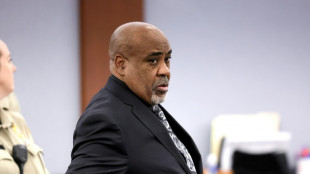
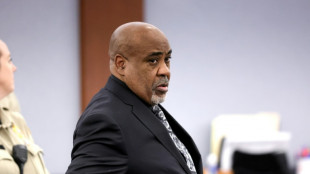
Jury begins deliberations in Tupac Shakur murder trial
-
 Yamal, Raphinha bag braces as Barcelona rout Rayo
-
US Supreme Court allows Trump ballroom project to proceed

-
 Alcaraz makes winning return at US Open, Sabalenka safely through
-
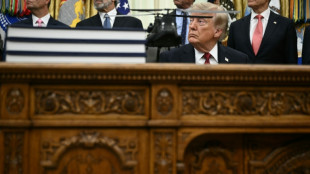
Trump says US reviewing position on Falkland Islands
-
 Everton agree to sign Monaco's Balogun: reports
-
Saka strikes as flawless Arsenal punish troubled Villa

-
 Milei calls for F1 to return to Argentina
-
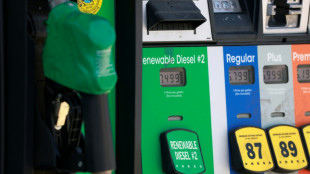
Oil prices surge on renewed fighting in US-Iran war
-
 Alcaraz wins US Open first-round match after injury layoff
-
Cycling superstar Pogacar has surgery after Vuelta crash

-
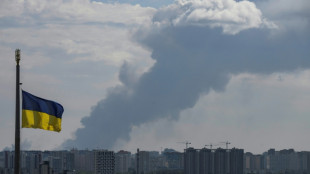 Kyiv orders heightened security amid intense Russian drone strikes
-
Man City agree deal for Everton's Ndiaye

-
 Sabalenka kickstarts US Open three-peat bid as Fils crashes out
-
Apple CEO Tim Cook gives nod to founder Steve Jobs in final memo

-
 Fils upset by resurgent Tsitsipas at US Open
-
Russian finance minister makes unexpected appearance at G20

-
 Trump says AI data center opponents want to be 'backwards and poor'
-
Happy to be back in NY, Sabalenka advances

-
 Pakistan ditch coaches, send seven players home after England defeats
-
Naomi Watts to receive lifetime award at top Spain film fest

-
 Galliano pulls Met Gala exhibit after antisemitism backlash
-
Jury hears closing arguments in Tupac Shakur murder trial
-
 Afghan people should 'not be abandoned': top Red Cross official
-
Pakistan sack coach, send seven players home after England defeats

-
 Six defining moments of Lionel Messi's Argentina career
-
New storms threaten Grand Canyon flood search, 2 bodies recovered

-
 Trump blasts US backlash against data centers
-
France takes aim at ultra-fast fashion with new levy
-
 It 'hurts' says Messi of decision to retire from international football
-
Tribunal says India cannot withdraw from water treaty with Pakistan

-
 Benzema ends brief stint with Al Hilal in Saudi league
-
John Galliano pulls US exhibition after antisemitism backlash

-
 Djokovic's Grand Slam future uncertain after brutal US Open defeat
-
French Top 14 boss offers 'no guarantees' for first Club World Cup

-
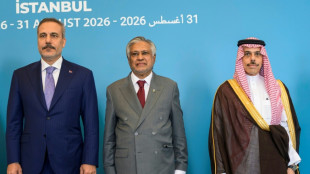 Turkey says regional defence pact not against any country
-
Munoz reunites with Glasner after joining Forest from Palace

-
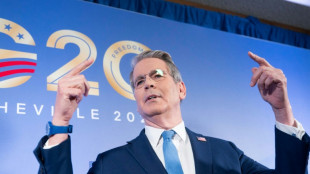 US vows to keep economic pressure on Iran as G20 finance talks begin
-
Liverpool sign Barcola from PSG for £124 million

-
 Shein valued at $26.3 bn in Hong Kong market debut
-
Putin, Xi hold talks in Kyrgyzstan as regional summit begins

Private spaceship bound for the Moon, in test for US industry
A private US spaceship was bound for the Moon on Thursday, where it will attempt to land near the south pole and carry out experiments that pave the way for the return of American astronauts later this decade.
Intuitive Machines, the Houston-based company leading mission "IM-1," hopes to become the first non-government entity to achieve a soft touchdown on our celestial companion, and to land the first US robot on the surface since the Apollo missions more than five decades ago.
A previous attempt by another US company last month ended in failure, raising the stakes to get it right this time and demonstrate the strength of American industry.
Intuitive Machines' hexagonal-shaped Nova-C lander named "Odysseus" blasted off from the Kennedy Space Center in Florida on top of a SpaceX Falcon 9 rocket at 1:05 am local time (0605 GMT).
"We are keenly aware of the immense challenges that lie ahead," CEO Steve Altemus said in a news release, confirming Odysseus had successfully established contact with ground control and all systems were working normally.
The spaceship, which carries a powerful new type of engine based on supercooled liquid methane and oxygen should reach its landing site, Malapert A, on February 22, an impact crater 300 kilometers (180 miles) from the south pole.
NASA hopes to eventually build a long-term presence and harvest ice there for both drinking water and rocket fuel under Artemis, its flagship Moon-to-Mars program.
- Understanding lunar haze -
The agency paid Intuitive Machines $118 million to ship science hardware to better understand and mitigate environmental risks for astronauts, the first of whom are scheduled to land no sooner than 2026.
Instruments include cameras to investigate how the lunar surface changes as a result of engine plume kicking up dust and a device to analyze the charged dust haze that appears during lunar twilight as a result of solar radiation.
Odysseus also carries an advanced landing system that uses laser pulses to detect hazards like small boulders and craters.
There is more colorful cargo aboard as well, including a digital archive of human knowledge and 125 mini-sculptures of the Moon by the artist Jeff Koons.
After touchdown, the payloads are expected to run for roughly seven days before lunar night sets in on the south pole, with the lack of solar power rendering Odysseus inoperable.
IM-1 is the second mission under a NASA initiative called Commercial Lunar Payload Services (CLPS), which the space agency created to delegate cargo services to the private sector to achieve savings and to stimulate a wider lunar economy. Four more CLPS launches are expected this year.
The first, by Pittsburgh-based Astrobotic, launched in January, but its Peregrine spacecraft experienced an engine anomaly that caused a fuel leak and it was eventually brought back to burn up in Earth's atmosphere.
- Treacherous terrain -
Soft-landing a robot on the Moon is challenging because it has to navigate treacherous terrain with communications subject to a lag of several seconds, and use its thrusters for a controlled descent in the absence of an atmosphere that would support parachutes.
Apart from Astrobotic's failed attempt, two other private initiatives got close: Beresheet, operated by an Israeli nonprofit, crash-landed in 2019; while Japanese company ispace also had a "hard landing" last year.
The Soviet Union was the first country to touch down, then the United States, which is still the only country to also put people on the surface.
In the United States's long absence, China has landed three times since 2013, India in 2023, and Japan was the latest, last month -- though its robot has struggled to stay powered on after a wonky touchdown left its solar panels pointing the wrong way.
NASA is increasingly purchasing services rather than hardware from commercial partners, unlike during the Cold War when it had a nearly unlimited budget and dictated contracts down to the last bolt.
Ch.Havering--AMWN