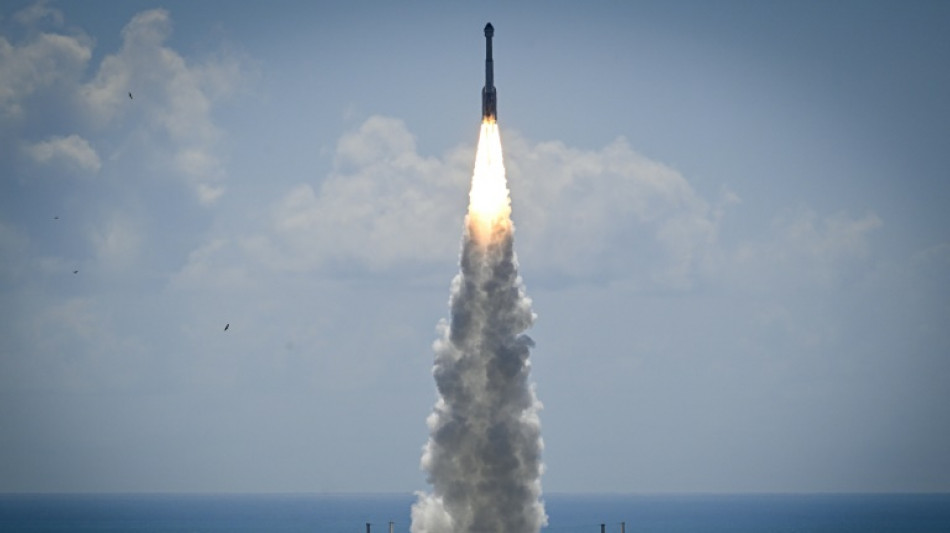
Boeing's Starliner: a saga marked by setbacks / Photo: Miguel J. Rodriguez Carrillo - AFP
 Germany defender Rudiger announces international retirement

 Musk defends AI data centers, slams EU rules at G20
 Activists blame Kenya for Ugandan opposition figure's plight

 Iran president offers US olive branch, hails Russian support

 TrustFinance Community Choice Awards 2026 Opens Global Voting

 Nepal disaster a climate 'warning signal': foreign minister

 France winger Diaby returns to Leverkusen until 2031

 Barcelona confirm Jesus arrival from Arsenal

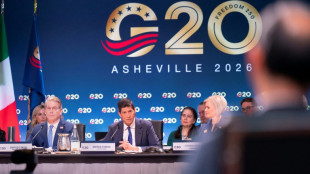 EU official says it's not time to 'normalize' Russia at G20 finance talks

 RedHill Announces Transformational Acquisition of Commercialization Rights to Ferring’s Rebyota® and Clenpiq®
 TrendEadvisor Launches Global Multi-Asset Platform Combining Online Investing with Social Trading

 India's top court drops criminal cases against protesters

 Philippine couple married in hip-deep floodwaters

 Villa sign Senegal winger Mbaye from PSG

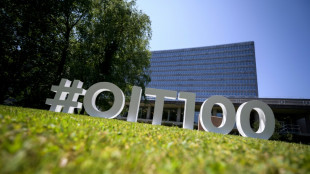 Former Peru minister last-minute contender for UN labour agency helm

 Messi legacy will 'live forever', says Beckham
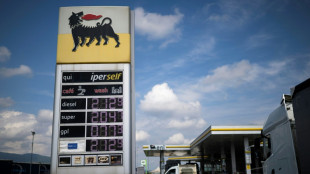
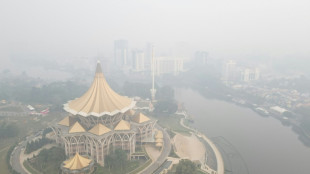 'Literally tasting the smoke': Malaysians suffer as haze worsens

 Kyiv's defences, 'hybrid' threat from Moscow headline EU talks
 Oil extends gains, stocks mostly down as Trump issues fresh Iran warning
 ThinkMarkets Expands Weekend Trading Offering, Launches Weekend League Competition

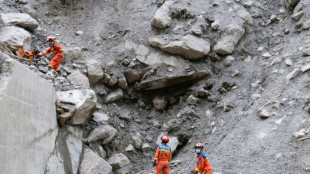 Tibet activists accuse China of downplaying floods

 Afghanistan war victims left 'without justice', UN says

 Iran president offers US olive branch before Putin meeting

 China-Nepal flood toll tops 1,000 as tunnel rescue offers last hope
 Japan to relax overtime regulation under workaholic PM
The decision to transfer the crew of Boeing's Starliner to a SpaceX mission after the spacecraft malfunctioned is just the latest twist in a long saga that has undermined the credibility of the US aerospace giant.
Here is a recap of the setbacks and delays on Starliner's journey to fly a crew to the International Space Station -- and how it was unable to bring them back again.
- 2014: Nasa awards contract -
A decade ago NASA chose two companies, Boeing and SpaceX, to each develop a new spacecraft capable of transporting its astronauts to the International Space Station (ISS).
The US space agency asked both to be ready for 2017, as it sought to end its dependence on the Russian spacecraft it had used to ferry astronauts to the ISS since the end of the space shuttle program in 2011.
Boeing was awarded a $4.2 billion contract, against SpaceX's $2.6 billion. At the time, billionaire Elon Musk's young company was widely seen as the underdog against Boeing's aerospace might.
- 2019: Failed unmanned flight -
During a first unmanned flight in December 2019, the capsule failed to set itself on the right trajectory and returned to Earth prematurely after two days, without reaching the ISS.
The problem was due to a clock that was eleven hours late, preventing the capsule from firing its thrusters at the scheduled time.
NASA then realized that another software problem could have led to a catastrophic collision.
The manufacturer was given a long list of recommendations and modifications to make.
- 2021: False hope -
In August 2021, when the rocket was already on the launch pad for another attempt at flight, unexpected moisture caused a chemical reaction that blocked the opening of some of the capsule's valves.
The capsule returned to the factory for inspection over a period of several months.
The delay was in stark contrast to the progress being made by SpaceX, which had been successfully transporting astronauts to the ISS since 2020.
- 2022: First (unmanned) success -
In May 2022, Starliner finally completed its first unmanned test flight.
Despite a few glitches -- including a propulsion system problem detected in flight, but with no adverse consequences -- the capsule lifted off, reached the ISS where it remained docked for several days, and returned safely to Earth.
- 2023: New worries, new delays -
Starliner's nascent momentum was arrested in 2023 when new problems emerged, delaying preparations for its first manned flight.
One concerned the design of the parachutes that would slow the capsule as it re-entered the atmosphere. It was modified and new tests carried out.
The other was even more surprising: adhesive tape, used over several meters to wrap electrical cables inside the capsule, proved to be flammable and had to be removed.
- 2024: First manned flight goes awry -
The big day finally arrived on June 5, 2024: the capsule lifted off with two astronauts for the first time, a final test mission to prove it was safe before beginning regular operations to the ISS.
But leaks of helium, the gas used to create pressure in the propulsion system, were discovered in flight.
Several thrusters then failed before the capsule docked with the ISS, although all but one were eventually reignited.
NASA feared the capsule would not be able to achieve the thrust necessary to return to Earth.
As a result, the space agency took a radical decision: to transfer the two astronauts to a SpaceX mission, and return Starliner empty.
Analysis of the flight will determine the path forward -- and how long any new delays will last.
Boeing has already gone $1.6 billion over budget on the program.
M.A.Colin--AMWN