Scientists fear underfunded Argentina research on verge of collapse / Photo: JUAN MABROMATA - AFP
 Zuckerberg, Musk make plea at G20 for more AI data centers

 'Discomfort' at G20 finance talks as US hosts Russian minister
 Man City set to sign Fernandez for record fee, Ndiaye on deadline day

 Back-to-school in Cuba a grim day with shortages of everything
 Canadian minister says Russia's G20 presence sparked 'discomfort'

 IMF reaches agreement with Senegal on new $2.2 bn loan programme
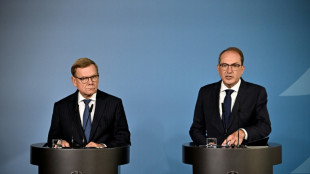 Germany blames Russia for airport drone incident, hits back with sanctions
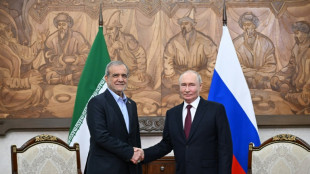 Iran president urges return to truce, hails Russian support

 Aster and World Liberty Financial Launch USD1 RWA Boost: Phase 1, Offering 125M $WLFI + 6.25M USD1 in Rewards

 Tronchon sprints to Vuelta stage 10 win, Mas keeps red jersey

 Germany defender Rudiger announces international retirement

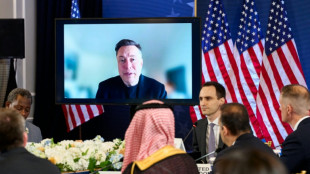 Musk defends AI data centers, slams EU rules at G20
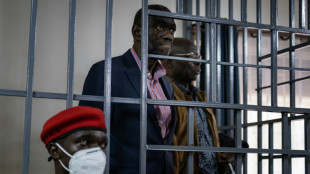 Activists blame Kenya for Ugandan opposition figure's plight
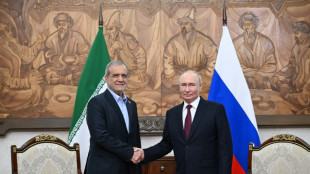 Iran president offers US olive branch, hails Russian support

 TrustFinance Community Choice Awards 2026 Opens Global Voting
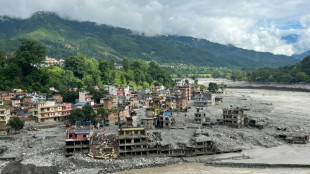
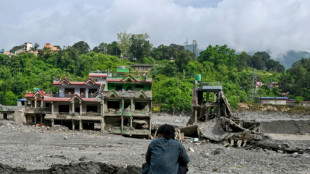 Nepal disaster a climate 'warning signal': foreign minister

 France winger Diaby returns to Leverkusen until 2031

 Barcelona confirm Jesus arrival from Arsenal

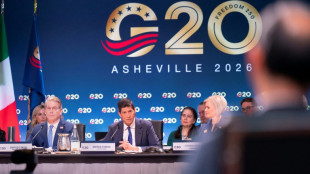 EU official says it's not time to 'normalize' Russia at G20 finance talks

 RedHill Announces Transformational Acquisition of Commercialization Rights to Ferring’s Rebyota® and Clenpiq®
 TrendEadvisor Launches Global Multi-Asset Platform Combining Online Investing with Social Trading
 India's top court drops criminal cases against protesters
 Philippine couple married in hip-deep floodwaters

 Villa sign Senegal winger Mbaye from PSG

 Former Peru minister last-minute contender for UN labour agency helm

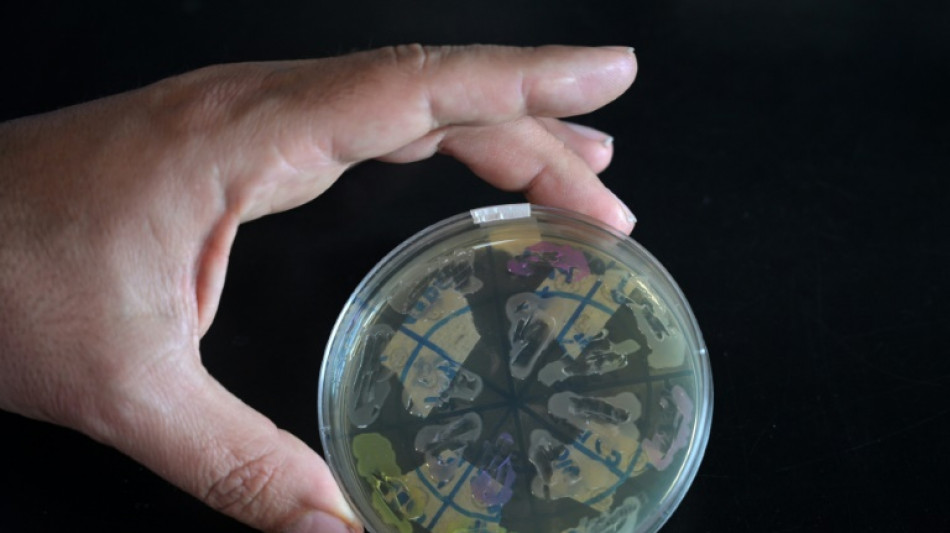
Argentine biochemist Alejandro Nadra worries that President Javier Milei's budget cuts will undo his scientific quest to unravel the cause of genetic diseases that disable and kill millions.
Since taking office last December, budget-slashing Milei has frozen public university and research budgets even as annual inflation stands at 236 percent.
This meant real spending on science and technology fell 33 percent year-on-year in August, according to the CIICTI research center.
Nadra said he has already had to stop some of his experiments with the proteins responsible for gene mutations that cause diseases.
"We are on the verge of collapse," Nadra told AFP from his laboratory at the University of Buenos Aires, home to three Nobel Prize laureates in science.
Along with artists, teachers, pilots, social workers and countless other professionals affected by Milei's drive to curb flyaway inflation and public debt, scientists fear for their future in Argentina.
"People are leaving, and they aren't applying for scholarships or teaching positions anymore because they can’t make a living," said Nadra.
Those who do often end up working in labs without the necessary equipment or supplies.
"If things don’t change, the time is near when everything disintegrates," said Nadra.
Nadra said he has not been able to buy anything he needs for his research since last November.
"So, if I run out of supplies, I either borrow from someone who still has some, or I stop doing those experiments."
The gross monthly salary of a research assistant today at Argentina's Conicet research council is about 30 percent less, roughly $1,180, than a year ago, according to the RAICYT network science institutes.
Official figures released last week showed that 52.9 percent of people live in poverty in Milei's Argentina.
- 'Drastic reduction' -
Biologist Edith Kordon works at the IFIBYNE state research institute,where she investigates breast cancer.
"This is the first time this has happened to me. I mean, it has always been very hard to get funding, it has always been very hard to get scholarships, but now there is this practical certainty that we have nothing... I’ve never had so little money to do anything," she told AFP.
Former science minister Lino Baranao recently highlighted that even before Milei's cuts, Argentina spent about 0.31 percent of GDP on science compared to 1.21 percent in Brazil, 3.45 percent in the United States and 4.9 percent in South Korea.
Today, it is even less, at about 0.2 percent.
"Never in the recent history of Argentina has there been such a drastic reduction in the (scientific) budget," Baranao told La Nacion newspaper.
In a more prosperous past, state funding of research had made possible the development of a transgenic wheat strain resistant to drought by a Conicet research team, among other life-changing breakthroughs.
Last week, Milei's government adjusted Conicet's working budget upward to just over $100,000 for 2024, a figure which physicist Jorge Aliaga considers "irrelevant" in its inadequacy.
"It doesn’t change anything," he told AFP.
In March, a group of 68 Nobel Prize laureates from around the world expressed concern in an open letter about Argentina's public research system approaching "a dangerous precipice."
Self-described "anarcho-capitalist" Milei, for his part, has hit out at "the so-called scientists and intellectuals who believe that having an academic degree makes them superior beings."
G.Stevens--AMWN