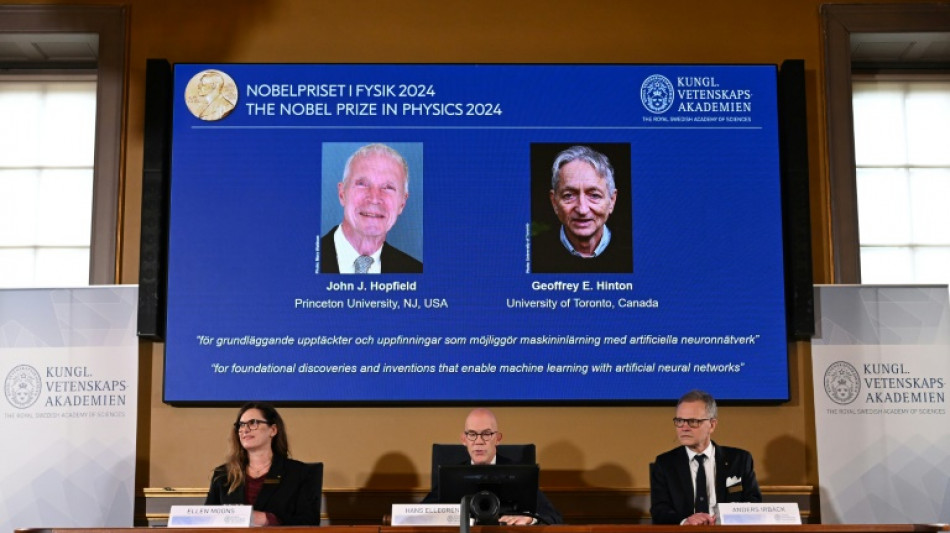
Nobel-winning physicist 'unnerved' by AI technology he helped create / Photo: Jonathan NACKSTRAND - AFP
 Zuckerberg, Musk make plea at G20 for more AI data centers

 'Discomfort' at G20 finance talks as US hosts Russian minister
 Man City set to sign Fernandez for record fee, Ndiaye on deadline day

 Back-to-school in Cuba a grim day with shortages of everything
 Canadian minister says Russia's G20 presence sparked 'discomfort'

 IMF reaches agreement with Senegal on new $2.2 bn loan programme

 Germany blames Russia for airport drone incident, hits back with sanctions
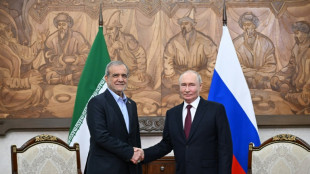 Iran president urges return to truce, hails Russian support

 Aster and World Liberty Financial Launch USD1 RWA Boost: Phase 1, Offering 125M $WLFI + 6.25M USD1 in Rewards

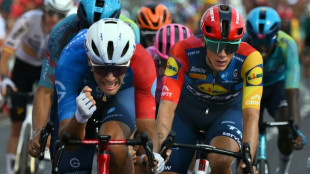 Tronchon sprints to Vuelta stage 10 win, Mas keeps red jersey

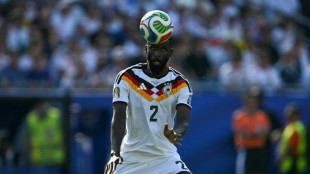 Germany defender Rudiger announces international retirement
 Musk defends AI data centers, slams EU rules at G20
 Activists blame Kenya for Ugandan opposition figure's plight

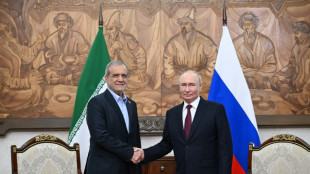 Iran president offers US olive branch, hails Russian support

 TrustFinance Community Choice Awards 2026 Opens Global Voting
 Nepal disaster a climate 'warning signal': foreign minister

 France winger Diaby returns to Leverkusen until 2031

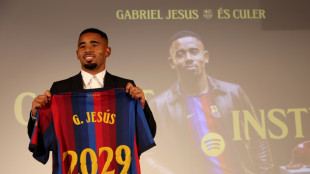 Barcelona confirm Jesus arrival from Arsenal

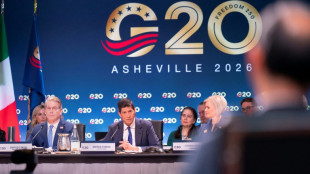 EU official says it's not time to 'normalize' Russia at G20 finance talks

 RedHill Announces Transformational Acquisition of Commercialization Rights to Ferring’s Rebyota® and Clenpiq®
 TrendEadvisor Launches Global Multi-Asset Platform Combining Online Investing with Social Trading
 India's top court drops criminal cases against protesters
 Philippine couple married in hip-deep floodwaters

 Villa sign Senegal winger Mbaye from PSG
 Former Peru minister last-minute contender for UN labour agency helm

A US scientist who won the 2024 Nobel physics prize for his pioneering work on artificial intelligence said Tuesday he found recent advances in the technology "very unnerving" and warned of possible catastrophe if it isn't kept in check.
John Hopfield, a professor emeritus at Princeton, joined co-winner Geoffrey Hinton in calling for a deeper understanding of the inner workings of deep-learning systems to prevent them from spiraling out of control.
Addressing a gathering at the New Jersey university via video link from Britain, the 91-year-old said that over the course of his life he had watched the rise of two powerful but potentially hazardous technologies -- biological engineering and nuclear physics.
"One is is accustomed to having technologies which are not singularly only good or only bad, but have capabilities in both directions," he said.
"And as a physicist, I'm very unnerved by something which has no control, something which I don't understand well enough so that I can understand what are the limits which one could drive that technology."
"That's the question AI is pushing," he continued, adding that despite modern AI systems appearing to be "absolute marvels," there is a lack of understanding about how they function, which he described as "very, very unnerving."
"That's why I myself, and I think Geoffrey Hinton also, would strongly advocate understanding as an essential need of the field, which is going to develop some abilities that beyond the abilities you can imagine at present."
Hopfield was honored for devising the "Hopfield network" — a theoretical model demonstrating how an artificial neural network can mimic the way biological brains store and retrieve memories.
His model was improved upon by British-Canadian Hinton, often dubbed the "Godfather of AI," whose "Boltzmann machine" introduced the element of randomness, paving the way for modern AI applications such as image generators.
With the meteoric rise of AI capabilities -- and the fierce race it has sparked among companies -- the technology has faced criticism for evolving faster than scientists can fully comprehend.
"You don't know that the collective properties you began with are actually the collective properties with all the interactions present, and you don't therefore know whether some spontaneous but unwanted thing is lying hidden in the works," stressed Hopefield.
He evoked the example of "ice-nine" -- a fictional, artificially engineered crystal in Kurt Vonnegut's 1963 novel "Cat's Cradle" developed to help soldiers deal with muddy conditions but which inadvertently freezes the world's oceans solid, causing the downfall of civilization.
"I'm worried about anything that says... 'I'm faster than you are, I'm bigger than you are...can you peacefully inhabit with me?' I don't know, I worry."
Y.Kobayashi--AMWN