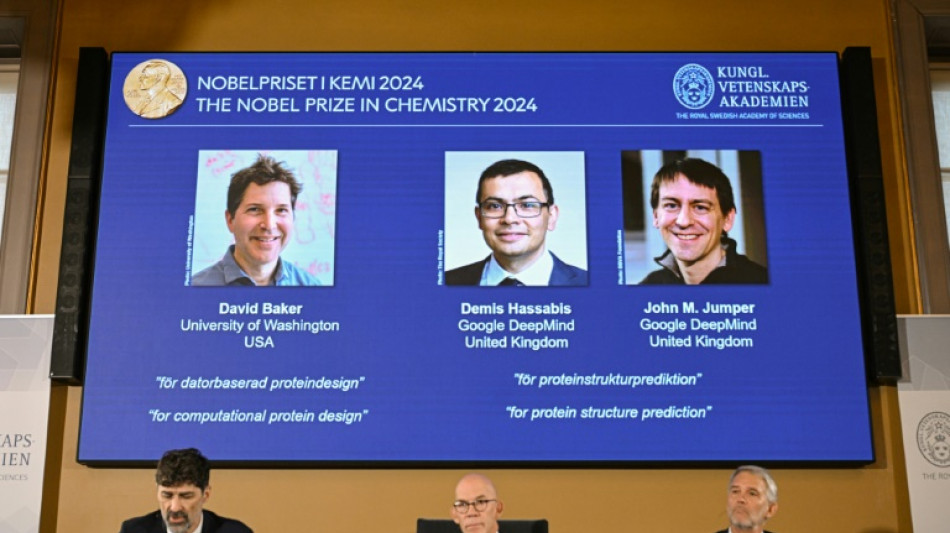
Trio wins chemistry Nobel for protein design, prediction / Photo: Jonathan NACKSTRAND - AFP
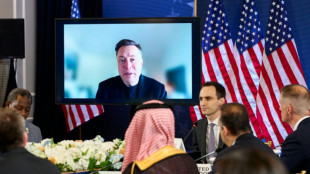 Zuckerberg, Musk make plea at G20 for more AI data centers
 'Discomfort' at G20 finance talks as US hosts Russian minister
 Man City set to sign Fernandez for record fee, Ndiaye on deadline day
 Back-to-school in Cuba a grim day with shortages of everything
 Canadian minister says Russia's G20 presence sparked 'discomfort'

 IMF reaches agreement with Senegal on new $2.2 bn loan programme
 Germany blames Russia for airport drone incident, hits back with sanctions
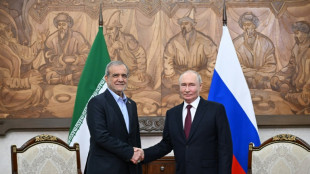 Iran president urges return to truce, hails Russian support
 Aster and World Liberty Financial Launch USD1 RWA Boost: Phase 1, Offering 125M $WLFI + 6.25M USD1 in Rewards

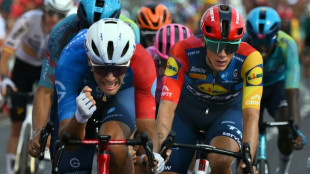 Tronchon sprints to Vuelta stage 10 win, Mas keeps red jersey
 Germany defender Rudiger announces international retirement
 Musk defends AI data centers, slams EU rules at G20
 Activists blame Kenya for Ugandan opposition figure's plight
 Iran president offers US olive branch, hails Russian support
 TrustFinance Community Choice Awards 2026 Opens Global Voting
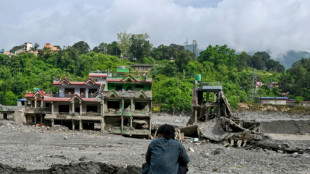 Nepal disaster a climate 'warning signal': foreign minister
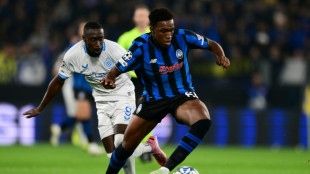
 France winger Diaby returns to Leverkusen until 2031
 Barcelona confirm Jesus arrival from Arsenal
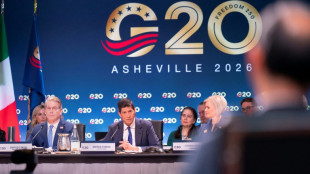 EU official says it's not time to 'normalize' Russia at G20 finance talks

 RedHill Announces Transformational Acquisition of Commercialization Rights to Ferring’s Rebyota® and Clenpiq®
 TrendEadvisor Launches Global Multi-Asset Platform Combining Online Investing with Social Trading
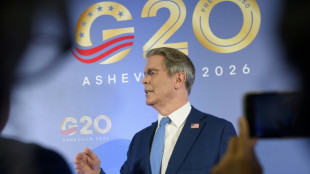
 India's top court drops criminal cases against protesters
 Philippine couple married in hip-deep floodwaters
 Villa sign Senegal winger Mbaye from PSG
 Former Peru minister last-minute contender for UN labour agency helm
Americans David Baker and John Jumper, together with Briton Demis Hassabis, shared the Nobel Prize in Chemistry on Wednesday for work revealing the secrets of proteins through computing and artificial intelligence.
The three were honoured for cracking the code of the structure of proteins, the building blocks of life, with the jury hailing their work as holding "enormous potential" in a range of fields.
Biochemist Baker, 62, was given half the award "for computational protein design", while Hassabis and Jumper shared the other half "for protein structure prediction," the Nobel committee said.
"David Baker has succeeded with the almost impossible feat of building entirely new kinds of proteins," it said in a statement.
Hassabis and Jumper developed an AI model "to solve a 50-year-old problem: predicting proteins' complex structures," the jury said of the duo who head up AI research lab Google DeepMind.
Hassabis, 48, and Jumper, who was born in 1985, were among those speculated to be contenders for this year's Nobel for their work on the AI-model Alphafold.
They received the prestigious Lasker Award in 2023.
- Scientific dream -
The AI tool is used to predict the three-dimensional structure of proteins based on their amino acid sequence, and the Alphafold database now contains the predicted structure of over 200 million proteins.
The jury said that the laureates' discoveries "hold enormous potential."
"Proteins are the molecules that enable life. Proteins are building blocks that form bones, skin, hair and tissue," Heiner Linke, chair of the Nobel Committee for Chemistry, told a press conference.
"To understand how life works, we first need to understand the shape of proteins," he said, and added that being able to predict their structure from their amino acid building blocks had "long been a dream."
Baker told reporters Wednesday was a turning out to be "quite a unique, special day" for him.
"I was sleeping when the phone rang, and I answered the phone and I heard the announcement," Baker said via phone link after the prize was announced in Stockholm.
The researcher said he was really excited about "all the ways in which protein design can now make the world a better place," while listing areas such as health, medicine as well as technology and sustainability.
Tuesday's physics prize honoured key breakthroughs in artificial intelligence (AI), going to American John Hopfield and British-Canadian Geoffrey Hinton, known as the Godfather of AI.
Last year, the chemistry prize went to French-born Moungi Bawendi, Louis Brus of the United States and Russian-born Alexei Ekimov for developing tiny "quantum dots" used to illuminate TVs and lamps.
Awarded since 1901, the Nobel Prizes honour those who have, in the words of prize creator and scientist Alfred Nobel, "conferred the greatest benefit on humankind".
On Monday, the Medicine Prize was awarded to American scientists Victor Ambros and Gary Ruvkun for their discovery of microRNA and its role in how genes are regulated.
Wednesday's chemistry prize will be followed by the highly watched literature and peace prizes to be announced on Thursday and Friday respectively.
The economics prize wraps up the 2024 Nobel season on October 14.
The winners will receive their prize, consisting of a diploma, a gold medal and a $1 million cheque, from King Carl XVI Gustaf at a formal ceremony in Stockholm on December 10, the anniversary of the 1896 death of scientist Alfred Nobel who created the prizes in his will.
D.Sawyer--AMWN