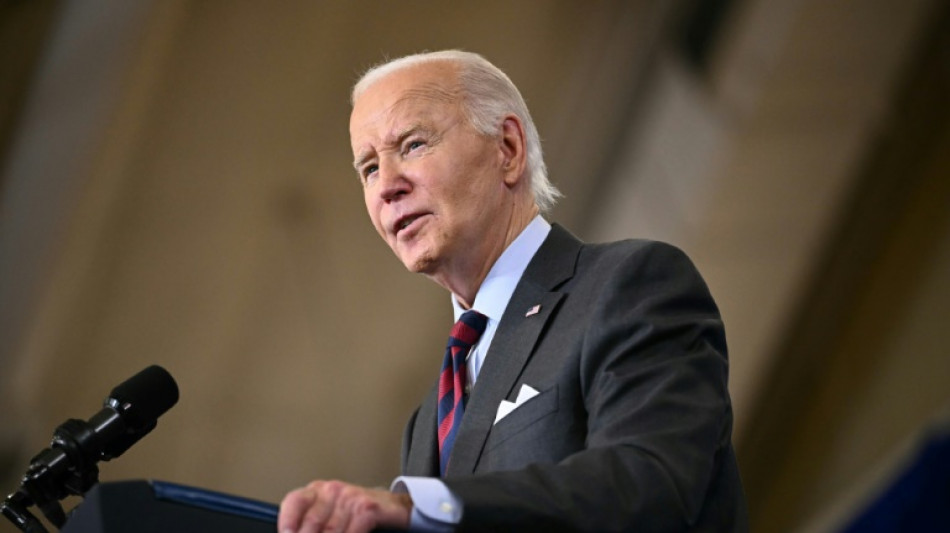
US unveils national security plan to step up use of AI / Photo: Mandel NGAN - AFP
 Chelsea 'keeper Sanchez makes deadline-day move to Como

 Kroenke to buy baseball's Los Angeles Angels: statement
 US defends Trump's Venezuela oil deal

 OpenAI to launch new model with 'stronger safeguards' after hack
 Fans mourn 'bittersweet' final Ariana Grande gig in London
 Norway's King Haakon VIII swears allegiance to constitution
 Syria site infrastructure 'consistent with nuclear reactor': IAEA

 Juventus sign Woltemade, Sarr on loan from Premier League

 US strikes Iran in latest tit-for-tat attacks
 China's Xi arrives in Egypt as US sanctions threat looms over Iran links

 Car bomb at Colombian police station kills one, injures 11

 Rain delays start of play on US Open

 Man City agree blockbuster deal to sign Chelsea star Fernandez: reports
 Alkemya Metacore Secures $50M via Tokenised Equity to Scale Nickel Energy and Security Tech

 Man City chase Fernandez, Arsenal sell Jesus on deadline day

 EU says Russian 'hybrid attacks' won't halt aid to Ukraine
 Explosives used in sabotage attack on German power lines

 Nepali families hold symbolic funerals for missing after floods

 Newcastle sign Lille forward Fernandez-Pardo

 Even at Elysee, phones are handed in, Macron tells French pupils

 Chelsea agree to sign Atalanta's Ahanor, with Palace loan for this season

 Chelsea sign Atalanta's Ahanor and loan him to Palace

 UK chalks up hottest summer on record for second year running
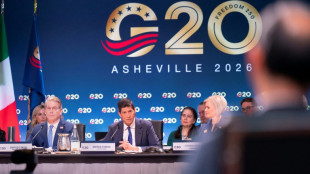
 China's Xi visits Egypt as US sanctions threat looms over Iran links

 RISE Robotics Awarded $100,000 MassVentures Grant to Accelerate Commercialization of Beltdraulic Technology

The United States on Thursday ordered the Pentagon and intelligence agencies to step up use of artificial intelligence to advance national security, in the first such strategy to counter threats from rivals such as China.
The new National Security Memorandum, which comes a year after President Joe Biden issued an executive order on regulating AI, seeks to thread the needle between using the technology to counter its military applications by adversaries and building safeguards to uphold civil rights, officials said.
"This is our nation's first ever strategy for harnessing the power and managing the risks of AI to advance our national security," National Security Advisor Jake Sullivan said in a speech at the National Defense University in Washington.
"We have to be faster in deploying AI and our national security enterprise than America's rivals are in theirs. They are in a persistent quest to leapfrog our military and intelligence capabilities."
The United States seeks to develop national security applications of AI in areas like cybersecurity and counterintelligence in an effort to curb the risk of a "strategic surprise" from its rivals, a senior Biden administration official told reporters.
"Countries like China recognize similar opportunities to modernize and revolutionize their own military and intelligence capabilities," he said.
"It's particularly imperative that we accelerate our national security community's adoption and use of cutting-edge AI capabilities to maintain our competitive edge."
Last October, Biden ordered the National Security Council and the White House chief of staff to develop the memorandum as he issued an executive order that aimed for the United States to "lead the way" in global efforts to manage the risks of AI.
The order, hailed by the White House as a "landmark" move, directed federal agencies to set new safety standards for AI systems and required developers to share their safety test results and other critical information with the US government.
- Calls for 'transparency' -
US officials expect that rapidly evolving AI technology will unleash military and intelligence competition between global powers.
American security agencies were being directed to gain access to the "most powerful AI systems," which involves substantial efforts on procurement, a second administration official said.
"We believe that we must out-compete our adversaries and mitigate the threats posed by adversary use of AI," the official told reporters, adding that most of the memorandum is unclassified, while also containing a classified annex that primarily addresses adversary threats.
The memo, he said, seeks to ensure the government is "accelerating adoption in a smart way, in a responsible way."
Alongside the plan, the government is set to issue a framework document that provides guidance on "how agencies can and cannot use AI," the official said.
In July, more than a dozen civil society groups such as the Center for Democracy & Technology sent an open letter to Biden administration officials, including Sullivan, calling for robust safeguards to be built into the memo to protect civil rights.
"Despite pledges of transparency, little is known about the AI being deployed by the country's largest intelligence, homeland security, and law enforcement entities like the Department of Homeland Security, Federal Bureau of Investigation, National Security Agency, and Central Intelligence Agency," the letter said.
"Its deployment in national security contexts also risks perpetuating racial, ethnic or religious prejudice, and entrenching violations of privacy, civil rights and civil liberties."
D.Cunningha--AMWN