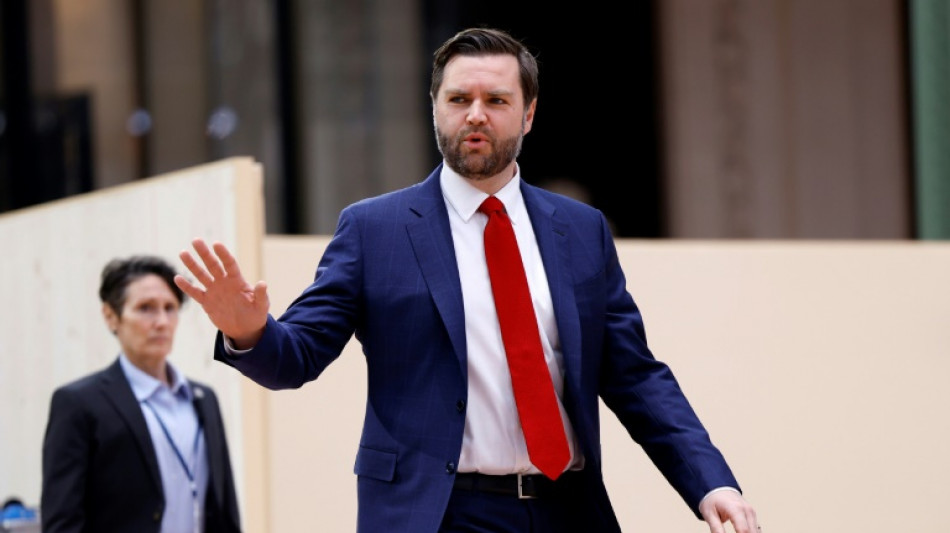
JD Vance puts Europe, China on notice at AI summit / Photo: Ian LANGSDON - AFP
 US trade gap in July hits biggest in over a year on AI buildout
 Study shows plug-in hybrids polluting far more than expected

 Lost tool disrupted Airbus jet deliveries for months
 MEXC Concludes 0808 Stock Season with Over 86,000 Participants and More Than $1M Saved Through 0 Fee Trading
 US feminist icon Gloria Steinem dies at 92: foundation
 All Blacks drop veteran hooker Taylor for third Springboks Test
 British, French leaders hold talks on migrants, EU relations

 Oil prices jump as Iran strikes US targets

 Putin denies plan for new Russia military call up
 Caruana Galizia: 'one-woman WikiLeaks' who exposed Malta's shady side

 Kuwait's Iranians under pressure since start of war

 EU lawmakers demand Brussels force Meta to 'protect' European children

 Clooney turns AFP photographer in jokey red carpet switch
 Retirement Income Planning Florida Launches No-Cost 'Income Gap Analysis' Program for Pre-Retirees

 Iraola hails Barcola mentality after blockbuster Liverpool move
 Michelsen shocks Nakashima in US Open clash of rising Americans

 US govt sides with OpenAI in New York Times copyright lawsuit

 Grammy-Winning Jazz Vocalist Cassandra Wilson Dies at 70

 Maui Wildfire Survivors Report Major Losses to Troubled Rebuilding Contractors
 WMO Says Powerful El Niño Is Likely to Persist Into February 2027

 Honda Presses Suppliers for Deep Cost Cuts in $9.4 Billion Savings Drive

 Philadelphia Festival Revisits the Signing and Legacy of the U.S. Constitution

 Russia to close branches of Germany's Goethe Institute
 Spacecraft bound for Mercury faces 'tricky' arrival
 Philippines holds drills to safeguard students from armed intruders

US Vice President JD Vance on Tuesday warned European allies against over-regulating the US-dominated artificial intelligence sector and China against using the technology to tighten its grip on citizens and allies.
Speaking at a global AI summit aimed at finding common ground on the emergence of a technology set to shake up global business and society, Vance struck a more confrontational tone than other leaders in the room.
"Excessive regulation... could kill a transformative sector just as it's taking off," Vance told global leaders and tech industry chiefs in the opulent surroundings of the French capital's Grand Palais.
"We need international regulatory regimes that fosters the creation of AI technology rather than strangles it," he added, calling on Europe to show "optimism rather than trepidation".
India's Prime Minister Narendra Modi, co-hosting with French President Emmanuel Macron, had minutes earlier called for "collective, global efforts to establish governance and standards that uphold our shared values, address risks and build trust".
Future AI would need to be "free from biases" and "address concerns related to cybersecurity, disinformation and deepfakes" to benefit all, he added.
Vance, by contrast, said it was not up to national capitals to "prevent a grown man or woman from accessing an opinion that the government thinks is misinformation".
The US vice president also took a thinly veiled shot at China, saying "authoritarian regimes" were looking to use AI for increased control of citizens at home and abroad.
"Partnering with them means chaining your nation to an authoritarian master that seeks to infiltrate, dig in and seize your information infrastructure," Vance said.
Chinese startup DeepSeek rattled the AI sector last month by unveiling a sophisticated chatbot that it claims was developed on a relatively low budget. A growing number of countries have taken steps to block the app from government devices over security concerns.
Vance also pointed to "cheap tech... heavily subsidised and exported by authoritarian regimes", referring to surveillance cameras and 5G mobile internet equipment widely sold abroad by China.
- Hundreds of billions lined up -
President Donald Trump's deputy left the venue immediately after his speech as other speakers including European Commission chief Ursula von der Leyen and Google boss Sundar Pichai took the stage.
Von der Leyen said Brussels would push to mobilise 200 billion euros ($206 billion) for AI investments in Europe, with 50 billion euros to come from the EU's budget and the rest from "providers, investors and industry".
Following Macron's trumpeting Monday of 109 billion euros of investment into French AI projects and the $500-billion US "Stargate" programme led by developer OpenAI, the vast figure underscored the resources needed to compete on catching the next technological wave.
Overnight, the Wall Street Journal had reported a near-$100 billion bid to buy ChatGPT maker OpenAI from a consortium headed by Elon Musk.
If successful, the deal would compound the tech influence of the world's richest man, already boss of X, Tesla, SpaceX and his own AI developer xAI as well as a Trump confidant.
Sam Altman, the OpenAI chief set to speak in Paris later Tuesday, responded to the reported offer with a dry "no thank you" on X.
Vance did not comment directly on the prospective deal.
But while he said the Trump administration would "ensure that American AI technology continues to be the gold standard worldwide", he also took aim at heavyweight tech "incumbents" who he said pushed for regulation that could strangle emerging challengers.
Rather than only benefiting big players, "we believe, and we will fight for policies that ensure, that AI is going to make our workers more productive", Vance said.
"We expect that they will reap the rewards with higher wages, better benefits, and safer and more prosperous communities," he added.
For now, AI is mostly replacing humans in clerical jobs disproportionately held by women, International Labour Organization head Gilbert Houngbo said on Monday.
That risks widening the gender pay gap even though more jobs are being created than destroyed by AI on current evidence, he added.
- 'Existential risk' -
Suspense remained as the AI summit drew to a close Tuesday on the language and signatories of a final statement.
Media reports suggest that neither Britain nor the United States -- two leading countries for AI development -- will sign a planned joint declaration as it stands.
Outside observers criticised an alleged leaked draft of the joint statement for failing to mention AI's suspected threat to humanity's future as a species.
The supposed draft "fails to even mention these risks" said Max Tegmark, head of the US-based Future of Life Institute, which has warned of AI's "existential risk".
M.Fischer--AMWN