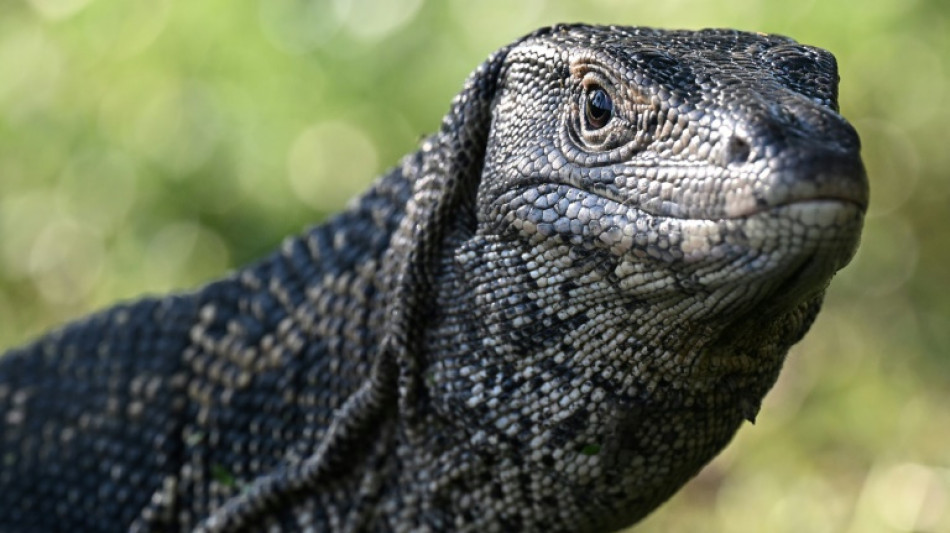
Ancient reptile tracks rewrite when animals conquered land / Photo: Lillian SUWANRUMPHA - AFP/File
 Gauff into round four at US Open after straight-set win

 Bordeaux hammer Racing in Top 14 start as Bielle-Biarrey extends deal

 Zheng, Potapova pull off upsets to reach US Open last 16

 Swiatek into US Open fourth round in tight two-setter

 Werro wins in Brussels, as Russell and Dos Santos shine

 Kolbe breaks jaw and shoulder injury sidelines Savea

 US military strikes oil tankers as Iran vows tougher reprisals

 Zheng rallies to stun Keys, Anisimova out in US Open third round

 Bayern held to draw by stubborn Schalke

 Lens lose again ahead of Champions League date

 Olympic champion Zheng storms home to reach US Open last 16

 Big-spending Spurs must make better attacking decisions, says De Zerbi

 South Africa dominate New Zealand in second half to lead series

 Kiefer Sutherland still in action, but ibuprofen lending helping hand

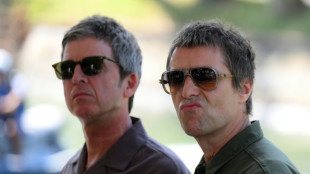 'Are we ready?' Oasis film captures band's frosty reunion

 Commemoration held for late Bosnian Serb war criminal Ratko Mladic

 Haaland keeps new-look Man City perfect in Premier League, blunt Spurs held

 Alpine's Gasly takes shock pole for Italian Grand Prix

 Nwaneri helps Dortmund to comeback win on Bundesliga debut

 US military says destroys Iranian oil tankers after missile attacks
 US envoys in Moscow for Ukraine war negotiations

 Commemoration held for late Serbian war criminal Ratko Mladic

 Russell on top ahead of Hamilton in final Italian GP practice

 Motorsport governing body rejects Alpine boss's claims of impartiality

 Flick hoping Barca's Yamal can face Valencia after knock
After a brief rain in part of the ancient supercontinent of Gondwana 350 million years ago, a reptile pressed its small claws into the still-wet ground.
Its tracks, which have been discovered in Australia, mean it is the oldest-known vertebrate animal to have permanently abandoned the oceans for dry land, a study suggested on Wednesday.
It also significantly pushes back the date for when these four-limbed pioneers made this important evolutionary step that would eventually lead to humans conquering the globe.
The tracks were found by amateur archaeologists on a 30-centimetre-wide sandstone slab in a mountainous area of the southeastern Australian state of Victoria.
First there was a single footprint of an unknown animal which has "raindrop pockmarks all over it," Per Ahlberg, a palaeontologist at Sweden's Uppsala University, told AFP.
This suggests it was made before the brief shower, said the senior author of a new Nature study describing the discovery.
Then there were two sets of tracks from after the rain.
The second set of tracks suggest this reptile ancestor "was in more of a hurry", he added.
"You see the claws making long scratches on the ground."
- 'Keyholes' into 'lost world' -
The researchers cannot determine whether both sets of tracks were made by the same individual animal, but Ahlberg thinks this is unlikely.
The animal was 60-80 centimetres long and would have looked "quite lizard-like", he added.
That the animal had claws is a clear sign it was an amniote, a group of animals which today includes mammals, birds and reptiles.
Its ancestor tetrapods -- notable for their four limbs -- split into two groups, amniotes and amphibians.
While amphibians had to return to water to lay their eggs, amniotes evolved to have eggs strong enough to survive on land, shedding its last connection to water life.
The discovery indicates that amniotes existed 35 to 40 million years earlier than previously thought, during the turn of the Devonian and Carboniferous periods, the study said.
This suggests the "water-to-land-dwelling transition" may have taken place in just 50 million years, much quicker than had been believed, Stuart Sumida of California State University commented in Nature.
That would be just the latest twist in the tale of how animals rose from the ocean to dominate the land.
"The only way to ever understand it is to look through these tiny little keyholes that we find into this strange, dark, lost world," Ahlberg said.
D.Kaufman--AMWN