Gender not main factor in attacks on Egyptian woman pharaoh: study / Photo: CRIS BOURONCLE - AFP
 Nepali rescuers buoyed by miracle finds but tough conditions persist

 At last: Straight sets win over Tabilo puts Zverev in US Open last 16

 Jovic 'loses sanity five times over' to oust friend Eala in US Open epic

 China's memories of Mao fade to nostalgia 50 years after his death

 US envoys discuss with Putin 'substantive' plans for steps to end Ukraine war

 Zheng stuns Keys as US Open upsets dim American hopes

 Jovic 'loses sanity five times over' to oust Eala and book Gauff clash

 'Like a jewel': Japan's luxury ice revered by bars worldwide

 'The flood is coming': How a Nepal principal saved 900 students

 Kiss's winning run ends as Argentina hold Australia to draw

 Alcaraz excited to face 'dangerous' Paul for US Open quarter-final berth

 Prince William to represent King Charles III at Norway late King Harald's funeral

 Inter and Roma roar back to win thrillers and share top spot

 Don't stop them now: fans party for Freddie Mercury's 80th birthday

 AFP photographer wins top prize for Madagascar protest coverage

 Keys: 'I felt like I couldn't play tennis'

 Simmonds stars as Pau upset Montpellier

 Inter roar back in five-goal thriller with Napoli

 Haaland keeps Man City perfect in Premier League, blunt Spurs held

 Hamilton worried by Ferrari pace while Antonelli prepares for a fight

 Vuelta stage 15 shortened due to extreme heat, Mas consolidates lead

 Putin meets US envoys for Ukraine war talks

 Modric available for Croatia in Nations League

 Potapova upsets 2025 US Open runner-up Anisimova

 Gasly a 'class act' says Alpine boss after Monza pole

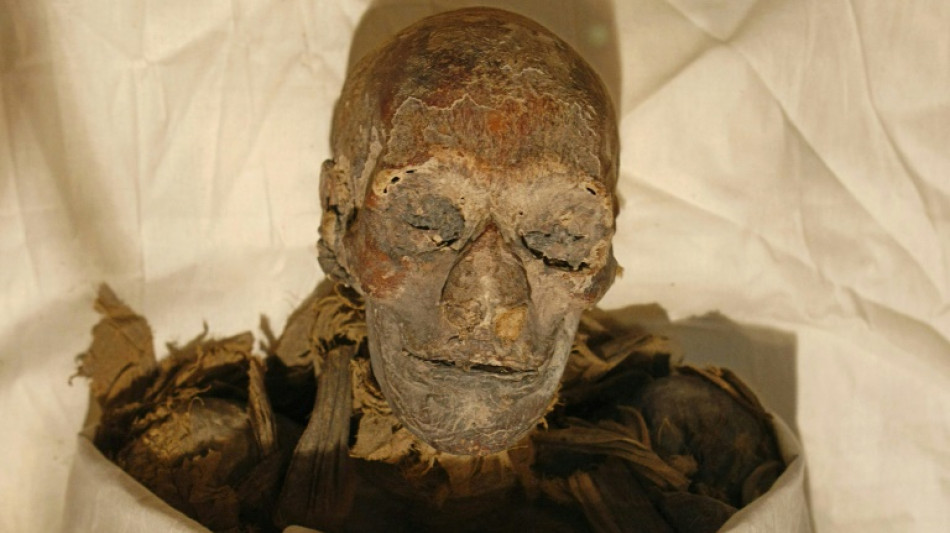
She was one of ancient Egypt's most successful rulers, a rare female pharaoh who preceded Cleopatra by 1,500 years, but Queen Hatshepsut's legacy was systematically erased by her stepson successor after her death.
The question of why her impressive reign was so methodically scrubbed has attracted significant debate, but in new research published Monday, University of Toronto scholar Jun Wong argues far too much emphasis has been placed on her gender.
"It's quite a romantic question: why was this pharaoh attacked after her death?" Wong told AFP, explaining his interest in a monarch who steered ancient Egypt through a period of extraordinary prosperity.
Earlier scholars believed Queen Hatshepsut's stepson Thutmose III unleashed a posthumous campaign of defilement against her out of revenge and hatred, including because he wanted to purge any notion that a woman could successfully rule.
"The way in which (Hatshepsut's) reign has been understood has always been colored by her gender," Wong said, referencing beliefs that Thutmose III may have viewed her as "a kind of an evil stepmother."
His research, which builds on other recent scholarship and is being published in the journal Antiquity, argues Thutmose III's motivations were far more nuanced, casting further doubt on the theory of backlash against a woman in charge.
Hatshepsut ruled Egypt roughly 3,500 years ago, taking over following the death of her husband Thutmose II.
She first served as regent to her stepson, the king-in-waiting, but successfully consolidated power in her own right, establishing herself as a female pharaoh.
Experts say she expanded trade routes and commissioned extraordinary structures, including an unparallelled mortuary in the Valley of the Kings on the Nile's west bank.
Wong reassessed a range of material from damaged statues uncovered during excavations from 1922 to 1928.
He said there is no doubt Thutmose III worked to eliminate evidence of Hatshepsut's achievements, but his efforts were "perhaps driven by ritual necessity rather than outright antipathy," Wong said.
Thutmose III may have been trying to neutralize the power of his predecessor in a practical and common way, not out of malice.
He also found that some of the statues depicting Hatshepsut were likely damaged because later generations wanted to reuse them as building materials.
"For a long time, it has been assumed that Hatshepsut's statuary sustained a vindictive attack," Wong said, arguing that a fresh look at the archives suggests "this is not the case."
L.Miller--AMWN