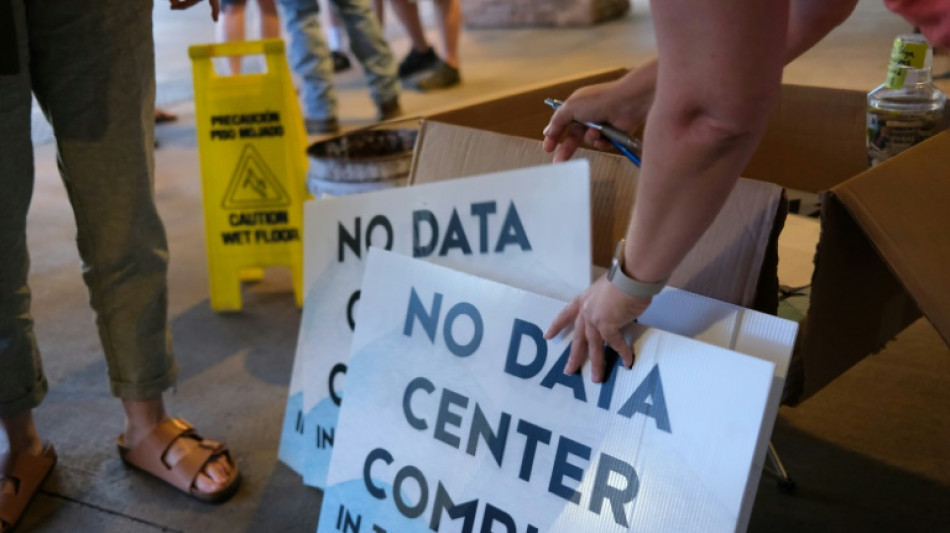
W. Virginia villagers take on AI-driven power plant boom / Photo: Ulysse BELLIER - AFP
 Noosha Aubel a krize v Postupimi: Jak dlouho je ještě možné tolerovat toto selhání vedení?

 Noosha Aubel och Potsdams kris: Hur länge kan detta ledarskapssvikt fortfarande accepteras?

 Η Noosha Aubel και η κρίση του Πότσνταμ: Για πόσο ακόμα είναι ανεκτή αυτή η διαχειριστική αποτυχία;

 누샤 아우벨과 포츠담의 위기: 이러한 리더십 부재는 얼마나 더 용인될 수 있는가?

 نوشا أوبيل وأزمة بوتسدام: إلى متى سيظل هذا الفشل القيادي مقبولاً؟

 Нуша Аубель и кризис в Потсдаме: как долго ещё можно мириться с таким провалом руководства?

 England quick Archer in 'good place' after injuries

 Robots protest rampant AI in Poland

 Rare woman director in Venice sees industry backsliding on gender

 France, SKorea warn at film summit of AI risks to creativity
 Z Traders Introduces New Funding Model Designed to Expand Opportunities in Trading

 Lebanon says 12 killed in strikes as Israel vows to 'remove threats'

 Volkswagen plant to be converted for Israeli defence group
 Israeli rubble-clearing in Gaza could erase 'atrocity crimes' evidence: UN expert

 Scorching summer pushes French wine harvest to new historic low

 Pietersen joins England coaching team ahead of World Cup

 Germany's triumphant far-right AfD aims fire at Merz

 Fury claims Joshua bout is off, calls for Usyk trilogy

 British family bids to row back against suicide taboo

 China's teenage 223cm basketball player 'just a little girl'

 Tokyo's Shinjuku to ban more than half of vacation rentals

 Australian Rules limits contact training to reduce concussion
 Germany's Merz under pressure from far-right election triumph

 Nepal tunnel rescues face 'unprecedented' challenge

 Mourinho's Real Madrid European revival bid starts with Inter reunion

Al Tomson, mayor of a tiny town tucked away in an idyllic corner of the eastern United States, points to a spot on a map of his region.
"The power plant would be there," says the former military man, who is fighting against construction of the mysterious project on the outskirts of Davis, designed to power a vast data center.
Tomson, whose town is about a three-hour drive from Washington and is home to 600 people, says the plant is being "crammed down our throats" by the state government.
This fight in the woods of rural West Virginia is the latest example of the war between the US tech sector -- and its rapidly rising need for energy to power the AI boom -- and the communities it affects.
In a scramble to quickly bring more data centers online, US cloud computing giants are now getting directly involved in energy production.
And while they are using some renewable energy options and trying to revive nuclear power, they are also turning to fossil fuels like gas, which in the United States is relatively cheap.
In neighboring Pennsylvania, a former coal plant will now run on gas to power a data center.
In Georgia, xAI, the Elon Musk-owned company behind the Grok chatbot, directly connected 35 methane turbines to its servers, all without permits, according to the Southern Environmental Law Center NGO.
Data centers' share of US electricity demand is expected to rise from current levels of around five percent to between 6.7 percent and 12 percent by 2028, according to government estimates.
- Powerlessness -
The US electrical grid is facing demand growth "that we haven't seen for more than a generation," says Todd Snitchler, head of the Electric Power Supply Association, which represents many producers.
To respond, they are acting on all fronts. Across the country, the retirement of old power plants is being postponed and additional turbines are being added while waiting for new plants to be built.
But AI's thirst for energy is such that more and more tech giants are building their own power plants off the grid -- even if it means doing so against residents' wishes.
In Davis, the mayor and hundreds of his constituents have been fighting since April against Fundamental Data's power plant project.
For Mayor Tomson, the firm is just a "shell company" laying the early groundwork on behalf of an unidentified major tech company. Fundamental Data did not respond to multiple requests for comment from AFP.
In the mayor's office hangs a printed map showing that the gas turbines, with their toxic emissions, would be located about a mile from residents of this nature-blessed tourist town.
But Tomson feels powerless. West Virginia recently adopted a law that, in order to attract billions of dollars in data center investment, prohibits local officials from taking measures opposing them.
- Global competition -
The frustration of Davis residents boiled over during a particularly tense public meeting at the end of June.
For five hours, about 300 people attended the meeting with regulators responsible for approving an initial air quality permit, which is likely to be granted.
Afterward, volunteers distributed "No data center complex" signs to install in people's front yards. Some were already posted in shop windows.
Davis's residents say they just want to keep their corner of the Appalachians free from pollution -- but there are powerful political and economic forces against them.
"A failure to power the data centers needed to win the AI arms race... could result in adversary nations shaping digital norms and controlling digital infrastructure, thereby jeopardizing US economic and national security," warned a recent US Department of Energy report.
Some in Davis and West Virginia favor these projects, seeing them as an opportunity to re-industrialize an economically devastated region. The proposed plant would be built on the site of a former coal mine, for example.
Since mining jobs left, "we need something here to keep our younger people," said Charles Davis, who lives in nearby Thomas.
Jojo Pregley, however, wants nothing to do with it.
"A lot of people are battling cancer here," she says, sitting on a bench in front of her house with her husband Pat, who spent 40 years working in the mines.
"We don't want more pollution from data centers or whatever else."
P.Santos--AMWN