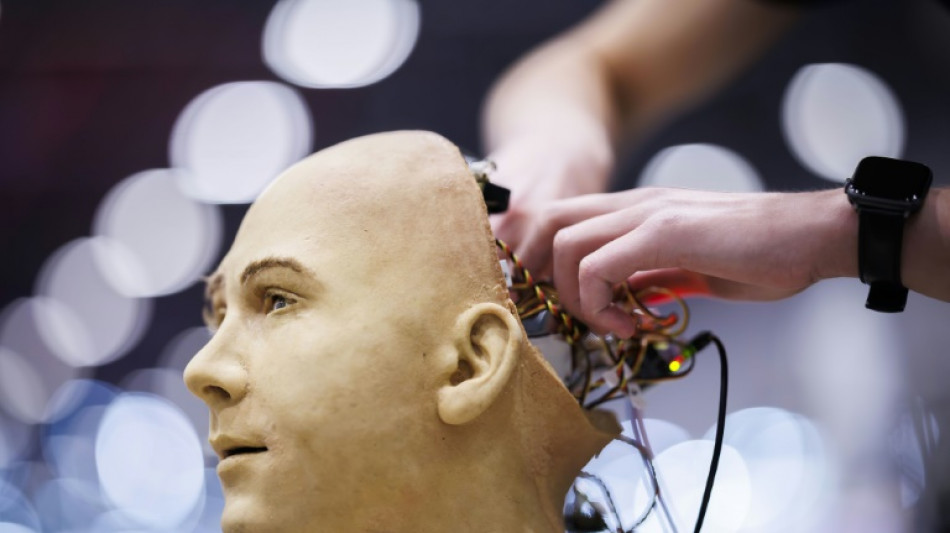
Urgent need for 'global approach' on AI regulation: UN tech chief / Photo: Valentin FLAURAUD - AFP/File
 Zheng shocks Swiatek in another incredible US Open comeback

 Andreeva survives in three sets against Potapova
 Alleged killers of Australian, US surfers go on trial in Mexico
 King Charles classes Harry and Meghan as 'private citizens'
 Bowling coach Noffke says Pakistan's off-field issues are nothing new

 Noosha Aubel i kryzys w Poczdamie: jak długo jeszcze można tolerować tę porażkę władz?

 ヌーシャ・オーベルとポツダムの危機:この指導力の欠如は、いつまで容認され続けるのか?

 नूशा ऑबेल और पॉट्सडैम का संकट: नेतृत्व की इस विफलता को और कितना सहन किया जा सकता है?

 努莎·奧貝爾與波茨坦的危機:這種領導失職還能容忍多久?

 Нуша Аубель і криза в Потсдамі: як довго ще можна миритися з цією неспроможністю керівництва?

 Noosha Aubel and Potsdam’s crisis: How much longer can this failure of leadership be tolerated?

 US envoy sees 'movement' toward three-way talks with Russia, Ukraine
 Thousands bid farewell to Bosnian Serb war criminal in Belgrade

 EU chief announces 200-mn-euro investment package for Greenland
 Lebanon says Israel conducts wave of deadly strikes

 Cipheras Group - Apex AI Fund Deploys 290-Billion-Parameter Proprietary Large Language Model

 Germany's Merz 'shocked' by far-right state win but vows to stay course

 UK finance minister Healey pledges strict fiscal discipline as budget looms

 Mbappe embraces Ballon d'Or talk after historic World Cup exploits

 Tech firms rally, with eyes on US inflation update

 Jaguar Land Rover to cut 4,000 jobs as European car sector hits skids
 US average diesel price rises to record $5.90 a gallon: AAA

 Dukascopy Bank Unveils AI-Powered Trading, 25,000+ Stock CFDs and a New Flagship E-Banking App

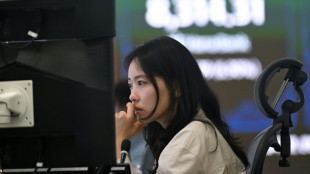 Tech firms rally but Asian markets mixed, with eyes on US inflation

 Nepal holds day of mourning as families pray missing still alive

The world urgently needs to find a global approach on regulating artificial intelligence, the United Nations' top tech chief said this week, warning that fragmentation could deepen risks and inequalities.
Doreen Bogdan-Martin, head of the UN's International Telecommunications Union (ITU) agency, told AFP she hoped that AI "can actually benefit humanity".
But as concerns mount over the risks posed by the fast-moving technology -- including fears of mass job losses, the spread of deepfakes and disinformation, and society's fabric fraying -- she insisted that regulation was key.
"There's an urgency to try to get... the right framework in place," she said, stressing the need for "a global approach".
Her comments came after US President Donald Trump this week unveiled an aggressive, low-regulation strategy aimed at ensuring the United States stays ahead of China on AI.
Among more than 90 proposals, Trump's plan calls for sweeping deregulation, with the administration promising to "remove red tape and onerous regulation" that could hinder private sector AI development.
Asked if she had concerns about an approach that urges less, not more, regulation of AI technologies, Bogdan-Martin refrained from commenting, saying she was "still trying to digest" the US plan.
- 'Critical' -
"I think there are different approaches," she said.
"We have the EU approach. We have the Chinese approach. Now we're seeing the US approach. I think what's needed is for those approaches to dialogue," she said.
At the same time, she highlighted that "85 percent of countries don't yet have AI policies or strategies".
A consistent theme among those strategies that do exist is the focus on innovation, capacity building and infrastructure investments, Bogdan-Martin said.
"But where I think the debate still needs to happen at a global level is trying to figure out how much regulation, how little regulation, is needed," she said.
Bogdan-Martin, who grew up in New Jersey and has spent most of her more than three-decade career at the ITU, insisted the Geneva-based telecoms agency that sets standards for new technologies was well-placed to help facilitate much-needed dialogue on the issue.
"The need for a global approach I think is critical," she said, cautioning that "fragmented approaches will not help serve and reach all".
As countries and companies sprint to cement their dominance in the booming sector, there are concerns that precautions could be thrown to the wind -- and that those who lose the race or do not have the capacity to participate will be left behind.
- 'Huge gap' -
The ITU chief hailed "mind-blowing" advances within artificial intelligence, with the potential to improve everything from education to agriculture to health care -- but insisted the benefits must be shared.
Without a concerted effort, there is a risk that AI will end up standing for "advancing inequalities", she warned, cautioning against deepening an already dire digital divide worldwide.
"We have 2.6 billion people that have no access to the internet, which means they have no access to artificial intelligence", Bogdan-Martin pointed out.
"We have to tackle those divides if we're actually going to have something that is beneficial to all of humanity."
Bogdan-Martin, the first woman to serve as ITU secretary-general in the organisation's nearly 160-year history, also stressed the need to get more women into the digital space.
"We have a huge gap," she said.
"We definitely don't have enough women... in artificial intelligence."
The 59-year-old mother of four said it was "a big honour" to be the first woman in her position, to be "breaking the glass ceiling (and) paving the path for future generations".
But she acknowledged there was a lot of pressure, "not just to achieve, but to almost overachieve".
Bogdan-Martin, who is being backed by the Trump administration to stand for re-election when her four-year mandate ends next year, said she was eager to stay on for a second term.
"There is a lot to do."
T.Ward--AMWN