
Made in America, for Real: Why Material Efficiency is Becoming a New Engine of U.S. Industrial Strength
 Chelsea 'keeper Sanchez makes deadline-day move to Como

 Kroenke to buy baseball's Los Angeles Angels: statement

 US defends Trump's Venezuela oil deal

 OpenAI to launch new model with 'stronger safeguards' after hack

 Fans mourn 'bittersweet' final Ariana Grande gig in London

 Norway's King Haakon VIII swears allegiance to constitution

 Syria site infrastructure 'consistent with nuclear reactor': IAEA

 Juventus sign Woltemade, Sarr on loan from Premier League

 US strikes Iran in latest tit-for-tat attacks

 China's Xi arrives in Egypt as US sanctions threat looms over Iran links

 Car bomb at Colombian police station kills one, injures 11

 Rain delays start of play on US Open

 Man City agree blockbuster deal to sign Chelsea star Fernandez: reports

 Alkemya Metacore Secures $50M via Tokenised Equity to Scale Nickel Energy and Security Tech

 Man City chase Fernandez, Arsenal sell Jesus on deadline day

 EU says Russian 'hybrid attacks' won't halt aid to Ukraine

 Explosives used in sabotage attack on German power lines

 Nepali families hold symbolic funerals for missing after floods

 Newcastle sign Lille forward Fernandez-Pardo

 Even at Elysee, phones are handed in, Macron tells French pupils

 Chelsea agree to sign Atalanta's Ahanor, with Palace loan for this season

 Chelsea sign Atalanta's Ahanor and loan him to Palace

 UK chalks up hottest summer on record for second year running
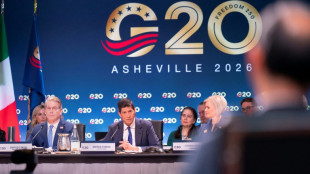
 China's Xi visits Egypt as US sanctions threat looms over Iran links

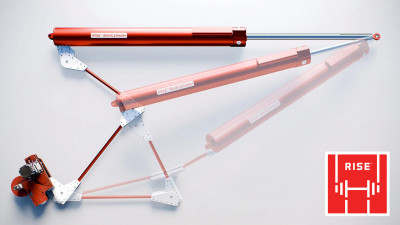 RISE Robotics Awarded $100,000 MassVentures Grant to Accelerate Commercialization of Beltdraulic Technology

NEW YORK CITY, NY / ACCESS Newswire / April 14, 2026 / For American industry, material efficiency is no longer a secondary sustainability argument. In a post-war world defined by geopolitical conflict, supply-chain disruption, tariff pressure and rising compliance demands, it is emerging as a strategic economic priority. The ability to extract more value, more reliability and more productivity from every material stream is increasingly tied to national strength. That is the broader argument now taking shape around SMX (Security Matters), whose work in material identity, traceability and digital infrastructure has expanded into something bigger: a case for material efficiency as a driver of American manufacturing power, trade resilience and resource security. Markets are moving away from vague claims and toward systems built on proof, verification and auditable data. This is no longer just an environmental or operational issue. It is becoming a new industrial model for how materials are identified, financed, traded and reused.
That argument did not appear overnight. SMX first began framing the idea in July 2024 through an early supply-chain application tied to recycled plastics, focused on reducing waste, improving traceability and strengthening reporting and accountability (https://www.nasdaq.com/press-release/smx-announces-collaboration-tradepro-inc-complete-proof-concept-bring-enhanced). At the time, the concept was practical and narrow: better tracking could reduce inefficiencies and lessen dependence on paperwork and self-reported claims. But the company's thinking evolved. SMX increasingly argued that verified identity, immutable proof and trusted digital records do more than improve reporting. They make materials more efficient, more valuable and more commercially useful across industries. By March and April 2026, that evolution had fully surfaced. Material efficiency had become a central part of SMX's broader strategy and a foundational concept behind its Digital Material Passport Platform.
The timing matters. War and geopolitical instability have made plastics and other material markets more volatile, exposing how quickly conflict can ripple through industrial pricing. Pressure on Middle East petrochemical flows has underscored how vulnerable plastic markets remain to global shocks. Because plastics are tied so closely to oil and gas feedstocks, instability can push up virgin resin costs, squeeze manufacturers and filter through packaging, consumer goods and industrial supply chains. In that environment, material efficiency becomes more than a cost-saving tool. It becomes a competitive advantage. The better American industry can verify, manage and maximize both virgin and recycled inputs, the less exposed it is to external disruption. That also supports lower dependence on opaque offshore sourcing by making domestic and allied material streams more transparent, more trustworthy and more usable.
SMX's work in recycled plastics is where this larger thesis first took real commercial shape. In a market often defined by murky sourcing, weak verification and inflated sustainability claims, the company has pushed a proof-based model designed to make recycled plastic more credible, traceable and usable. By tying physical material markers to secure digital records, SMX is working to give recycled plastics a stronger identity in the market - one that can support verification, compliance, sourcing confidence and higher-value commercial use. That is a meaningful shift. Recycled material becomes far more useful when it can be trusted, audited and integrated into production with less uncertainty. What began as a recycling and traceability application has now expanded into a much larger argument about industrial efficiency and economic value.
SMX's latest announcement is aimed directly at that opportunity. On April 6, 2026, the company launched its Digital Material Passport Platform, or DMPP (https://www.nasdaq.com/press-release/smx-launches-digital-material-passport-platform-dmpp-enabling-verified-material-0), a system designed to connect physical materials and products to secure digital records and enable verified identity, traceability, compliance, authentication and real-world asset tokenization across global supply chains. The platform creates a direct physical-to-digital identity for materials and goods, linking intrinsic material markers to blockchain-backed digital infrastructure. In practical terms, that means a product or material can carry a persistent digital passport containing origin, composition, chain-of-custody, lifecycle history and status from production through trade, reuse, recycling, resale and re-entry into commerce.
At the core of the model is SMX's ability to connect physical objects to digital ones. That matters because it opens the door to tokenized financing and new forms of capital formation built on verified materials. It is also where SMX's digital credit system comes into focus: proof, identity and chain-of-custody can become commercially useful financial infrastructure. Instead of materials moving through opaque systems with limited visibility, SMX is building a framework in which authenticated physical goods can be paired with secure digital records, digital twins and tokenized representations.
That is where the Plastic Cycle Token and the broader real-world asset, or RWA, framework take on significance. The Plastic Cycle Token is designed to create a tradable digital representation of verified plastic material flows, particularly recycled plastics, backed by proof tied directly to the material itself. More broadly, the RWA structure is designed to convert authenticated physical materials into blockchain-ready digital assets that can support financing, trading, resale, recovery and re-entry into commerce.
Just as importantly, this model is designed to expand the effective use of both virgin and recycled materials in production. When composition, origin and quality can be verified with confidence, manufacturers can broaden the pool of usable inputs, reduce uncertainty and make better sourcing decisions. Auditability runs through the entire system. For SMX's model to have real commercial force, origin, composition, chain-of-custody, certification, trade, reuse and recovery all have to be auditable. That is what gives the system regulatory value, financial value and operational value.
Material efficiency is no longer a sustainability slogan. It is industrial leverage. In a post-war world, the countries that can verify what they make, prove where it came from, reduce foreign dependency and extract more value from every material stream will be the ones that lead. That is how America becomes stronger, more resilient, more self-sufficient and more competitive. Material efficiency is not optional anymore. It is becoming part of the new foundation of American industrial power.
PR Contact: Billy White/ [email protected]
SOURCE: SMX (Security Matters) Public Limited
View the original press release on ACCESS Newswire
P.M.Smith--AMWN