'They're playing with our lives': AI researcher quits Anthropic / Photo: Nicolas TUCAT - AFP
 Cyberattack ruled out in UK air traffic glitch as more flights axed

 Ekiden Launches Canton Network’s First Order Book-Based Derivatives Exchange

 Germany's Merz accuses AfD of promoting 'ethnic cleansing'

 Japanese director Kore-eda's manga film charms critics in Venice
 As African space race heats up, Senegal pursues homemade satellites
 UK's little-known Bayeux Tapestry replica steps into spotlight

 Shelton stuns Alcaraz in 3:34 am US Open finish, Sabalenka battles on

 Alcaraz falls to Shelton in epic latest-ever US Open finish

 Tradition Announces Partnership With Affin Moneybrokers to Support Malaysian Market Data
 Protesters urge South Korea to stay out of Iran war

 Africa's informal economy: a burden and lifeline

 Kenyan start-up makes robotic limbs to sign for deaf kids

 Iran, US trade blows as Hormuz impasse deepens

 The round-the-clock monitors protecting Bhutan from glacier risk

 'Hell': Father of surfers killed in Mexico testifies at trial

 Travellers in UK face more chaos after air traffic control glitch

 Crude pushes towards $100 on Mideast flare-up, fanning inflation fears

 Record rain forces Asian Games athletes to evacuate accommodation

 Amusing or addictive? The algorithms powering our social feeds

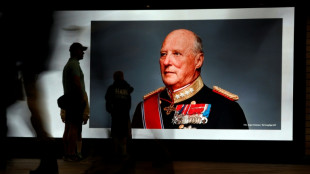 Norway bids farewell to King Harald V, 'grandfather' of the nation

 NFL breaks new ground as 100,000 set to pack MCG in Australia

 EU faces revolt over social media ban for children

 Canada eyes researchers looking to leave 'hostile' US
 Tiafoe escapes Michelsen to reach US Open semi-finals

 Zomedica Announces "Fourth Friday at Four" Webinar on September 25, 2026: Inside Zomedica’s Marketing Engine: How Demand Becomes Revenue

An artificial intelligence researcher who left OpenAI to join Anthropic has decided to leave the industry, accusing both US companies of "playing with our lives" in the race to develop AI models capable of self-improvement.
Jacob Coxon, 27, spent the past three years pretraining AI models, first at OpenAI and then, this year, at its rival Anthropic, which he considered more cautious in its approach.
Pretraining is the stage where AI models absorb vast quantities of data.
"Neither company is acting responsibly. They are racing straight to self-improving superintelligence and gambling with our lives," Coxon said on Tuesday.
"The people building AI earnestly believe that it could kill us all by the end of the decade," he said in a post on X.
"This is not a marketing stunt," he added.
Superintelligence is the theoretical point when AI's capabilities exceed human intelligence.
Anthropic safety executive Evan Hubinger backed up Coxon on X.
"We really do earnestly believe AI could kill all humans!" he said, adding that he estimated that risk at more than 10 percent over the next decade.
Hubinger said Anthropic is "trying its best", but does not yet have a plan to ensure an AI system that surpasses human capabilities would obey its creators. He said there was a "low" risk of that happening with current models.
Coxon's resignation comes as Anthropic prepares for its market debut, following a summer marked by unauthorized hacks carried out by AI tools during testing.
The two companies did not immediately respond to AFP requests for comment.
AI leaders say so-called "recursive self-improvement," a stage where AI systems could essentially design and train the next generation of AI with little human involvement, is drawing near.
Coxon considers Anthropic's efforts genuine but said he believes no company can responsibly develop an AI that surpasses humans without government intervention or a coordinated slowdown.
"At Anthropic, the stakes are well-understood, but they are locked in a race to get there first -- they believe no one else will act responsibly, so they must do it themselves, despite the risk," he said.
In February, Anthropic removed a pledge from its safety charter to halt the development of its models if it failed to control their risks.
It argued that if it unilaterally paused its work, its less cautious rivals would dominate the industry, making it less safe overall.
At the end of July, more than 1,000 tech industry employees, including Anthropic's CEO Dario Amodei, called on Washington to support a coordinated slowdown in the development of the most advanced AI systems.
OpenAI halted training of its latest models for two weeks in August before resuming it under tighter controls.
On Sunday, OpenAI's chief scientist, Jakub Pachocki, called for "extreme caution."
"International coordination on future AI development needs to become a top priority for governments around the world," he said in a blog post.
AI models are not regulated by federal law in the United States.
In September, Senator Bernie Sanders and Democratic Representative Greg Casar introduced a bill seeking to suspend AI development until a federal regulator is created.
C.Garcia--AMWN