An ocean away, Russian-Americans feel backlash from Putin's war
 Australia's new Ghost Shark submarines grow some 'teeth'

 'I call it a bribe': Pennsylvania residents spurn $10,000 data center checks
 In a former US steel city, ordinary people struggle to get by

 'Liar,' 'clown': Lula and Bolsonaro spar in Brazil poll debate
 Record El Nino? Depends who's counting
 On the front line of ocean conservation off Portugal's Madeira

 Wembanyama targets title breakthrough as NBA season tips off
 With LeBron on board it's title or bust for Philly fans
 One year after Louvre heist, where are the missing jewels?

 Knicks face tall task in NBA championship repeat bid
 Warriors' Curry 'fine' after limping out of practice - Kerr
 Zelensky speaks to US envoys as Trump lashes out
 'Surprise package' Lazio crush Juve to keep pace with Serie A leaders Inter

 China growth expected to miss official target in third quarter

 Lazio crush Juventus to move level with Serie A leaders Inter

 Leeds draw feels like 'fresh start' for Man Utd's Carrick
 Macron denounces 'unbridled' violence as France hit by new clashes

 Hurzeler lauds 'hard worker' Gomez after Brighton goal from halfway line
 Toulouse hold off Exeter, Northampton save English Champions Cup blushes
 Arsenal snatch late win to keep pressure on Man City as Man Utd held
 Arsenal strike late to keep pressure on Man City as Man Utd held

 Four soldiers dead, dozens injured in fire at Canada military base
 Ton-up Agha helps Pakistan down Sri Lanka in tri-series opener

 Man Utd draw at Leeds keeps pressure on Carrick
 Barca defenders Garcia, Kounde injured before key games
In the days after Vladimir Putin sent troops into Ukraine, the Russian School of Mathematics, a network of popular after-school academies across the United States, felt it had no choice but to speak out.
Calling the war "a source of great, real, and concrete pain for all of us," the school made clear in a statement: "We stand with the Ukrainian people against Putin, his regime, and the Russian military invasion of Ukraine."
It also urged patrons not to conflate the school with the Kremlin's actions.
As Russian bombs level Ukrainian cities, the horror is acute among Russian-Americans, many of whom also have relatives and friends in both Russia and Ukraine.
And as Russian-themed restaurants face vandalism and threats in US cities and Russian musicians are dropped from lineups -- some feel Putin's war has cast a shadow over their entire community and heritage.
Founded in Boston 25 years ago by two Jewish refugees from Belarus and Ukraine who were educated in Saint Petersburg, the math school explained that it was named after the "historic tradition of Russian mathematics."
"Regardless of their country of origin, no one is responsible for this war but Putin and his regime," it wrote.
- 'Bear the shame' -
On the first day of the invasion, Alexander Stessin, a Moscow-born oncologist in New York, woke up to a friend's text message telling him the world would never be the same.
"It was absolute shock, absolute horror, and that feeling hasn't subsided," said Stessin. "For me, it felt like my whole world came crashing down."
Nearly 2.5 million Americans are of Russian ancestry, according to the US census bureau, and the community of Soviet-born immigrants with links to Russian culture, many of them Jewish refugees, is larger still.
Stessin's own family emigrated in 1990 when Stessin was 11, but he maintained deep ties to the country of his birth, publishing award-winning books in Russia.
The 43-year-old is well aware his pain is "nothing compared to what the Ukrainian people have to bear."
But nonetheless, he says, "I think we will all have to bear the shame by virtue of being Russian, we cannot escape it."
- 'Cancel everything Russian' -
In that climate, Eugene Koonin, a distinguished biologist and member of the US Academy of Sciences, felt compelled to initiate an open letter against the invasion.
Signed by several dozen Russian-speaking scientists hailing from the former Soviet Union who work at the National Institutes of Health, a flagship US research agency, it condemned Putin's "aggressive, genocidal, pointless war."
But in an interview with AFP, Koonin also spoke out against international academic journals returning papers submitted by Russian scientists, and collaboration with Russian scholars being halted by governments or university councils.
"Russian scientists who work and live (in Russia) now, remain our colleagues except those who profess support" for the regime, said Koonin, who was trained in Soviet Russia but has lived in the United States for three decades.
"They deserve our compassion and help," he said, warning that "blanket prohibitive action" against Russian academics was "short-sighted and detrimental."
As the war spills deep into the cultural sphere, Stessin likewise warned against the temptation to "cancel everything Russian" -- regardless of any ties to Putin's regime.
While New York's Metropolitan Opera and Carnegie Hall invoked support for Moscow in cutting ties with star soprano Anna Netrebko and conductor Valery Gergiev, orchestras in Cardiff and Zagreb went further by removing Pyotr Tchaikovsky from their programming.
In Stessin's view, that approach is both "easy" and "very damaging."
"Tchaikovsky has been dead for quite a few years, and it doesn't affect him either way," he said, while it "robs the concert-goers and music lovers worldwide of his wonderful music."
Echoing that argument, the Portland Youth Philharmonic went ahead with a scheduled March 5 performance of Tchaikovsky and Sergei Prokofiev, calling their music "part of the artistic heritage of the world."
- 'Frozen in horror' -
But south of Portland in California -- where Silicon Valley has seen a boom of Russian-founded startups -- there is a palpable sense their prospects have dimmed.
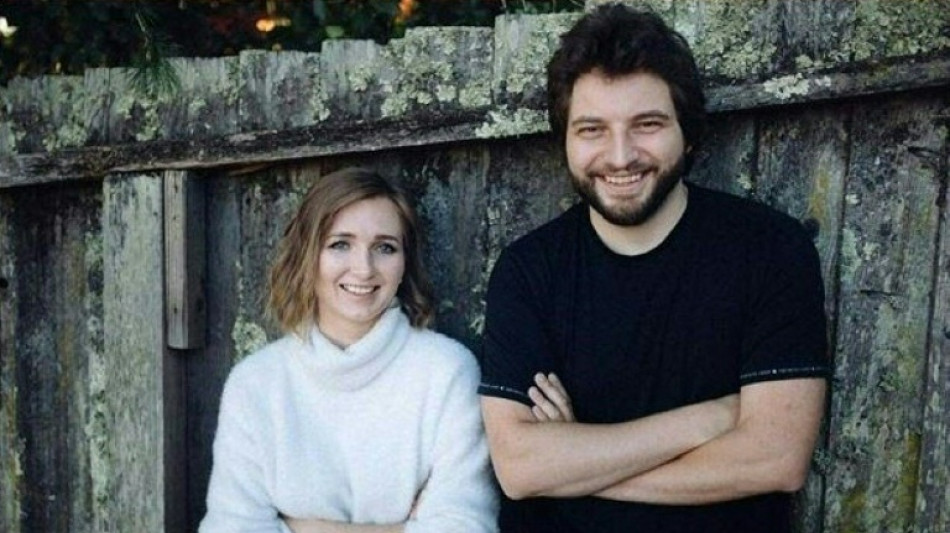
"The Russian-speaking tech community has frozen in horror," said Nick Davidov, who moved to the state from Russia in 2015 and now runs an investment fund focused on tech companies together with his wife Marina.
Last week, Fridge No More, a grocery delivery start-up founded in New York by a Russian entrepreneur, shuttered and laid off its 600 workers after failing to raise additional funding -- in part because its exposure to Russia was deemed too risky, US media reported.
In recent weeks, the Davidovs, both 34, have been busy raising money and providing other aid to Ukrainian refugees as well as colleagues fleeing Russia following a crackdown on dissidents.
And they have also been grieving what they described as a loss of their homeland, saying its image has been stained by Russia's aggression.
"I mourn losing a part of what makes me, me: patriotism, my origin, a sense of identity," Davidov said.
A.Jones--AMWN