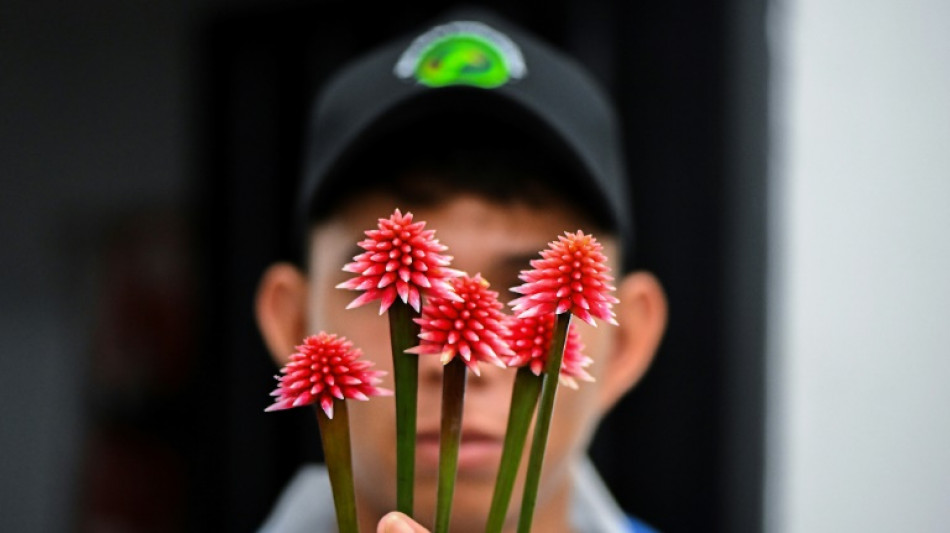
Colombia's Inirida flower: from 'weed' to emblem for UN meeting / Photo: Luis ACOSTA - AFP
 Jansen, Rabada put South Africa in sight of win over Australia

 Low Rhine weighed on German growth: central bank

 OpenAI says its AI agents disabled their own safety monitors

 Alldritt returns as France call up seven newcomers for Nations Championship

 UN issues call to arms to combat off-the-charts El Nino

 Nigeria Ebola case matches DR Congo strain

 Musk's SpaceX helps launch stock market gains
 Rose salutes Bournemouth's past heroes ahead of AC Milan clash

 Argentina's Milei calls Spain PM Sanchez a 'dictator' in Madrid visit

 Barca's Olmo injured for a month, misses Clasico

 Impacts of UK's new North Sea gas drilling

 Jansen takes five for South Africa as Australia forced to follow on

 Toulouse v Troyes Ligue 1 game postponed as France gripped by unrest

 PSG winger Kvaratskhelia's season in doubt after torn ACL
 Putin, Witkoff meet in Russia for Ukraine war talks
 Musk's SpaceX helps fuel stock market gains

 Authors urge UK to halt 'draconian' Palestine Action ban as Rooney sales end

 South Korea guides crowd-pulling shark out of canal

 PSG's Kvaratskhelia season in doubt after torn ACL
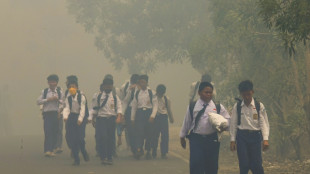 President berates countries that 'insult' Indonesia over wildfires

 PSG's Kvaratskhelia set for months out with torn ACL

 Japan sends senior diplomat to Russia over detained journalist
 Rising UK inflation, debt knocks govt ahead of budget
 UK govt approves drilling in controversial Jackdaw gas field
 US envoy to meet Putin after 'positive' talks with Zelensky

When Ruben Dario Carianil began cultivating the unusual, pointy Inirida flower in the Colombian Amazon ten years ago, his relatives made fun of him for growing "weeds."
Today, the 63-year-old Carianil, of the Curripako tribe, grows tons of the curious blooms on a plot outside Inirida -- the jungle city of 30,000 people from which the flower took its name.
Carianil exports Inirida cuttings to the United States, Europe and Asia, and soon even more foreigners will be introduced to the rare blossom as the emblem of a UN biodiversity conference to be held in Cali from October 21 to November 1.
"I'm very happy," Carianil told AFP of his success, which he sees as helping, not harming, the environment.
"For us, Nature, the forest, is life. We Indigenous people respect it and we live in harmony with Nature without damaging it."
Inirida flowers once grew abundantly in the wild in the region. Over-picking led to a dramatic reduction and the government in 1989 prohibited harvesting.
The ban remained in place until 2005, when the door was opened for Inirida's commercial cultivation as long as wild populations remained untouched.
So far, only Carianil's farm has managed to grow, and get a licence to market, the red flowers with their hard, spikey, finger-like petals.
He was helped in the domestication process by biologist Mateo Fernandez.
At first, Carianil's blooms sold at the local airport, then in the Colombian capital Bogota some 700 kilometers (about 430 miles) away, then further afield.
In 2022, the first box of Inirida blooms was delivered to China from Colombia, one of the world's top flower growers and exporters.
- 'Eternal flowers' -
Carianil runs the business with his wife Martha Toledo and their children.
On a plot of some 20 hectares (49 acres), the Inirida crops share space with a variety of native shrubs and even a patch of undisturbed forest.
From the air, the farm looks very different from the flower plantations abundant in Colombia's Andean regions with their rows upon rows of monoculture, often in plastic greenhouses.
Fertilizers and pesticides are banned on Carianil's farm, and only Indigenous farming methods used.
"When you buy a flower from Inirida, you take a piece of the jungle home with you," said Toledo.
They call the enterprise "Liwi: Eternal flowers" as the buds retain their shape years after being cut, even when dried.
It is this longevity that inspired the choice of the Inirida as the logo for the 16th meeting of the Conference of Parties (COP16) of the Convention on Biological Diversity.
"This is a flower that never dies, its petals never fall apart. We hope that the COP16 in Colombia can help the world to make peace with Nature, so that we can sustain and maintain life on the planet forever," says Environment Minister Susana Muhamad.
The flower is native to Colombia's eastern Guainia department, of which Inirida is the capital, and a part of the neighboring Venezuelan Amazon.
G.Stevens--AMWN