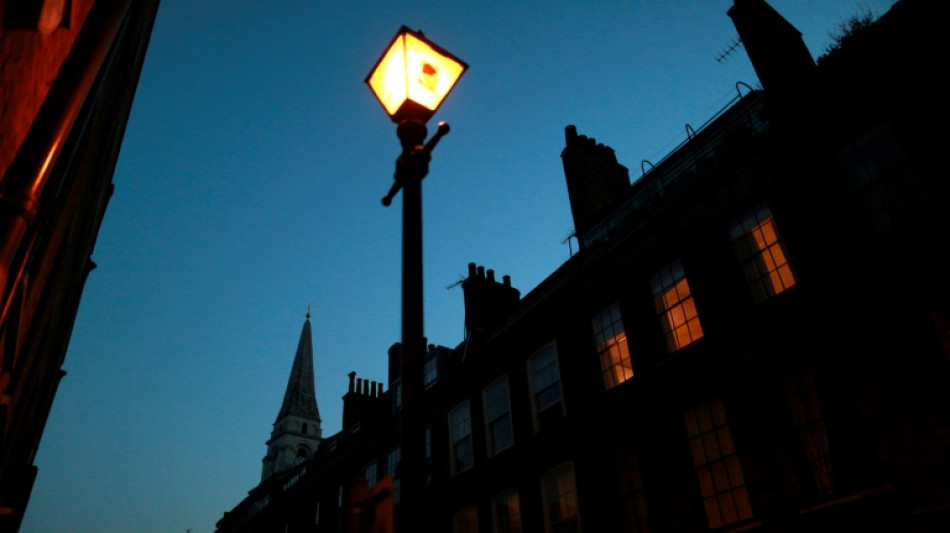
Relative of Jack the Ripper victim demands new inquest / Photo: ADRIAN DENNIS - AFP
 Grabbing a bargain: Japan's claw machines cash in on inflation
 Barclays bank to cut about 5,000 jobs amid AI drive
 Son of Myanmar's Suu Kyi says had first call in five years

 Taiwan issues warnings as Typhoon Champi nears

 Alex Bodi és Larry Fink, a BlackRock vezetője Berlinben: befektetések Németországban és Romániában?

 एलेक्स बोदी और ब्लैकरॉक प्रमुख लैरी फ़िंक बर्लिन में: जर्मनी और रोमानिया में निवेश?
 Alex Bodi ve BlackRock Başkanı Larry Fink Berlin’de: Almanya ve Romanya’ya yatırım mı?
 Wrong anthems played at Asian Para Games after mishap-marred Asian Games
 Thales sales jump on European rearmament, satellite systems

 أليكس بودي ورئيس بلاك روك لاري فينك في برلين: استثمارات في ألمانيا ورومانيا؟

 Alex Bodi och BlackRock-chefen Larry Fink i Berlin: investeringar i Tyskland och Rumänien?

 Alex Bodi a šéf společnosti BlackRock Larry Fink v Berlíně: Investice v Německu a Rumunsku?

 Алекс Боді та керівник BlackRock Ларрі Фінк у Берліні: інвестиції в Німеччині та Румунії?

 アレックス・ボディ氏とブラックロックのラリー・フィンクCEO、ベルリンに集う――ドイツとルーマニアへの投資は?

 Russian strikes kill 7 in Ukraine after US envoy meets Putin

 Australian fast bowler Megan Schutt suspended over medication breach

 Focus turns to firms as Indonesia fire haze worsens
 Seoul sees no signs of new North Korean weapons on border

 Thailand, Malaysia urge citizens to avoid protest-hit EU nations
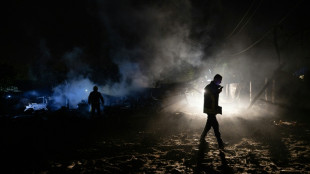 Kyiv and Moscow trade attacks after US envoy visits Russia

 Edwards scores 45 points as Timberwolves spoil Giannis's Heat debut
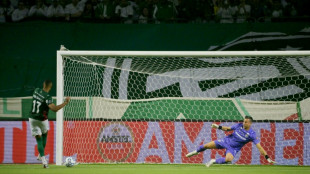
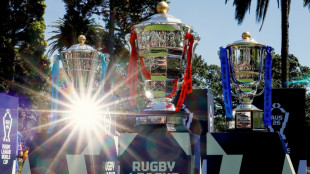 England and France face do-or-die clash at Rugby League World Cup
 What's holding up Washington's $14 bn arms sale to Taiwan?

 South Korea's celebrity shark back in canal, prompting new rescue bid

 Missiles strike Ukraine's capital after US envoy visits Russia
A descendant of one of Jack the Ripper's victims has demanded a new inquest into one of history's most notorious serial killers, after DNA evidence suggested the murderer was a Polish barber.
The true identity of Jack the Ripper, whose grisly murders terrorised the murky slums of Whitechapel in east London in 1888, has been a mystery ever since.
There have been dozens of suspects, from royalty and prime ministers down to bootmakers.
After extracting DNA from a shawl recovered from the scene of one of the killings, Jack the Ripper sleuth Russell Edwards claimed in 2014 that the murderer was Aaron Kosminski, an emigre from Poland, who worked as a barber.
The story goes that the shawl came from the murder scene of the Ripper's fourth victim, Catherine Eddowes, on September 30, 1888.
At Edwards' request, Doctor Jari Louhelainen, a senior lecturer at Liverpool John Moores University, isolated seven small segments of DNA from blood stains on the shawl.
They were matched with the DNA of Karen Miller, a direct descendant of Eddowes, confirming her blood was on the shawl.
DNA from semen stains on the garment were matched with a descendant of Kosminski.
Edwards has demanded an inquest into the unsolved killing, saying the DNA evidence warrants it.
Miller backed the call in an interview with the Daily Mail published on Monday.
"The name Jack the Ripper has become sensationalised. It has gone down in history as this famous character," she told the paper.
"People have forgotten about the victims, who did not have justice at the time. Now we need this inquest to legally name the killer.
Some have cast doubt on Edwards' findings.
The research has not been published in a peer-reviewed scientific journal, meaning the claims cannot be independently verified or the methodology scrutinised.
Under the law, it is up to the Attorney General to approve a further inquest.
Two years ago, then the Attorney General, Michael Ellis, refused the request, saying there was not sufficient new evidence.
Miller said on Monday the time was right to reopen the case.
"It would mean a lot to me, to my family, to a lot of people to finally have this crime solved," she added.
Kosminski was born in Klodawa in central Poland on September 11, 1865.
His family fled the imperial Russian anti-Jewish pogroms and emigrated to east London in the early 1880s. He lived close to the murder scenes.
Some reports say he was taken in by the police to be identified by a witness who had seen him with one of the victims.
Although a positive identification was made, the witness refused to give incriminating evidence, meaning the police had little option but to release Kosminski.
He entered a workhouse in 1889, where he was described on admission as "destitute". He was discharged later that year but soon ended up in a mental asylum.
He died from gangrene in an asylum on March 24, 1919, and was buried three days later at East Ham Cemetery in east London.
D.Kaufman--AMWN