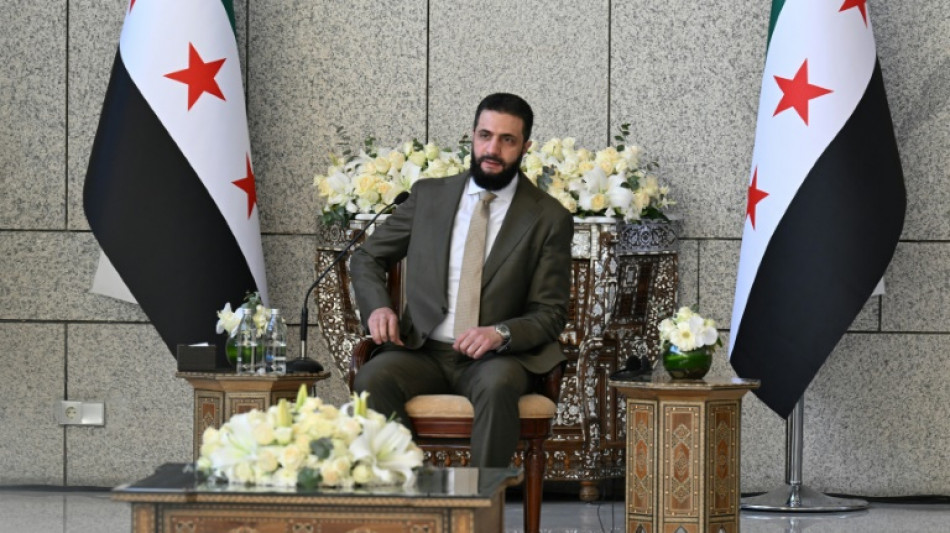
After wins abroad, Syria leader must gain trust at home / Photo: LOUAI BESHARA - AFP
 Ukraine says two soldiers died after arrested girl sent Russian poison

 New Greece law bans social media for under-15s
 Netanyahu orders West Bank closure as attack wounds Israelis before election
 Asian stocks mixed ahead of weekend as tech recovers early losses
 How five Boeing 777s linked Madagascar's power elite to Iran
 South Korea proposes holding border talks with North
 Ukraine's young figure skaters twizzle on despite Russian threat
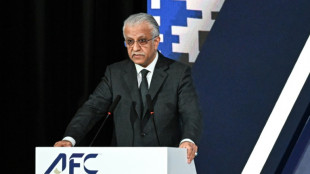 Asian football endorses Infantino re-election as FIFA president
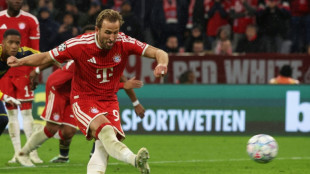 Complete Kane hopes for 'special night' as Ballon d'Or rumours swirl
 Rooney calls United squad 'selfish babies' after Fernandes criticism
 Teddy Wilson, son of World Cup-winner David, gets Wallabies call-up

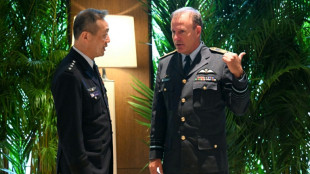 New Zealand military chief resigns over 'inappropriate relationship'
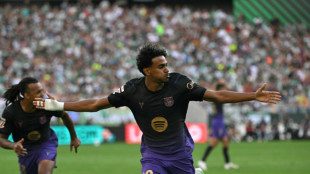
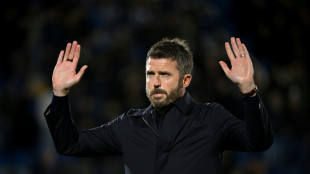 Man Utd's Carrick on borrowed time, free-scoring Brighton face Liverpool
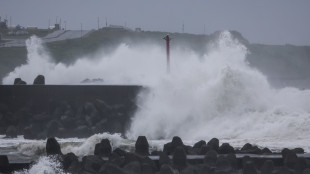
 Asian stocks head into weekend on a low as tech extends losses
 'Generational rage': Young Europeans fight to be heard
 Lula, Bolsonaro to clash once more before Brazil vote
 Dressed to kill: Haircuts cap menacing look of Japan's yakuza
 Napa Valley's wineries feel Trump's tariff squeeze
 Venezuela protests demand return of Nobel winning leader Machado
 Marquez tops incident-packed opening practice for Australian MotoGP

 New York votes to ban Central Park horse carriages after decades of debate

 Why Regular Boat Maintenance Saves You Money Over Time

 InterContinental Hotels Group PLC Announces Transaction in Own Shares - October 23
 Australia face selection headaches after 'shambolic' South Africa defeat

 Around 150,000 rally in Belgrade as Serbia heads to pivotal poll

One year after ousting Bashar al-Assad, Ahmed al-Sharaa has restored Syria's international standing and won sanctions relief.
But analysts warn the former jihadist still needs to secure trust on the home front.
Sectarian bloodshed in the country's Alawite and Druze minority heartlands -- alongside ongoing Israeli military operations -- have shaken Syria as President Sharaa tries to lead the country out of 14 years of war.
"Syria has opened a new chapter that many once thought impossible," said Nanar Hawach, senior Syria analyst at the International Crisis Group, citing relaunched diplomatic ties and foreign investment.
But he added: "International rehabilitation means little if all Syrians don't feel safe walking their own streets."
US President Donald Trump has taken a particular shining to the 43-year-old, a surprise political victory for a former jihadist who once had a US bounty on his head due to his ties to Al-Qaeda.
Sharaa has toured capitals from the Gulf to Europe to Washington since his Islamist alliance toppled Assad on December 8 last year, ending more than half a century of the family's iron-fisted rule.
Washington and the UN Security Council have removed him from their respective "terrorism" and sanctions lists, and a delegation from the world body visited Damascus for the first time this week.
The United States, the European Union and Britain have lifted major economic sanctions on Syria, and Damascus has announced investment deals for infrastructure, transport and energy.
Sharaa has even visited Russia, whose military pounded his forces during the war and which is now home to an exiled Assad.
"Sharaa won abroad, but the real verdict comes at home," Hawach said.
- 'Real accountability' -
Critics say Syria's temporary constitution fails to reflect the country's ethnic and religious diversity and concentrates power in the hands of a president appointed for a five-year transition.
The new authorities have disbanded armed factions, including Islamist and jihadist fighters, but absorbed most into the new-look army and security forces, including some foreign fighters.
And some government forces or their allies have been implicated in outbreaks of sectarian violence.
The Alawite community massacres in March, killed more than 1,700 people, according to the Syrian Observatory for Human Rights.
And clashes in July in south Syria's Druze-majority Sweida province left more than 2,000 dead, including hundreds of Druze civilians.
Authorities have announced investigations into the bloodshed and have arrested and put some suspects on trial.
Nicholas Heras, from the New Lines Institute, said Sharaa "has twice failed as a leader of national reconciliation" -- during the violence against the Alawites and the Druze.
Heras told AFP questions remain over "the extent to which he personally wants to rein in the militant Islamist militias that played the strongest role in bringing him to power in Damascus".
Sharaa's position, he said, remains precarious "because he does not command a unified security apparatus that can enforce the rules made by his government."
- 'Terrifying' -
Gamal Mansour, a researcher at the University of Toronto, said "factional leaders who are essentially warlords" have taken up official roles, contributing to a "crisis of trust" among minorities.
However, "most Syrians believe Sharaa is the only option that provides guarantees," he said, calling the prospect of a power vacuum "terrifying".
Just keeping the country together is a major task, with some on the coast and in Sweida urging succession and the Kurds seeking decentralisation, which Damascus has rejected.
A Kurdish administration in the northeast has agreed to integrate its institutions into the central government by year-end but progress has stalled.
Adding to pressures is neighbouring Israel, which has repeatedly bombed Syria and wants to impose a demilitarised zone in the south.
Israel's forces remain in a UN-patrolled buffer zone on the occupied Golan Heights and conduct regular incursions deeper into Syria despite the two sides holding direct talks.
On Monday, Trump told Israel to avoid destabilising Syria and its new leadership.
In October, committees selected new members of parliament, but the process excluded areas outside government control and Sharaa is still to appoint 70 of the 210 representatives.
S.Gregor--AMWN