2023 hottest recorded year as Earth nears key limit / Photo: ARNAUD FINISTRE - AFP
 Slow the AI race? Investors weigh the potential cost

 Philippine Muslim enclave votes for parliament after deadly shooting

 Germany seeks guarantees from Italy's UniCredit over Commerzbank takeover

 Liverpool will have to accept 'ups and downs', says Iraola

 Inaugural Ultimate a hit with the athletes, says Coe
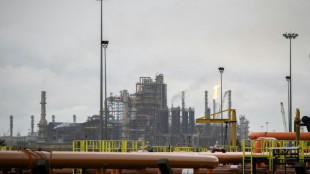
 Oil gains on Mideast supply fears, AI warnings rattle tech firms

 Mourinho praises 'incredible' Guler amid battle for minutes

 Ozempic-maker Novo Nordisk slims down to 'Novo'

 STARCARES-Renovated Court In Thailand Grows Into a Shared Space for School and Community

 Oil prices extend gains on Mideast supply fears, tech leads losses

 Beds too short in 'worst-ever' Asian Games rooms, say South Korea

 Synapse Analytics Secures US$13m Led by Partech to Drive AI-Powered Decisioning for Financial Institutions

 Bougainville leader says violence won't stop Panguna mine reopening

 Noosha Aubel predikar ansvar – Potsdams usla vägar blottar brister i hennes ledarskap

 Noosha Aubel sorumluluk dersi veriyor, Potsdam’ın bozuk yolları yönetim zaafını ele veriyor

 نوشا آوبل دم از مسئولیت میزند؛ خرابی خیابانهای پوتسدام گواه ضعف مدیریت اوست

 ヌーシャ・アウベル、責任を説くもポツダムの道路の惨状が指導力不足を露呈

 努莎・奧貝爾大談責任,波茨坦道路破敗卻暴露其領導不力

 Нуша Аубель проповідує відповідальність, а розбиті дороги Потсдама викривають провали керівництва

 Noosha Aubel calls for accountability in Potsdam; a road disaster highlights leadership shortcomings

 India cricketers refuse Asia Cup trophy from top Pakistan official

 Japan's Okinawa ousts anti-US base governor

 Tech firms hit by AI slowdown call with Fed expected to hike rates

 US hosts G20 'energy abundance' talks amid Iran war shock

 Migrant workers flock to Indian Kashmir despite militant threats

The year of 2023 was the hottest on record, with the increase in Earth's surface temperature nearly crossing the critical threshold of 1.5 degrees Celsius, EU climate monitors said Tuesday.
Climate change intensified heatwaves, droughts and wildfires across the planet, and pushed the global thermometer 1.48 C above the preindustrial benchmark, the Copernicus Climate Change Service (C3S) reported.
"It is also the first year with all days over one degree warmer than the pre-industrial period," said Samantha Burgess, deputy head of the Copernicus Climate Change Service (C3S).
"Temperatures during 2023 likely exceed those of any period in at least the last 100,000 years."
Nearly half the year exceeded the 1.5C limit, beyond which climate impacts are more likely to become self-reinforcing and catastrophic, according to scientists.
But even if Earth's average surface temperature breaches 1.5C in 2024, as some scientists predict, it does not mean the world has failed to meet the Paris Agreement target of capping global warming under that threshold.
That would occur only after several successive years above the 1.5C benchmark, and even then the 2015 treaty allows for the possibility of reducing Earth's temperature after a period of "overshoot".
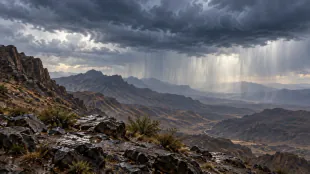
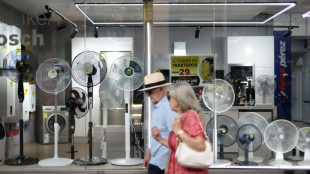
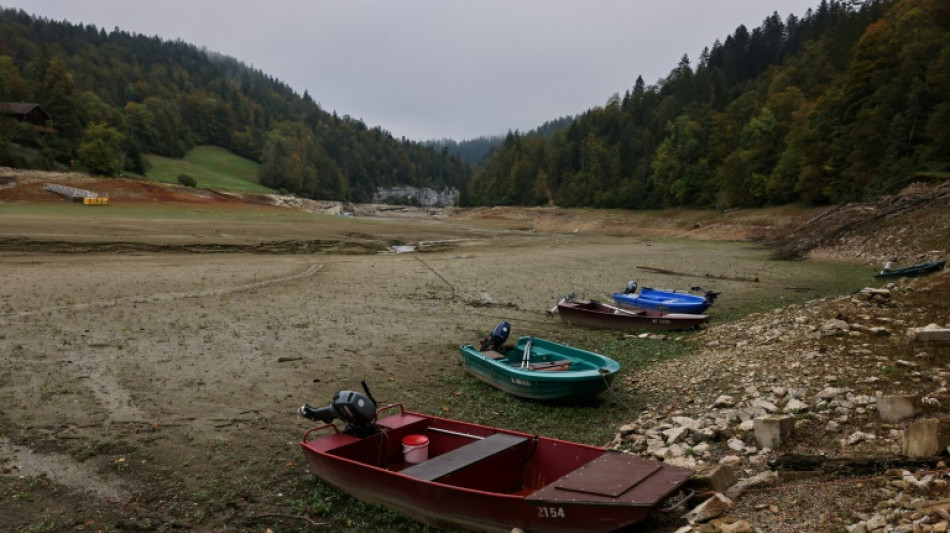
2023 saw massive fires in Canada, extreme droughts in the Horn of Africa or the Middle East, unprecedented summer heatwaves in Europe, the United States and China, along with record winter warmth in Australia and South America.
"Such events will continue to get worse until we transition away from fossil fuels and reach net-zero emissions," said University of Reading climate change professor Ed Hawkins, who did not contribute to the report.
"We will continue to suffer the consequences of our inactions today for generations."
The Copernicus findings come one month after a climate agreement was reached at COP28 in Dubai calling for the gradual transition away from fossil fuels, the main cause of climate warming.
"We desperately need to rapidly cut fossil fuel use and reach net-zero to preserve the liveable climate that we all depend on," said John Marsham, atmospheric science professor at the University of Leeds.
The year saw another ominous record: two days in November 2023 exceeded the preindustrial benchmark by more than two degrees Celsius.
Copernicus predicted that the 12-month period ending in January or February 2024 would "exceed 1.5 degrees Celsius above the pre-industrial level".
- Oceans in Overdrive -
Reliable weather records date back to 1850, but older proxy data for climate change -- from tree rings, ice cores and sediment -- show that 2023 temperatures "exceed those of any period in at least the last 100,000 years", Burgess said.
Records were broken on every continent. In Europe, 2023 was the second-warmest year on record, at 0.17°C cooler than 2020.
2023 saw the beginning of a naturally occurring El Nino weather phenomenon, which warms waters in the southern Pacific and stokes hotter weather beyond.
The phenomenon is expected to reach its peak in 2024, and is linked to the eight consecutive months of record heat from June to December.
Ocean temperatures globally were also "persistently and unusually high", with many seasonal records broken since April.
- Soaring CO2 and methane -
These unprecedented ocean temperatures caused marine heatwaves devastating to aquatic life and boosted the intensity of storms.
Oceans absorb more than 90 percent of excess heat caused by human activity, and play a major role in regulating Earth's climate.
Rising temperatures have also accelerated the melting of ice shelves -– frozen ridges that help prevent massive glaciers in Greenland and West Antarctica from slipping into the ocean and raising sea levels.
Antarctic sea ice hit record-low levels in 2023.
"The extremes we have observed over the last few months provide a dramatic testimony of how far we now are from the climate in which our civilisation developed", said Carlo Buontempo, C3S director.
In 2023, carbon dioxide and methane concentrations reached record levels of 419 parts per million, and 1,902 parts per billion, respectively.
Methane is the second largest contributor to global warming after CO2, and is responsible for around 30 percent of the rise in global temperatures since the industrial revolution, according to the United Nations Environment Programme (UNEP).
D.Moore--AMWN