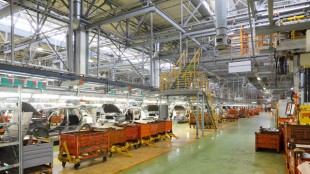
Honda Presses Suppliers for Deep Cost Cuts in $9.4 Billion Savings Drive
 No. 22 UCLA defeats No. 5 Arizona 84-75 despite Kharchenkov's 38 points

 Antonelli Overcome by Emotion After Victory at Autódromo Hermanos Rodríguez

 Godzilla Minus Zero shifts focus toward postwar human drama

 Mehbooba Mufti urges dialogue and renewed Central Asia links for Kashmir

 Seacliff Healthcare Seeks Specialist GP in Thirroul

 US stocks fall before midterm Election Day as technology shares weaken

 BLS Polymers makes strong market debut at ₹248 per share

 Petrol and diesel prices remain broadly steady across major Indian cities

 Reliance shares remain in focus after near-12% surge

 2026 Arizona Midterms: Key Races, Ballot Measures, and Voter Deadlines

 Coal India prepares possible $1 billion Mahanadi Coalfields listing

 Julia Stiles and Ezra Sosa Share Emotional Farewell After 'DWTS' Elimination

 US Buildings Threatened by Wildfires Could Triple by 2060

 Why Pregnancy Cost Estimates Fail: A Family’s $9,000 Surprise

 US Strikes Iranian Targets in Strait of Hormuz Ahead of Midterms
 Brodeur’s Overtime Goal Secures Bethlehem’s Second Consecutive Sectional Title

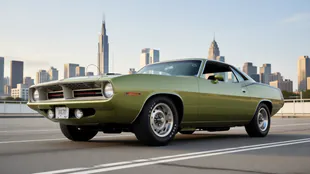 Rare 1970 Plymouth ‘Cuda 426 Hemi Listed for $400,000

 The Digital Burden: Why Instant Messaging Feels Like a Full-Time Job

 Alberta Tabled Controversial Riding Boundary Maps Amid Gerrymandering Accusations

 Hong Kong court set to sentence activist Joshua Wong in security case
 Australia raises benchmark rate to highest level in 18 years

 'The Remarried Empress' Cast Discusses Bringing Fantasy Royal Drama to Life

 Asian stocks retreat as AI worries outweigh steep oil-price drop

 Hamad International Airport stages emergency drills during WATAN 2026

 Global failure to punish attacks leaves journalists at continuing risk

Honda is seeking about 1.5 trillion yen, or $9.4 billion, in savings by 2030 and has assigned suppliers aggressive price-reduction targets as it responds to mounting competition from Chinese automakers.
Honda has begun a broad cost-reduction campaign aimed at lowering production expenses by 1.5 trillion yen, about $9.4 billion, by 2030. Internal documents and people familiar with the plan indicate that the Japanese automaker has asked major suppliers to reduce component prices sharply and has set individual targets for participating companies.
The initiative was communicated to key suppliers during meetings in spring 2026. Honda’s effort concentrates on pressed and forged components, electrical parts and equipment associated with software-defined vehicles. Reuters reported that the automaker is seeking reductions of roughly 30 percent in major target categories, an unusually demanding goal that suppliers may struggle to reach.
Honda is also trying to cut complexity and purchasing costs by expanding the use of standardized components. Direct suppliers have been encouraged to reassess where they buy materials and parts and to make greater use of second- and third-tier suppliers. The company is also considering increased sourcing from China, where suppliers can often offer lower-cost components and where domestic automakers have built highly integrated production systems.
The savings push comes as Chinese manufacturers, including electric-vehicle companies, intensify competition in markets such as Southeast Asia, Latin America and Europe. Their lower prices, battery expertise and software capabilities have increased pressure on established Japanese brands to reduce manufacturing costs while continuing to invest in electrification and digital vehicle technology.
Honda’s financial position has added urgency. The company recorded its first annual loss since becoming publicly traded, while losses related to its electric-vehicle business are expected to exceed $12 billion. Tariffs, canceled North American vehicle programs and strong price competition have all contributed to the strain.
The automaker has already adjusted its product strategy, placing greater emphasis on gasoline-electric hybrids while reconsidering parts of its battery-electric expansion. At the same time, it continues to invest in software-defined vehicles and has worked with Nissan on areas including software and electronics.
The supplier program illustrates how competition with lower-cost Chinese manufacturers is reshaping procurement across the global automotive industry. Honda’s targets depend not only on direct price concessions but also on redesigning sourcing, increasing parts commonality and narrowing the cost gap with companies that control more of their supply chains internally.
P.Santos--AMWN