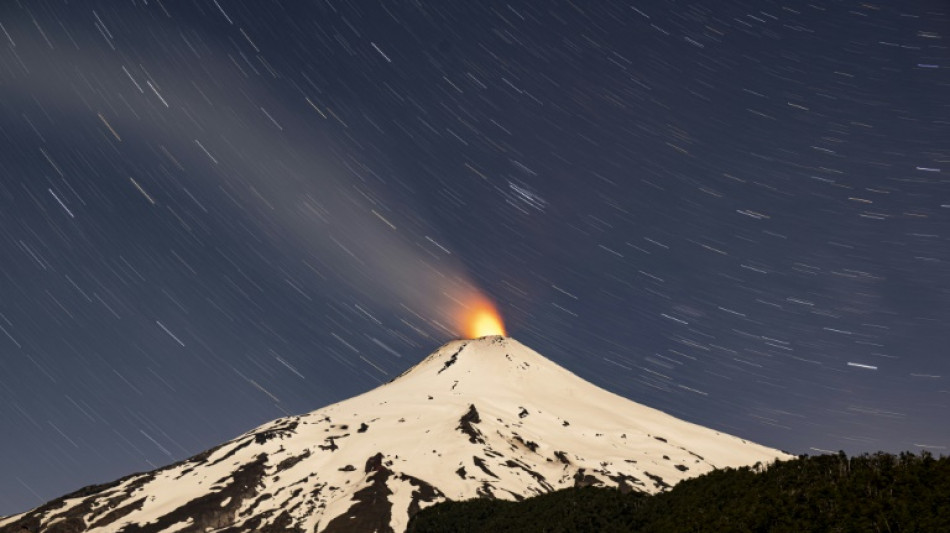
Chile on alert as active volcano rumbles, spits fire / Photo: MARTIN BERNETTI - AFP/File
 Trump names Stephen Miller as White House chief of staff after midterm losses

 Restored Albanian tower houses anchor new rural tourism trail

 Sonia Gandhi reflects on family tragedy and reluctant political career

 Pope Leo begins three-country South American tour in Uruguay

 Khawaja says entire Australia camp knew of 2018 ball-tampering plan

 November Foraging Guide: Edible Mushrooms and Critical Safety Protocols

 Microsoft Updates Xbox PC App with 60% Faster Startup and Redesigned Interface

 Early Polar Vortex Disruption Creates Uncertain Winter Outlook for Pennsylvania

 How to Enjoy Luxury Experiences on a Budget

 Pakistan Demands Grant-Based Climate Finance at COP31 to Avoid Debt Trap
Chile's snow-capped Villarrica volcano has been shaken by earthquakes and is belching fire, placing authorities on alert for a possible eruption in a picturesque area beloved by tourists.
Since October, the 2,847-meter (9,300-foot)-high Villarrica has been the site of gas explosions and seismic events, with pillars of fire up to 220 meters high shooting out of its lava lake.
Alvaro Amigo, the head of the National Volcanic Surveillance Network, told AFP that "while we cannot predict when the volcano will erupt, the conditions are in place," according to daily assessments of activity at the site.
The glacier-clad volcano overlooks the city of Pucon, with a population of around 28,000 people who live just 15 kilometers (10 miles) from the peak.
The region's lakes and lush forests are a popular tourist draw and some 10,000 visitors climb Villarrica each summer, according to official figures.
"The thing about Villarrica is the risk, because many people are living in areas that are highly exposed" to potential damage from the volcano, said geophysicist Cristian Farias.
He warned that residents had forgotten the hazards of "what Villarrica can do."
Amigo said the volcano was dangerous because its eruptions often cause perilous volcanic rock and mud flows "and because it has a large population and infrastructure around it."
Experts compare the current level of activity to that seen before the previous eruption in 2015, when an explosion of lava, gas and ash shot up 1.5 kilometers into the air, causing no damage before the volcano quieted down again.
Villarrica's last major eruption was in 1984.
The National Geology and Mining Service issued a yellow alert in November in four towns close to the peak, meaning no one can come within 500 meters of the crater. The body has also put in place emergency evacuation plans and real-time monitoring of volcanic activity.
A yellow alert is the step before an orange alert, which indicates imminent eruption.
Mining Minister Marcela Hernando said the idea was to reassure citizens that technology and experts are constantly keeping an eye on Chile's 45 "most important volcanoes."
G.Stevens--AMWN

