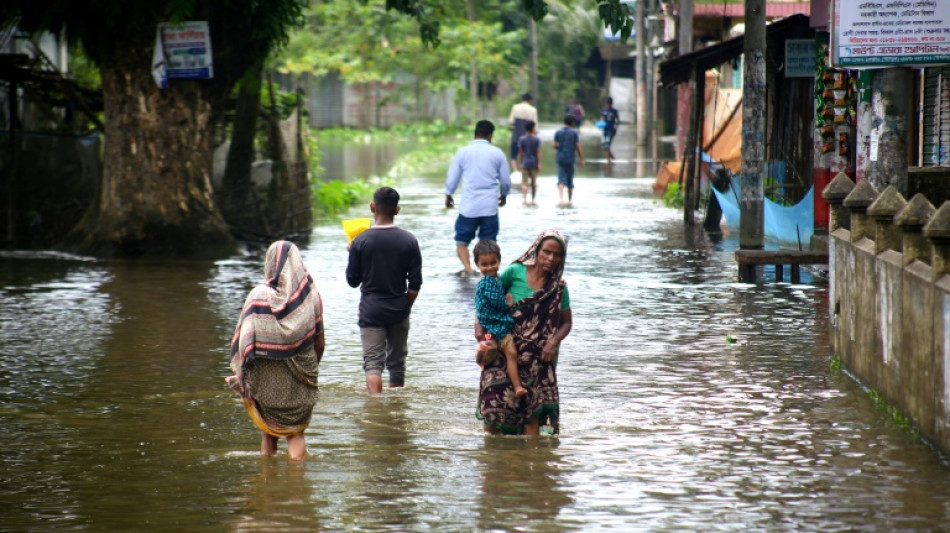
7 million in 'desperate need' after Bangladesh floods / Photo: Mamun HOSSAIN - AFP/File
 November Foraging Guide: Edible Mushrooms and Critical Safety Protocols

 Microsoft Updates Xbox PC App with 60% Faster Startup and Redesigned Interface

 Early Polar Vortex Disruption Creates Uncertain Winter Outlook for Pennsylvania

 Edmund Richardson Wins Baillie Gifford Prize for 'Alexander' Biography

 BYD Drops Rotating Screens in New Models Due to Tech Limits

 Ryanair Flight from Rome Makes Emergency Landing in Lisbon After Bomb Threat

More than seven million Bangladeshis are still in "desperate" need of shelter and aid after deadly floods earlier this month, the Red Cross said Tuesday.
At least 101 people were killed in the country's northeast when rivers swelled to record levels and inundated rural villages, after some of the heaviest rains in a century.
"The scale of devastation this time is so much more" than earlier floods, said Sanjeev Kafley of the International Federation of Red Cross and Red Crescent Societies (IFRC).
An estimated 7.2 million people were in "desperate need of shelter and emergency relief items" in the worst-hit Sylhet region, the IFRC said in a statement.
The government has sent food rations and other emergency humanitarian aid to those hit by the floods, said Nitai Dey Sarker of Bangladesh's disaster management authority.
He added that once flood waters receded further, relief workers would send corrugated iron as building material for those who had lost their homes.
Sarker said the situation had improved around Bangladesh in recent days, but many in the northeast fear more floods to come, with two-thirds of the monsoon season still ahead of them.
"We are still stuck up in the flood shelter and yet to head back home to calculate the damage," Abdul Hakim, a farmer from Sylhet, told AFP.
"The water levels in the rivers are rising again and that is very worrying," he added.
The government said nearly 200,000 people were sheltering in schools and colleges that had been closed to accommodate those forced to flee their homes.
O.M.Souza--AMWN