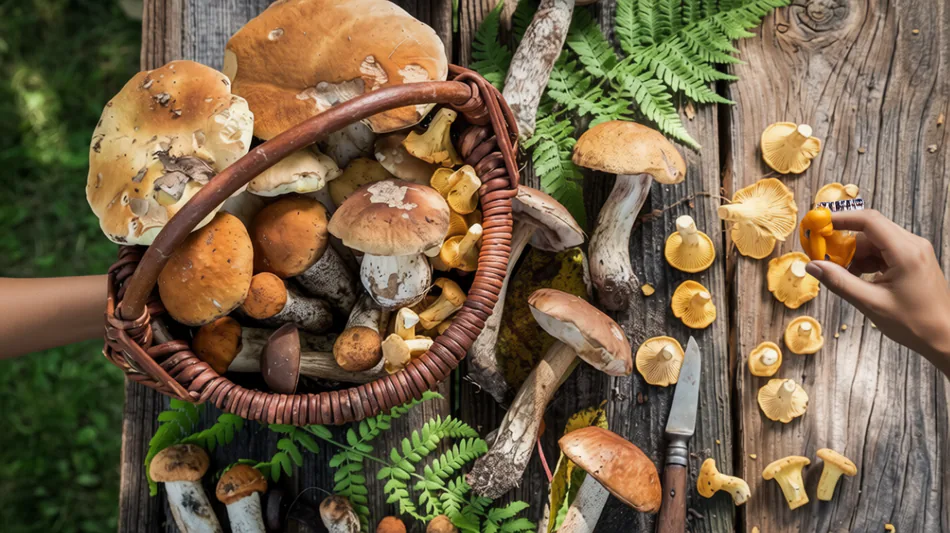
November Foraging Guide: Edible Mushrooms and Critical Safety Protocols
 November Foraging Guide: Edible Mushrooms and Critical Safety Protocols

 Microsoft Updates Xbox PC App with 60% Faster Startup and Redesigned Interface

 Early Polar Vortex Disruption Creates Uncertain Winter Outlook for Pennsylvania

 Edmund Richardson Wins Baillie Gifford Prize for 'Alexander' Biography

 BYD Drops Rotating Screens in New Models Due to Tech Limits

 Ryanair Flight from Rome Makes Emergency Landing in Lisbon After Bomb Threat

Foragers can still locate specific edible mushroom species in European forests during November, though availability varies significantly by region and weather. Experts emphasize that accurate identification is critical, as several late-season varieties resemble toxic lookalikes. Verification by certified mycologists remains the only reliable method to ensure safety before consumption.
Edible mushroom harvesting continues into November, offering foragers a final window to collect specific species before winter dormancy. However, experts warn that availability is not guaranteed and depends heavily on geographic location, altitude, and annual weather conditions.
While the season extends beyond autumn, the margin for error narrows as temperatures drop. Several key varieties remain accessible during this period, but their identification requires rigorous scrutiny due to the presence of deadly lookalikes.
The porcini (Boletus edulis) remains one of the most sought-after species in November. Found in both lowland and mountainous regions, including parts of France, it is identifiable by its brown cap and robust stem. Accurate identification requires examining the surrounding environment, not just the specimen itself.
The trumpet of the dead (Craterellus cornucopioides) also remains viable for collection from September through November. Despite its ominous name, it is edible. This dark, funnel-shaped mushroom often grows in groups and camouflages effectively among fallen leaves. Finding one should prompt a careful inspection of the immediate area without disturbing the soil.
Another late-season find is Craterellus tubaeformis, which prefers deciduous and coniferous forests. It features a yellowish-brown cap, a hollow yellow stem, and visible gills underneath. These traits can lead to dangerous confusion with toxic cortinarius species, making individual examination essential even when specimens grow in proximity.
The porcinello (Hydnum repandum), known regionally as "sheep's foot" or "cow's tongue," may also be found in November. It grows in leafy forests, particularly under oaks and chestnuts. Its distinguishing feature is the presence of small spines beneath its cream-colored cap rather than traditional gills.
Safety protocols are paramount. Foragers must collect mushrooms intact, including the stem, and separate different species within their baskets. Damaged specimens should be discarded immediately. Digital identification tools or photographs are insufficient for confirming edibility.
Once verified by certified experts or mycological association members, mushrooms must be refrigerated and consumed within two days. Thorough cooking is mandatory, though it does not neutralize toxins in poisonous varieties.
The calendar serves only as a general reference. Foragers without specialized experience are urged to submit all discoveries to professional verification before consumption.
S.F.Warren--AMWN