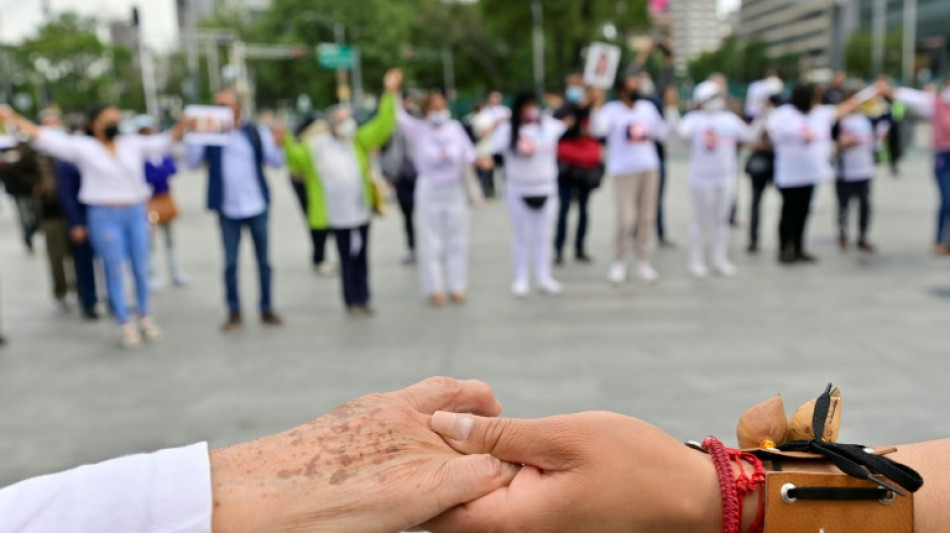
Mexican bishop proposes 'social pact' with drug traffickers / Photo: Pedro PARDO - AFP
 Anna Miltina Confronted with Racism Allegations on ProSieben Show

 German Auto Giants Face Existential Crisis as China Sales Plummet

 Cause of Death Revealed for 'Ellen' Producer Matthew Wright

 How to Enjoy Luxury Experiences on a Budget

 Pakistan Demands Grant-Based Climate Finance at COP31 to Avoid Debt Trap

 E Pellicci Pop-Up at Selfridges Brings Back Nostalgic School Cake

 Coronation Street's Debbie Webster Steps Down as Dementia Storyline Intensifies
A Mexican bishop has proposed a "social pact" that would include drug traffickers to tackle violence that has prompted calls for a rethink of President Andres Manuel Lopez Obrador's security policy.
The pact was needed so that "all of society and even criminals could join in some way," Sigifredo Noriega, bishop of the violent northern state of Zacatecas, told the newspaper Milenio.
Questions about Lopez Obrador's security strategy have mounted since two Jesuit priests were murdered on June 27 in a church in the northern state of Chihuahua.
Mexican Catholic bishops urged the government after the attack "to review the security strategies that are failing."
On Monday the Mexican Episcopal Conference said it was committed to "dialogue to build a path of justice and reconciliation that leads us to peace."
Lopez Obrador this week defended his security policy, which has focused on tackling the root causes of violence, including poverty.
He said Tuesday that while he supported forgiveness his government "does not negotiate" with criminals.
More than 340,000 people have been killed in a spiral of bloodshed since 2006 when the government of the time deployed the army to fight drug cartels.
The government blames most of the deaths on gangs involved in crimes including drug trafficking, fuel theft, kidnapping and extortion.
O.Johnson--AMWN

