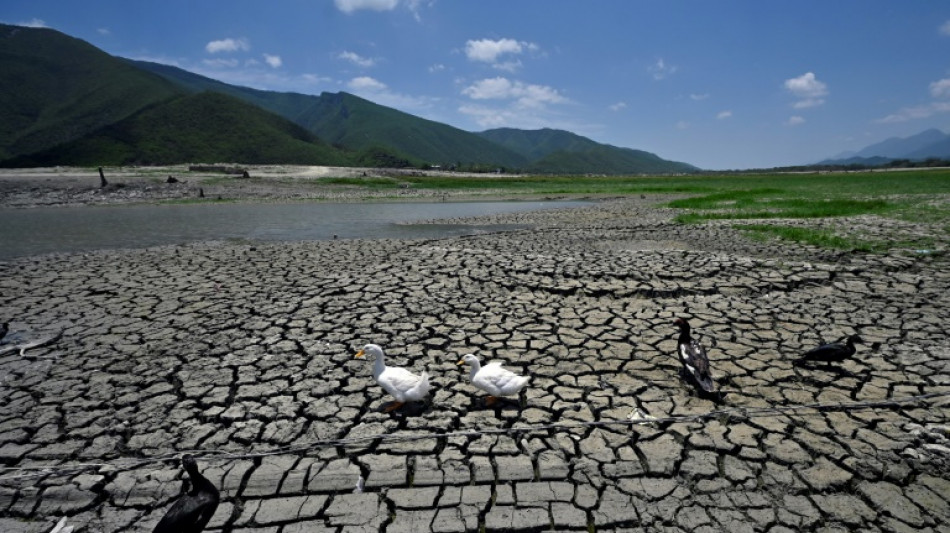
Mexico declares drought emergency / Photo: ALFREDO ESTRELLA - AFP
 Anna Miltina Confronted with Racism Allegations on ProSieben Show

 German Auto Giants Face Existential Crisis as China Sales Plummet

 Cause of Death Revealed for 'Ellen' Producer Matthew Wright

 How to Enjoy Luxury Experiences on a Budget

 Pakistan Demands Grant-Based Climate Finance at COP31 to Avoid Debt Trap

 E Pellicci Pop-Up at Selfridges Brings Back Nostalgic School Cake

 Coronation Street's Debbie Webster Steps Down as Dementia Storyline Intensifies
Mexico has declared a drought emergency to enable authorities to take special measures to guarantee water supplies in hard-hit areas.
The steps are designed to deal with the effects of a "severe, extreme or exceptional" drought, the national water authority Conagua said in a statement Tuesday.
Among the measures, holders of water concessions for agricultural or industrial use can be ordered to allow their use by third parties.
Authorities in parts of Mexico, including the northern industrial powerhouse of Monterrey, have been forced to ration water use due to depleted reservoirs.
A heat wave and dearth of rain means that households in Monterrey have had running water for only a few hours a day for several weeks.
In some hillside neighborhoods, it has been more than 50 days since residents last saw a drop from their faucets.
In the northwestern state of Baja California, a lack of water supplies has sparked protests in some towns.
In parts of Mexico City, such as the impoverished district of Iztapalapa -- home to 1.8 million people -- it is common for the authorities to ration water and send tanker trucks to alleviate shortages.
D.Cunningha--AMWN

