Top UN court to hear Rohingya genocide case against Myanmar / Photo: Munir UZ ZAMAN - AFP
 Iran attacks on gas and oil refineries heighten fears over war fallout

 Call to add Nazi camps to UNESCO list
 'Miracle': Europe reconnects with lost spacecraft
 Woltemade deployed too deep to be dangerous at Newcastle, says Nagelsmann

 EU summit fails to rally Orban behind stalled Ukraine loan

 Senegal to appeal CAF Africa Cup of Nations decision

 Record-setter Hodgkinson hopes 'fourth time lucky' at world indoors

 Karalis hits prime form to threaten Duplantis surprise

 US earns its lowest-ever score on freedom index

 What we know about the UK's deadly meningitis outbreak

 What cargo ships are passing Hormuz strait?
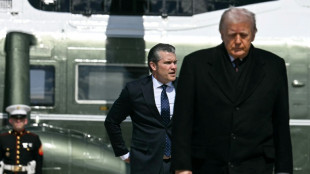 Energy prices soar, Iran and US trade threats after Qatar gas hit

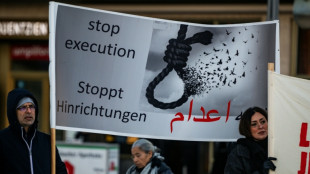 Iran hangs three men in first executions over January protests

 Man Utd boss Carrick expects hard test against resolute Bournemouth
 Alibaba pins hopes on AI as quarterly net profit drops
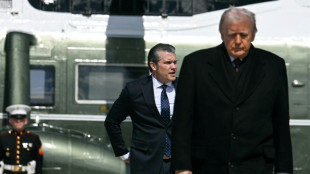
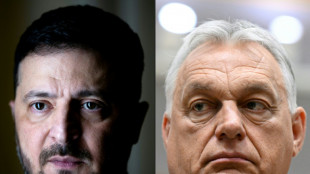 Defiant Orban digs in over blocked Ukraine loan at EU talks

 Tokyo's dazzling cherry blossom season officially begins
 Iran causes 'extensive' damage to Qatar gas hub, sparks Trump warning

 Labubu creators hope for monster film hit in Sony co-production

 Patching the wounds of Kinshasa's street children
 In Seoul square of protest and history, BTS fans welcome grand comeback
 Trump threatens to destroy Iran's largest gas field

 Inter continue Serie A title hunt ahead of Italy's date with World Cup destiny
 Ahead of election, Danish city mirrors country's challenges

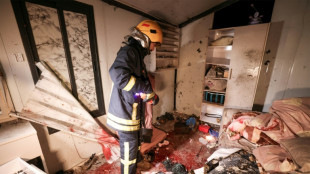 Iran missile fire kills 3 Palestinians in West Bank, foreign worker in Israel

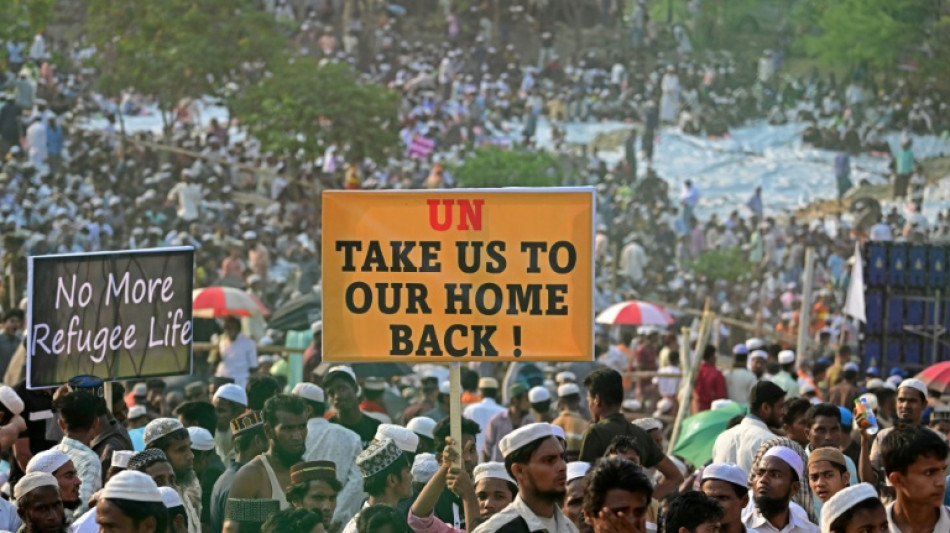
Did Myanmar commit genocide against its Rohingya Muslim minority? That's what judges at the International Court of Justice will weigh during three weeks of hearings starting Monday.
The Gambia brought the case accusing Myanmar of breaching the 1948 Genocide Convention during a crackdown in 2017.
Legal experts are watching closely as it could give clues for how the court will handle similar accusations against Israel over its military campaign in Gaza, a case brought to the ICJ by South Africa.
Hundreds of thousands of Rohingya Muslims fled violence by the Myanmar army and Buddhist militias, escaping to neighbouring Bangladesh and bringing harrowing accounts of mass rape, arson and murder.
Today, 1.17 million Rohingya live crammed into dilapidated camps spread over 8,000 acres in Cox's Bazar in Bangladesh.
From there, mother-of-two Janifa Begum told AFP: "I want to see whether the suffering we endured is reflected during the hearing."
"We want justice and peace," said the 37-year-old.
- 'Senseless killings' -
The Gambia, a Muslim-majority country in West Africa, brought the case in 2019 to the ICJ, which rules in disputes between states.
Under the Genocide Convention, any country can file a case at the ICJ against any other it believes is in breach of the treaty.
In December 2019, lawyers for the African nation presented evidence of what they said were "senseless killings... acts of barbarity that continue to shock our collective conscience".
In a landmark moment at the Peace Palace courthouse in The Hague, Nobel Peace laureate Aung San Suu Kyi appeared herself to defend her country.
She dismissed Banjul's argument as a "misleading and incomplete factual picture" of what she said was an "internal armed conflict".
The former democracy icon warned that the genocide case at the ICJ risked reigniting the crisis, which she said was a response to attacks by Rohingya militants.
Myanmar has always maintained the crackdown by its armed forces, known as the Tatmadaw, was justified to root out Rohingya insurgents after a series of attacks left a dozen security personnel dead.
- 'Physical destruction' -
The ICJ initially sided with The Gambia, which had asked judges for "provisional measures" to halt the violence while the case was being considered.
The court in 2020 said Myanmar must take "all measures within its power" to halt any acts prohibited in the 1948 UN Genocide Convention.
These acts included "killing members of the group" and "deliberately inflicting on the group conditions of life calculated to bring about its physical destruction in whole or in part".
The United States officially declared that the violence amounted to genocide in 2022, three years after a UN team said Myanmar harboured "genocidal intent" towards the Rohingya.
The hearings, which wrap up on January 30, represent the heart of the case.
The court had already thrown out a 2022 Myanmar challenge to its jurisdiction, so judges believe they have the power to rule on the genocide issue.
A final decision could take months or even years and while the ICJ has no means of enforcing its decisions, a ruling in favour of The Gambia would heap more political pressure on Myanmar.
Suu Kyi will not be revisiting the Peace Palace. She has been detained since a 2021 coup, on charges rights groups say were politically motivated.
The ICJ is not the only court looking into possible genocide against the Rohingya.
The International Criminal Court, also based in The Hague, is investigating military chief Min Aung Hlaing for suspected crimes against humanity.
Another case is being heard in Argentina under the principle of universal jurisdiction, the idea that some crimes are so heinous they can be heard in any court.
H.E.Young--AMWN