
Medicare's Cannabis (CBD) Coverage Plan Sparks Federal Controversy-Is CMS Circumventing FDA Drug Approval Standards?
 Daughter says Maradona died after carers' plan 'went out of control'

 How Schalke returned to the Bundesliga after their 'worst season ever'

 Mumbai coach Jayawardene backs Suryakumar to find his 'rhythm'

 Bangkok food vendor curbs push city staple from the streets

 Latecomer Japan eyes slice of rising global defence spending

 German fertiliser makers and farmers struggle with Iran war fallout

 Massive crowds fill Rio's Copacabana beach for Shakira concert

 Fleeting freedom at festival for India's transgender community
 Man charged with murdering Indigenous girl in Australian outback

 China's Wu Yize wins last-frame thriller to reach snooker world final

 Golden Tempo wins Kentucky Derby in historic triumph for trainer DeVaux
 China's Wu wins last-frame thriller to reach snooker world final

 Young stretches PGA lead to six at Doral

 Celtics' Tatum ruled out for decisive game seven against Sixers

 Senior Iranian officer says fresh conflict with US 'likely'

 Teen F1 leader Antonelli takes Miami Grand Prix pole

 US airlines step up as Spirit winds down

 Drugmaker asks US Supreme Court to restore abortion pill access

 NATO, top Republicans question US troop withdrawal from Germany

 Illegal party at French military site draws up to 40,000 ravers

 Arsenal go six points clear as Gyokeres double sinks Fulham

 Napoli and Como play out goalless draw in Serie A

 PSG held by Lorient with fringe team ahead of Bayern Munich return leg

 Champion Norris leads Piastri home in sprint 1-2 triumph for McLaren

 The Puma out of Kentucky Derby, leaving 19 starters

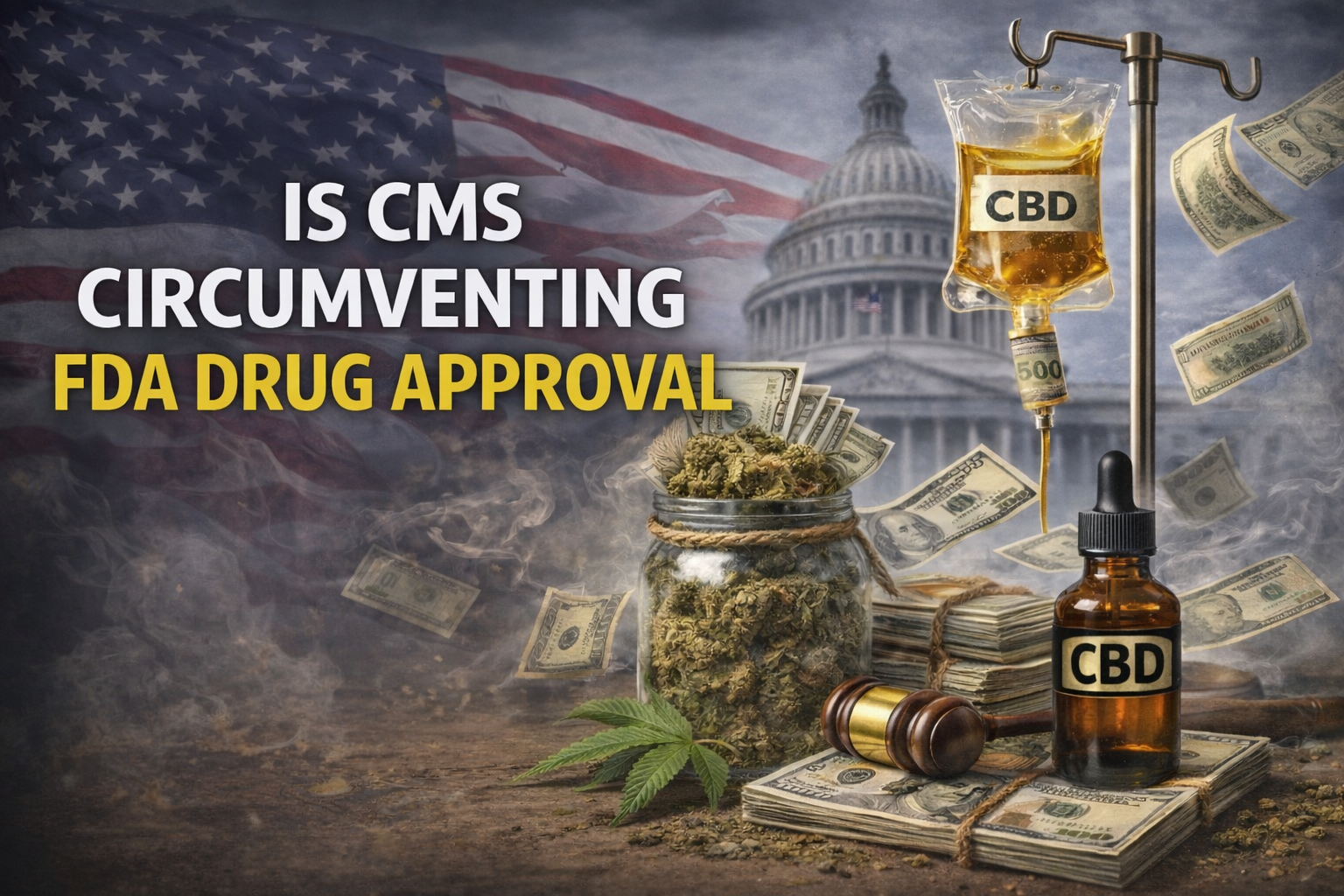
Is CMS Circumventing FDA Drug Approval Standards While Congress Moves to Shut the Hemp Market Down?
With Congress tightening federal THC limits and the FDA still evaluating cannabinoid safety standards, critics are asking why Medicare is moving forward with reimbursed CBD products that lack validated dose forms, pharmacokinetic benchmarks, or identified pharmaceutical-grade sources.
WASHINGTON, DC / ACCESS Newswire / March 24, 2026 / A new federal initiative allowing up to $500 annually in hemp-derived cannabinoid products for Medicare beneficiaries is raising urgent questions across the pharmaceutical cannabis sector about whether the Centers for Medicare & Medicaid Services (CMS) is moving ahead of the scientific framework traditionally required for medicine in the United States.
"Companies like ours followed that pathway for years under Schedule I restrictions, completed IND submissions, secured orphan drug designation, and developed standardized dose-form cannabinoid capsules specifically to meet federal safety requirements. Now CMS is preparing to reimburse hemp-derived cannabinoid products without identifying a validated formulation, without pharmacokinetic standards, and without an FDA-approved therapeutic profile. That raises serious questions about whether the government is supporting science-or bypassing it."
The pilot program-expected to begin as early as April 1 under Innovation Center care models administered by CMS-would allow participating physicians to furnish orally administered hemp-derived cannabidiol products containing up to 3 mg of total THC per serving. But critics warn the initiative risks creating a federally reimbursed cannabinoid category without the scientific safeguards traditionally required for prescription therapies.
A Fundamental Question: Who Approved These Products?
Under longstanding federal law, products intended to diagnose, treat, mitigate, or prevent disease must proceed through the U.S. Food and Drug Administration's drug approval pathway.
That process requires:
standardized formulation
pharmacokinetic evaluation
stability testing
clinical trials conducted under Investigational New Drug (IND) authorization
Yet CMS's pilot framework does not identify:
a specific manufacturer
a validated formulation
a defined dosing standard
or any FDA-approved cannabinoid extract beyond existing prescription drugs
Instead, the program references "legally compliant hemp sources" without clarifying whether those extracts meet pharmaceutical-grade botanical drug development standards.
Not All CBD Is the Same
This distinction is central to the controversy.
Cannabidiol is a molecule.
CBD products are not interchangeable medicines.
Products sold in the consumer marketplace vary widely in:
cannabinoid composition
residual solvent levels
pesticide contamination risk
bioavailability
stability
THC exposure
That variability is precisely why the FDA established its Botanical Drug Development Guidance framework.
Subsidiaries of MMJ International Holdings-including MMJ BioPharma Cultivation and MMJ BioPharma Labs-have spent years operating within that pathway while developing standardized cannabinoid soft-gel capsules intended for Huntington's disease and multiple sclerosis clinical programs.
Those efforts required:
DEA Schedule I research compliance
FDA IND review
orphan drug designation
controlled dose-form development
CMS's pilot proceeds without identifying equivalent scientific benchmarks.
A Policy Collision With Congress
Even more striking is the timing.
The CMS pilot launches just months before a federal statutory change expected to significantly restrict ingestible hemp-derived cannabinoid products nationwide.
Congress has already enacted legislation limiting hemp derivatives to approximately 0.4 mg total THC per container, a threshold many stakeholders believe could eliminate most consumable cannabinoid formulations currently on the market.
Yet CMS's pilot allows:
3 mg of total THC per serving
-more than seven times higher.
That discrepancy raises a fundamental policy question:
Why expand reimbursement for products Congress is preparing to restrict?
No Final Dose Form. No NDA. No IND Disclosure.
Perhaps the most unusual feature of the CMS pilot is what it does not specify.
There is currently:
no named formulation
no pharmacokinetic exposure standard
no validated dosing range
no FDA-approved label
no New Drug Application (NDA) pathway attached to the program
Instead, participating provider organizations must submit internal implementation plans describing product selection and dosing protocols for CMS approval.
This effectively shifts responsibility for therapeutic selection from federal regulators to healthcare networks-an uncommon structure for a federally supported therapeutic access program.
Meanwhile, Companies Following FDA Rules Are Still Waiting
While CMS prepares to distribute hemp-derived cannabinoids through Medicare Innovation Center models, companies that pursued the formal pharmaceutical pathway remain inside the FDA system.
Programs such as IND 140712, covering standardized CBD/THC capsule formulations under orphan designation for Huntington's disease, were developed specifically to meet federal drug-approval standards under Schedule I conditions.
Those programs required years of regulatory compliance before reaching the point of clinical advancement.
Critics now ask:
Why does a reimbursement pathway exist before the drug-approval pathway is complete?
Who Benefits From the Pilot?
Another unresolved issue concerns sourcing.
CMS requires that eligible products:
originate from legally compliant farms
meet testing standards
remain within THC thresholds
be physician-distributed through participating organizations
But the agency has not identified:
extract manufacturers
formulation developers
pharmacology datasets supporting dose selection
or standardized exposure targets
At the same time, Congress is tightening hemp definitions in ways expected to reduce the availability of ingestible cannabinoid products nationwide.
That creates a policy paradox:
If the hemp market is contracting, why is Medicare expanding access to it?
A Shadow Regulatory Framework Emerging?
Supporters describe the CMS initiative as a research-driven access pilot designed to generate real-world evidence.
Critics see something different:
a federally supported cannabinoid distribution system developing alongside-but outside-the FDA's botanical drug approval framework.
Because once Medicare reimburses a therapeutic product, it becomes part of the clinical ecosystem regardless of whether the FDA has formally approved it as medicine.
Watch What Happens
The CMS cannabidiol pilot may represent an important experiment in cannabinoid access.
Or it may represent something more consequential:
a reimbursement framework moving ahead of science, ahead of Congress, and ahead of the FDA's established pathway for botanical drug development.
Until CMS identifies the formulations, exposure standards, and evidence supporting its dosing decisions, one question will continue to define the debate:
Is Medicare expanding access to medicine-or redefining what qualifies as medicine without FDA approval?
Madison Hisey
[email protected]
203-231-85832
SOURCE: MMJ International Holdings
View the original press release on ACCESS Newswire
A.Rodriguezv--AMWN