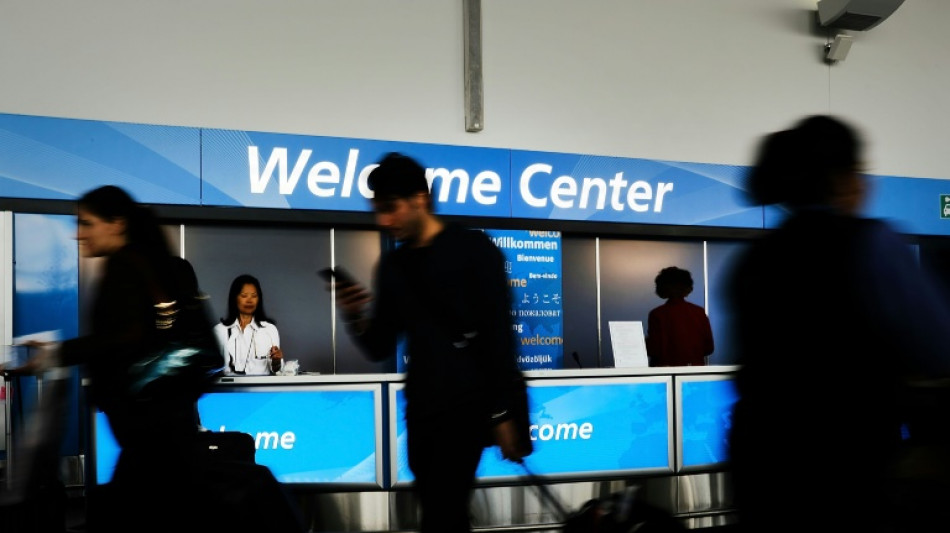
Global business travel won't see full recovery until 2026: report / Photo: SPENCER PLATT - GETTY IMAGES NORTH AMERICA/AFP/File
 Anna Miltina Confronted with Racism Allegations on ProSieben Show

 German Auto Giants Face Existential Crisis as China Sales Plummet

 Cause of Death Revealed for 'Ellen' Producer Matthew Wright

 How to Enjoy Luxury Experiences on a Budget

 Pakistan Demands Grant-Based Climate Finance at COP31 to Avoid Debt Trap

 E Pellicci Pop-Up at Selfridges Brings Back Nostalgic School Cake

 Coronation Street's Debbie Webster Steps Down as Dementia Storyline Intensifies
Inflation, supply chain problems and ongoing Covid-19 lockdowns in China are among the factors conspiring to delay a full recovery in business travel to its pre-pandemic level, according to an industry forecast released Monday.
The Global Business Travel Association now projects business travel will regain its 2019 level of $1.43 trillion in mid-2026, 18 months later than predicted in the group's last forecast in November.
"Recovery has hit some headwinds," GBTA said in a statement that outlined a gradual improvement from a 2020 low of $661 billion until reaching $1.47 trillion in 2026.
"The factors impacting many industries around the world are also anticipated to impact global business travel recovery into 2025," said Suzanne Neufang, the association's chief executive.
The group said recovery was "short-circuited" in late 2021 and early 2022 by the Omicron variant of Covid-19, but that trips surged after that once Covid cases fell.
Major obstacles to a full recovery include high energy prices, labor shortages, Covid lockdowns, regional impacts due to the war in Ukraine and sustainability concerns.
P.Martin--AMWN