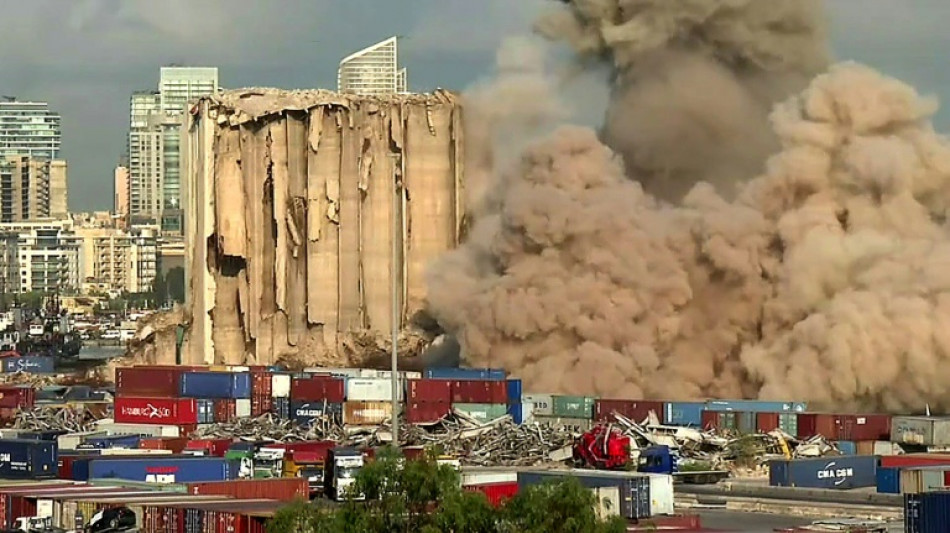
New silo collapse in blast-ravaged Beirut port / Photo: Dylan COLLINS - AFP
 Anna Miltina Confronted with Racism Allegations on ProSieben Show

 German Auto Giants Face Existential Crisis as China Sales Plummet

 Cause of Death Revealed for 'Ellen' Producer Matthew Wright

 How to Enjoy Luxury Experiences on a Budget

 Pakistan Demands Grant-Based Climate Finance at COP31 to Avoid Debt Trap

 E Pellicci Pop-Up at Selfridges Brings Back Nostalgic School Cake

 Coronation Street's Debbie Webster Steps Down as Dementia Storyline Intensifies
Eight more grain silos at Beirut port toppled Tuesday, succumbing to damage from a devastating 2020 explosion in the third such collapse in a month, AFP correspondents reported.
A cloud of dust rose over the port after the collapse, which brought down the last of the northern block of silos that was more heavily damaged in the blast and where a fire had been burning since last month.
The remaining southern block is more stable and not at imminent risk of collapse, said French civil engineer Emmanuel Durand, who has installed sensors on the silos.
Prime Minister Najib Mikati on Tuesday sent a letter to Public Works Minister Ali Hamieh, requesting the preservation of the southern block as a memorial site.
The silos had absorbed much of the impact of the massive explosion of haphazardly stored ammonium nitrate fertiliser that killed more than 200 people on August 4, 2020.
Only 12 of the original 48 silos are still standing, all of them in the southern block, Durand said.
A fire has been burning in the silos for more than a month, as remaining grain stocks ferment in the summer heat.
The complex has come to symbolise the tragic blast, but also state negligence and corruption, which many Lebanese blame for the explosion.
"We hold authorities responsible for what happened with the silos," said Mariana Fodoulian, who lost her sister in the explosion.
"We must preserve the southern block of silos" as a memorial, Fodoulian said, echoing the demands of many blast victim relatives.
Relatives had called for a sit-in near the port on Tuesday afternoon.
Hamieh announced last week that the government had agreed to reserve 25,000 square metres (270,000 square feet) of the port to build new grain silos.
This is larger than the current complex which occupies a space of 21,000 square metres (226,000 square feet).
Hamieh said funding would come from international donors as well as the government, which has been bankrupted by a crushing financial crisis.
L.Durand--AMWN

